
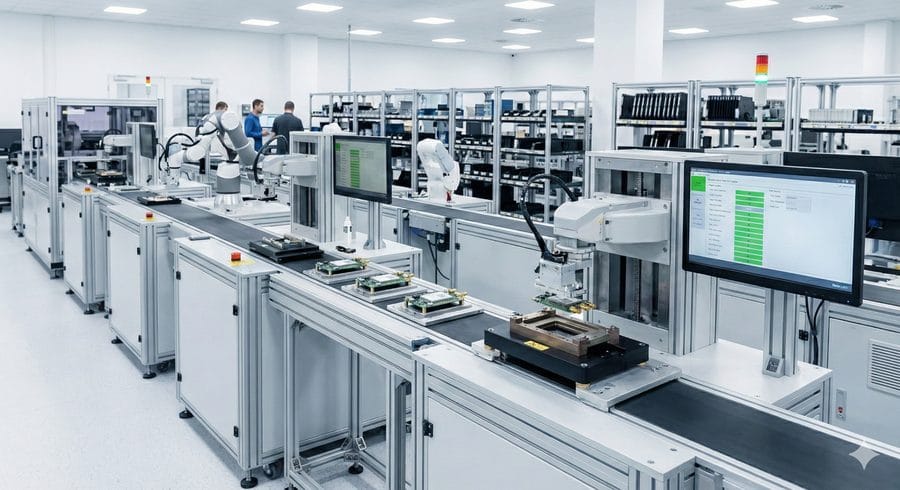
Why building and manufacturing your own tracking devices matters when disruptions become the norm
Global supply chains have been battered by a sequence of crises. Data from supply chain intelligence provider Resilinc shows that disruptions increased 38 % globally in 2024 compared with 2023, reversing a brief period of calm and forcing companies to reassess how they design, manufacture and deploy hardware. The Red Sea crisis alone—sparked by spillover conflicts in the Middle East—disrupted around USD 6 billion per week of cargo and extended transit times by more than a third. On top of geopolitical shocks, climate-related disasters have surged: 2024 registered a 119 % jump in extreme weather–related disruptions, with flood alerts up 214 % and major hurricanes and typhoons up 101 % year over year. Even when a supply chain recovers, the backlog often exposes deeper vulnerabilities such as single-sourced components, poorly understood logistics dependencies and misaligned manufacturing footprints.
In this environment, simply buying off -the -shelf trackers or sensors and bolting them onto a logistics program is no longer enough. The hardware itself must be engineered to withstand harsh conditions, deliver verifiable data and integrate seamlessly with enterprise systems. At the same time, the way you build that hardware can be just as important as the design. If all your devices are assembled in a single location or rely on the same supplier, a single disruption—trade restrictions, port closures, cyberattacks or health emergencies—can halt production and delay shipments. Organizations that make custom industrial IoT devices and manage their own manufacturing footprint are discovering that they can design resilience into both the product and the supply chain.
Why Off‑the‑Shelf Isn’t Enough
Off‑the‑shelf IoT devices are tempting because of their lower upfront cost and rapid availability. For standard logistics operations—tracking pallets in controlled environments, for example—generic devices may suffice. However, these devices often impose compromises. They rarely match the unique mechanical constraints of real equipment, they may carry unused features that increase power consumption, and their internal firmware roadmaps are controlled by vendors. ObjectSpectrum notes that off‑the‑shelf solutions provide “reliable and cost-efficient” options for basic use cases but emphasises that custom hardware offers a tailored fit, optimized performance and the ability to handle specialized environments such as high vibration or corrosive conditions. Importantly, custom designs let companies own their intellectual property, select components with known longevity and define upgrade paths.
Custom hardware is not just about adding features; it is about shaping the device to its purpose. The Velvetech guide to IoT hardware development argues that reliability, scalability and interoperability should be foundational considerations. By tailoring the device to the business need, companies gain full ownership and control over updates, security and data integrity. The same guide advises selecting sensors based on specific goals, operating environments and cost‑power trade-offs. In the context of supply chain tracking, that means choosing accelerometers sensitive enough to detect shock events without generating false alarms, temperature sensors that survive sub-zero reefers and light sensors that detect tampering inside containers. These decisions are difficult to make when you have no influence over the bill of materials (BOM).
Designing in reliability also means testing hardware under conditions far more severe than those found in a typical office. Conclusive Engineering points out that hardware testing goes beyond basic quality control: engineers need to evaluate physical components under temperature fluctuations, electromagnetic interference (EMI) and accidental drops to identify weaknesses before products reach the market. Stress tests, thermal cycling, vibration and environmental testing help manufacturers tune design parameters and ensure energy efficiency and durability. By running these tests early, a team can refine the mechanical design of the enclosure, adjust soldering processes or choose adhesives that survive humidity and temperature swings—all before committing to expensive tooling.
Moreover, custom hardware paves the way for better data quality. It enables instrumentation and calibration points that generic devices often lack. For example, a custom board can include a sense resistor and test pads to measure current consumption across different modes—sleep, attach, tracking—and feed those measurements into battery life models. It can also route coax lines and isolate radio frequency (RF) paths to achieve lower noise floors for both cellular and GNSS signals. These details may seem esoteric, but they influence whether a device meets regulatory limits, obtains network certification and performs reliably in the field.
Engineering for Real‑World Conditions
Real-world logistics seldom look like a clean bench-top test. Devices get dropped, vibrated and exposed to moisture. They may operate in freezer compartments one day and on sun-baked trailers the next. A custom industrial IoT tracker must therefore incorporate mechanical and electrical design choices that mitigate these stresses. This begins with material selection: choosing polymers and gaskets rated for the target ingress protection (IP) level and adhesives that do not degrade at operating temperatures. It also involves mechanical decoupling, such as mounting accelerometers on rigid surfaces to avoid false positives from enclosure flexing.
Comprehensive reliability testing is vital because the consequences of failure in the field are costly. According to Conclusive Engineering, thermal, vibration and environmental tests not only protect a brand’s reputation but also help avoid recalls. Stress tests simulate years of wear in a matter of weeks, revealing components prone to fatigue. Thermal cycling, for instance, can expose solder joints or adhesives that fail under differential expansion. Vibration testing ensures that connectors remain seated and antennas remain matched when a tracker is bolted to a diesel engine. Drop tests replicate accidental knocks during installation or shipping. Only by combining these tests can engineers gather a body of evidence that the hardware will survive the mission.
Sensor selection is another area where custom design adds value. In a logistics context, accelerometers detect motion and impact; gyroscopes or magnetometers can help discern orientation; temperature and humidity sensors monitor cold chain compliance; and light sensors detect unauthorized opening of packages or containers. Velvetech emphasises that sensor choice must balance goals, environment, power and cost. For example, a three-axis accelerometer with low noise density and high dynamic range may be overkill if the asset only needs to detect movement thresholds; conversely, a shock sensor may be essential if the goal is to prove that heavy equipment was handled within contract limits.
The data collected must feed into management systems to be useful. Digi International explains that key metrics for IoT supply-chain deployments include asset location and dwell time, inventory levels, environmental conditions and equipment health; sensors can produce these metrics when integrated with inventory and transportation management systems. For example, smart shelves monitor stock to prevent out-of-stock scenarios, while temperature and humidity sensors keep perishable goods within specification. Vibration and diagnostics help operators plan maintenance before failures occur. Exception alerts notify teams of anomalies in real time, enabling proactive mitigation. Custom hardware makes it easier to tailor these sensing and alerting capabilities because firmware, radio parameters and sensor calibrations are under your control.
Finally, engineering for the real world includes designing for maintainability and upgradeability. Off‑the‑shelf trackers may not allow firmware updates in the field, and even when they do, the update cadence is controlled by the vendor. Custom hardware can support over-the-air updates, but only if power budgeting and security are considered from the outset. Engineers should allocate memory for firmware redundancy, implement secure boot mechanisms and design battery protection circuits that support safe updates. They should also plan for field diagnostics: adding debug pads, bootloader keys and current measurement access points so support teams can troubleshoot returned units without expensive teardown.

Integrating Data and Real‑Time Management
Data collected by custom trackers should not sit in silos. Digi International advises integrating IoT data with inventory and transportation management systems so that alerts and analytics translate into actionable decisions. In practice, this integration requires standardised payload schemas, robust backhaul connectivity and cross-team cooperation. For instance, a tracker may report its location, temperature, vibration metrics and battery status in a single message; the backend must parse and route those fields to the appropriate modules. Without harmonised interfaces, the value of custom hardware is diminished.
Real-time management also benefits from event-driven architectures. Rather than streaming data continuously, the device can send heartbeat reports at a low frequency and switch to high-rate transmissions only when certain thresholds are met. For example, an accelerometer can trigger immediate reporting when it detects a shock above a specified g-force, while temperature anomalies can raise alerts when they deviate from a configured range. Digi’s guidance suggests implementing IoT in phases to avoid disruption and to allow for iterative tuning. Field deployments should start small, with incremental sensor activation and scaling as confidence builds.
Because custom hardware gives you control of both firmware and physical interfaces, it also enables more advanced data strategies. You can implement dual radio modes—such as LTE‑M for routine traffic and NB‑IoT for deep coverage fallback—or add low-energy protocols like Bluetooth Low Energy (BLE) for in-yard check-ins. You can design the device to store high-resolution data locally and offload it when connectivity is strong, thus reducing network charges. And you can incorporate edge processing—simple algorithms that decide when to transmit—reducing latency and power consumption. Off-the-shelf devices, by contrast, often have fixed radio configurations and limited memory, constraining these optimizations.
Supply Chain Risk and Dual Manufacturing
Understanding the risk profile of your supply chain is essential for deciding how and where to build hardware. The COVID‑19 pandemic, the Suez Canal blockage and other crises have underscored how concentrated sourcing amplifies vulnerability. Even before the pandemic, one study found that nearly 13 % of organisations experienced more than ten supply-chain disruptions in 2023, up from 5 % in 2019. The same study observed that trade restrictions have tripled between 2019 and 2023 and that companies increasingly adopt friend‑shoring and dual supply strategies to mitigate geopolitical risk. Geopolitical friction can directly hit supply chains: in 2024, tensions over Taiwan led to export bans of critical minerals like gallium and germanium, illustrating how trade policy can constrain high-tech manufacturing.
In this context, dual-base manufacturing—splitting production across two geographically distinct facilities—has emerged as a pragmatic strategy. Instead of scattering production randomly, companies mirror processes, quality management systems and tooling across both sites. The aim is continuity: when one site is disrupted by lockdowns, power outages or labor shortages, the other can absorb the load. Each base maintains buffer capacity of around 40 % of normal output, rotated through pilot runs to ensure readiness. Standardised work instructions, synchronized documentation and integrated production databases make it possible to transfer production in as little as 72 hours. By designing continuity into the manufacturing topology, organisations turn every build into a training exercise for potential transfer.
Dual manufacturing also helps manage tariffs and currency swings. For example, some companies operate one factory in a country with low tariffs for the U.S. market and another in a country with favourable trade agreements with Europe. When tariffs shift, output can be rebalanced accordingly. But the real value of dual manufacturing is process discipline: tooling, test fixtures and software are built in pairs and validated in parallel. Operators train to identical procedures. Even maintenance schedules and calibration certificates are aligned. This approach transforms capacity planning from an emergency scramble into a controlled operation.
Of course, dual manufacturing is not a panacea. It requires investment in duplicate equipment, cross‑training and supply chain coordination. It only works if the BOM and assembly processes can be replicated without local improvisation. That is where custom hardware development comes in. By controlling the BOM—selecting components that are available in both regions, designing the PCB to accommodate alternative suppliers and validating adhesives and enclosures in multiple climates—you ensure that a build transferred to another factory will not run into surprises. Standardizing test jigs, in‑circuit test (ICT) fixtures and firmware flashing tools ensures that the results from one site are comparable to those from another.

Creating Manufacturing Resilience through Customization
When supply chains are under stress, a “prototype‑to‑production” mindset becomes a critical advantage. Building a functional prototype demonstrates that a concept works; but taking that prototype into mass production requires a different skill set. It involves designing for manufacturing (DFM), designing for test (DFT) and designing for supply chain. Custom hardware allows engineers to incorporate test points, probe pads and connectors that production lines need for ICT and functional tests. They can define golden samples, tune process windows and specify statistical process control (SPC) metrics to catch drift. These steps are rarely possible with off‑the‑shelf solutions because the underlying design is opaque.
Managing procurement risk is another part of resilience. The Implement Consulting study recommends a second-source policy for critical components—cells, adhesives and antennas—and maintaining minimum order quantity (MOQ) buffers. In practice, this means selecting radio modules that have at least two vendors, specifying adhesives and gaskets from multiple suppliers and validating antennas with similar form factors. It also means tracking end-of-life announcements and aligning your product roadmap accordingly. Custom hardware design can accommodate these redundancies because the layout, connectors and firmware drivers are under your control.
Logistic constraints, particularly those related to batteries, further highlight the need for early planning. Lithium batteries must pass UN 38.3 tests and be accompanied by a test summary to be legally shipped by air or sea. Regulatory regimes such as FCC, CE/RED, PTCRB, RoHS and REACH each impose distinct requirements depending on the destination market. Digi emphasises that compliance and audit documentation should be prepared early to avoid delays in market entry. Custom hardware teams can build compliance into the design: selecting radio modules with existing certifications or planning module integration tests; choosing materials that meet chemical restrictions; designing thermal management to pass specific absorption rate (SAR) tests; and preparing evidence packages that streamline certification.
In addition, manufacturing resilience depends on having a transparent data trail. Modern factories use Manufacturing Execution Systems (MES) and traceability software to log which operator assembled each board, which batch of adhesive was used and which test results were recorded. Custom hardware development should integrate with these systems by embedding unique identifiers—QR codes, serial numbers or RFID tags—into the PCB and enclosure. When combined with dual-base manufacturing, traceability ensures that quality issues can be isolated to a specific site, time and BOM lot. Without such linkage, root cause analysis becomes guesswork.
Compliance and Certification: Not Optional
Regulatory compliance is sometimes viewed as an administrative hurdle, but in reality it is a design constraint. For example, the United States requires RF equipment to obtain FCC equipment authorization before it can be marketed or imported, while Canada’s ISED imposes its own certification for wireless devices. The European Union mandates CE marking under the Radio Equipment Directive and chemical compliance under RoHS and REACH. PTCRB certification verifies that cellular devices will operate reliably on carrier networks. Then there is battery shipping compliance: lithium batteries must pass UN 38.3 tests, and shipping carriers require documentation summarizing those results. Failing to plan for these steps can push back product launches by months.
Custom hardware enables a proactive approach to certification. When you control the RF design, you can design test access points for conducted and radiated testing. You can plan for worst-case antenna placement, secure shielding and filter design to meet emission limits. You can select components that have existing approvals or documented integration procedures. By coordinating certification schedules with your dual manufacturing plan—testing units from both sites concurrently—you avoid surprises when scaling.
More importantly, compliance is part of your brand promise. Customers rely on compliance marks to trust that the product will not interfere with networks, harm users or violate environmental regulations. As supply chains globalize and regulators intensify enforcement, compliance becomes a differentiator. A well-documented, audit-ready hardware program signals that your organization takes safety, quality and sustainability seriously.

The Value of End‑to‑End Development
Taken together, these elements—custom hardware design, rigorous testing, integrated data strategies, dual-base manufacturing, procurement discipline and compliance planning—turn supply-chain resilience from a slogan into an operational capability. They represent a shift from buying generic devices to building a bespoke system tuned to your assets, routes and risk tolerance. The investment pays off not only through reduced downtime but also through improved data fidelity, extended device lifetimes and easier integration with existing systems.
Developing custom industrial IoT hardware is not an easy undertaking. It requires cross-functional collaboration between mechanical, electrical and firmware engineers; manufacturing experts; supply-chain analysts; and compliance specialists. It also requires a willingness to iterate, test and refine. But as supply chains face increasingly complex threats—from geopolitical tension and trade restrictions to cyberattacks and climate extremes—the cost of inaction is rising. Organizations that build their own resilience through custom devices and diversified manufacturing are better positioned to adapt and thrive.
For those interested in operational frameworks for long-life trackers, our article on operational playbooks for asset traczkers explores how to choreograph modes and metrics to maximize battery life. Meanwhile, our dual-base manufacturing playbook dives deeper into how to mirror processes across two factories and maintain buffer capacity for continuity. Both resources complement the hardware-focused discussion here and illustrate how product and process work together.
FAQ
Q1: Why should we invest in custom industrial IoT hardware when off-the-shelf devices are cheaper?
Off-the-shelf devices are suitable for simple tracking tasks, but they rarely meet the specific mechanical, environmental and data requirements of complex logistics programmes. Custom hardware gives you full control over the bill of materials, allows you to choose sensors matched to your use case, and enables the rigorous testing needed to ensure reliability. It also supports better data integration, firmware updates and compliance planning.
Q2: How does dual-base manufacturing reduce risk?
Dual-base manufacturing splits production across two standardized facilities. Each site mirrors processes, tooling and documentation, allowing capacity to be shifted quickly when disruptions occur. Maintaining buffer capacity and synchronizing documentation enable transfer in days rather than weeks. This mitigates risks from geopolitical events, natural disasters and supply constraints.
Q3: What sensors are most important for supply chain tracking?
The most critical sensors depend on the asset and environment. Accelerometers detect motion and shocks, temperature and humidity sensors ensure cold-chain compliance, and light sensors detect unauthorized openings. Digi International emphasises that key metrics include asset location and dwell time, inventory levels, environmental conditions and equipment health. Selecting sensors should be guided by specific goals and power budgets.
Q4: How can companies start building supply-chain resilience through hardware?
Begin by auditing your existing devices and manufacturing footprints. Identify single points of failure in components, suppliers and factory locations. Engage engineering and supply-chain teams early to design custom hardware that meets operational needs, supports compliance and allows for dual sourcing. Implement reliability testing regimes and integrate IoT data with management systems. Start small with pilot deployments and phase your rollout to gather learning and refine processes.
Conclusion
As supply chain disruptions multiply and trade policies evolve, resilience can no longer be bolted on after the fact. It must be engineered into the devices that watch over your assets and built into the factories that make them. Custom industrial IoT hardware—tested in harsh conditions, designed for reliability and produced across dual bases—offers a tangible way to turn resilience from an aspiration into a competency. By controlling both the product and the process, organizations can navigate turbulence with less drama and more confidence.