
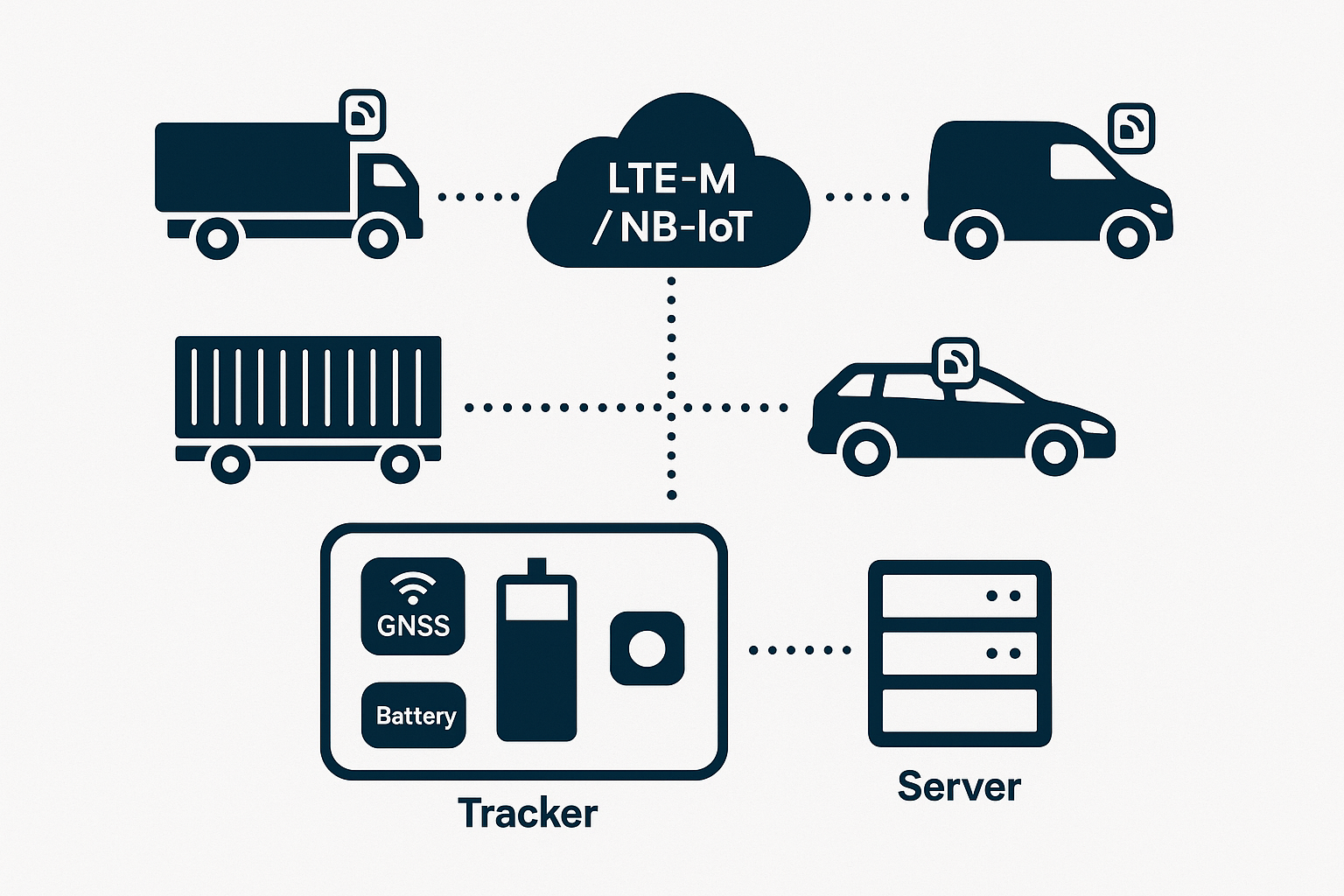
Asset tracking is no longer just about knowing where something is. For fleets, logistics providers and equipment rental companies, it’s about doing it reliably for years without touching the device, even when assets sit idle in harsh environments.
This requirement forces engineers to solve a very specific problem: How do you build a cellular + GNSS tracker that can survive on a single battery for multiple years, while still supporting real-time alarms when something important happens?
In this article, we’ll take a technical look at that challenge using EELINK’s GPT12-X Ultra as a reference architecture. Devices in this family combine LTE-M / NB-IoT, multi‑constellation GNSS and a 5000 mAh primary battery into a palm‑sized enclosure, delivering multi‑year standby in low‑frequency reporting profiles. Along the way you’ll discover why multi-year asset trackers are changing the economics of fleet and asset management.
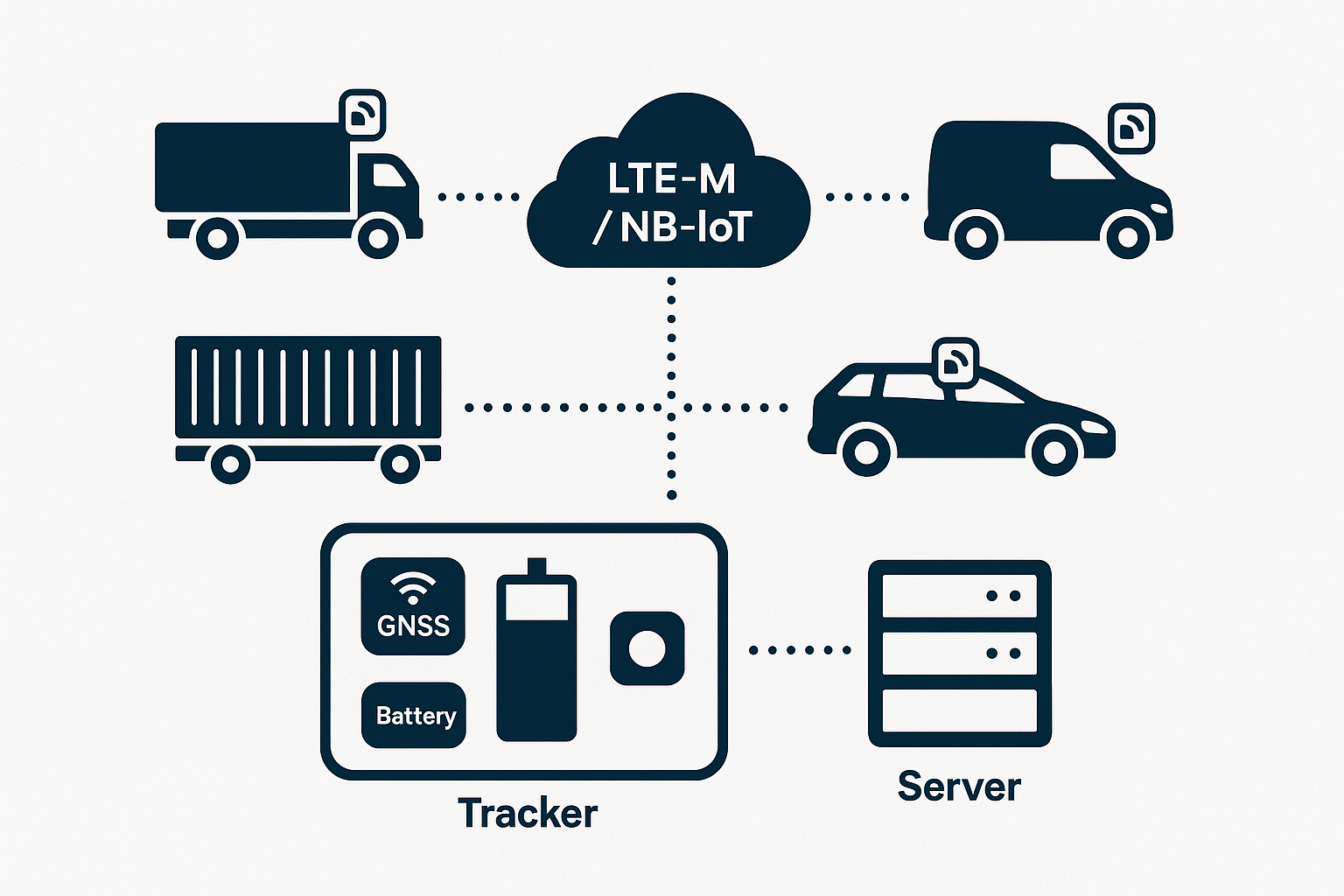
System Architecture Overview
At a high level
/iage
, a multi‑year LTE‑M / NB‑IoT tracker can be decomposed into the following subsystems:
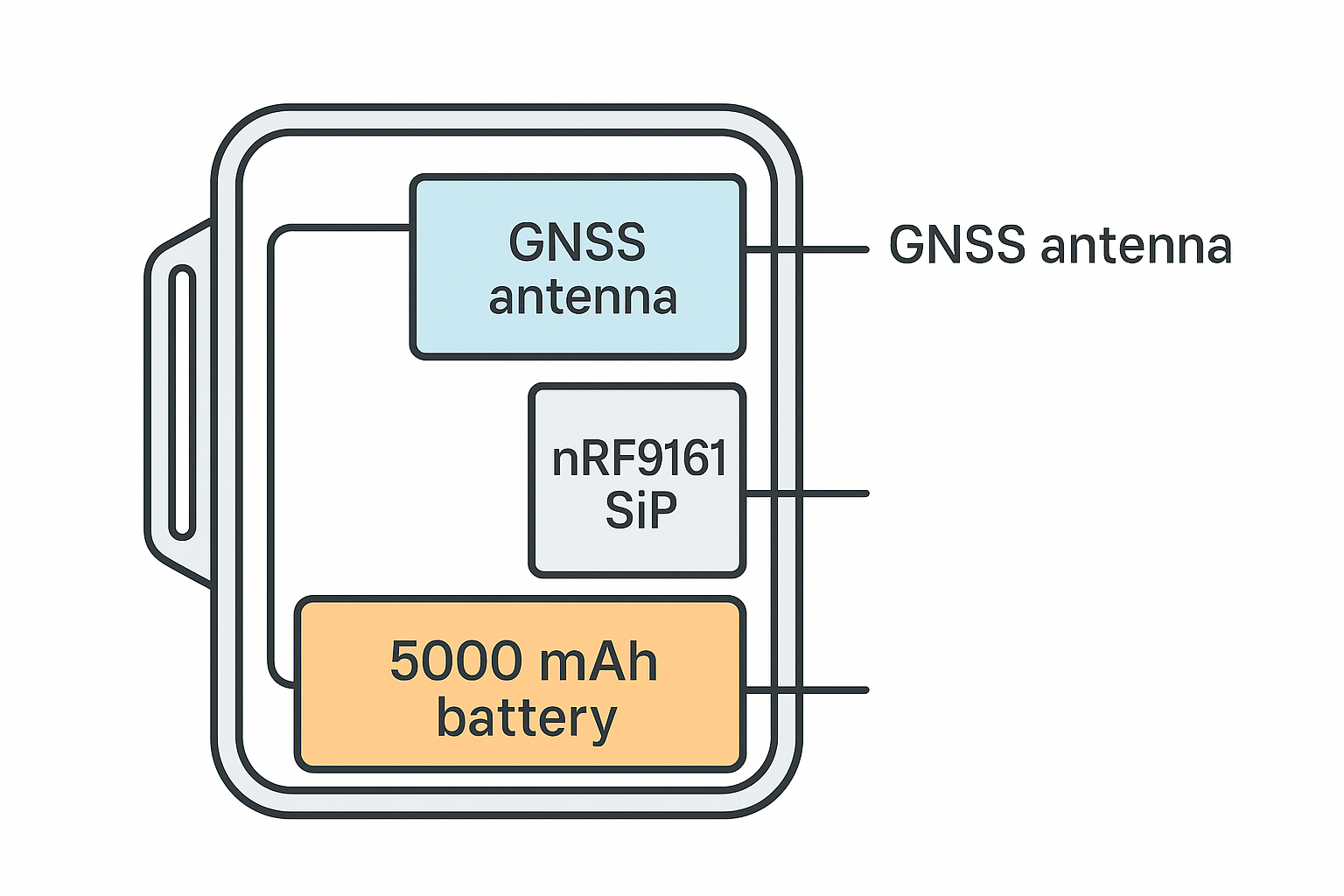
- Cellular & GNSS system‑in‑package — a single chip solution like Nordic’s nRF9161 SiP that integrates LTE‑M / NB‑IoT modem, GNSS receiver, MCU and security features.
- Power subsystem — a 5000 mAh lithium‑manganese primary cell with power switches and regulators optimized for very low quiescent current.
- Positioning & sensors — multi‑constellation GNSS (GPS, GLONASS, BDS/BeiDou) plus accelerometer and light sensors for motion and tamper detection.
- Non‑volatile storage — on‑chip flash plus optional external memory for buffered records.
- Enclosure & RF — compact housing with integrated LTE/GNSS antennas.
- Cloud conn
- /imageectivity — a lightweight binary protocol that minimizes payload size and Cloud connectivity — a lightweight binary protocol that minimizes payload size and round-trips.‑trips.
Why a Cellular SiP Matters: Inside the nRF9161
One of the most important design choices is the cellular platform. System‑in‑package (SiP) solutions like Nordic’s nRF9161 integrate a multimode LTE‑M / NB‑IoT modem, a 64 MHz ARM Cortex‑M33 MCU with on‑chip flash and RAM, a GNSS receiver and hardware security. From a hardware perspective this reduces the number of external components and simplifies PCB design. From a firmware perspective it consolidates application logic, modem control and GNSS management into a single environment. Critically for multi‑year devices, the nRF91 series is designed around deep sleep states and power saving network features so that the radio spends most of its life completely off.
Power Architecture and Battery Life Modeling
Devices like GPT12‑X Ultra use a 5000 mAh lithium‑manganese primary cell because it offers very low self‑discharge, wide temperature tolerance and high energy density. Because the battery is non‑rechargeable the entire power budget must be designed up front. A simple duty cycle model looks like:
Battery life ≈ (Battery capacity) / (Sleep current × sleep time + Active current × active time)
When manuals state that a device can achieve 3–4 years of standby at one report per day they are describing a specific duty cycle: deep sleep for 24 hours, short wake for GNSS acquisition, brief LTE‑M / NB‑IoT attach and transmit, then back to deep sleep. In practice designers must account for network variability, GNSS acquisition time, self‑discharge and occasional bursts of high‑frequency tracking. For GPT12‑X Ultra the goal is to keep baseline sleep current in the microamp range, ensure active cycles are very short and limit how often the device is allowed to stay in high‑frequency modes.
LTE‑M / NB‑IoT Power Saving in Practice
Power Saving Mode (PSM) allows an LTE‑M / NB‑IoT device to remain registered with the network while effectively turning off its radio between tracking intervals. Extended Discontinuous Reception (eDRX) lets devices decide how often they listen for downlink messages while idle. By aligning PSM cycles with reporting intervals a tracker can let the network “forget about it” most of the time while still supporting occasional downlink control.
GNSS & Positioning Strategy
GNSS can be a big power consumer. A multi‑year design relies on aggressive duty cycling: wake GNSS only at scheduled intervals or when motion indicates a significant change in position, use hot‑start and cached assistance data whenever possible and enforce a maximum acquisition window before falling back to last‑known location or cell‑based positioning. By combining sensor data with GNSS duty cycling, devices like GPT12‑X Ultra dramatically improve power efficiency without sacrificing useful data.
Firmware State Machine: Modes, Not Just Timers
Long‑life trackers use distinct operating modes: deep sleep, scheduled wake, event‑driven wake and emergency/high‑frequency mode. Transitions between these states are based on thresholds, geofence events or explicit cloud commands. Designing firmware around modes rather than hard‑coded intervals gives engineers the flexibility to tune behavior for different asset types—trailers, containers, rental equipment—without changing core code.
Security, FOTA and Device Management
Long‑life devices are only useful if they can be managed and secured remotely. The nRF9161 provides hardware‑level features such as Arm TrustZone, CryptoCell, secure boot and TLS acceleration. EELINK’s GPT12‑X devices also support over‑the‑air firmware upgrades. For a tracker expected to run for multiple years this combination matters: SIM swap and APN changes can be rolled out via configuration updates; security patches and new features can be applied without recalling devices. It’s crucial to budget energy and data for FOTA in the lifecycle model.
Cloud & Protocol Design
Protocol design matters as much as hardware design. A lean binary protocol minimizes payload size, avoids unnecessary acknowledgements and batches multiple records where possible. Each extra byte transmitted is radio time and every second of radio time is part of your battery.
Practical Lessons
- Start from the power budget, not the feature list.
- Treat the modem and GNSS as expensive resources in energy.
- Exploit LTE‑M / NB‑IoT power‑saving features fully.
- Invest in a robust firmware state machine.
- Plan for firmware over‑the‑air from day zero.
- Don’t forget mechanical and RF realities; installation quality matters.
Conclusion
Building a tracker that operates for years on a single battery isn’t magic. It’s the combination of the right cellular/GNSS SiP, a carefully tuned power architecture, intelligent GNSS and sensor fusion, a mode-driven firmware state machine and a lean, robust cloud protocol. Architectures like GPT12‑X Ultra show how these pieces come together in a compact device that’s practical for trailers, containers and high‑value equipment worldwide. Multi‑year designs shift tracking from short‑term fixes to multi‑year infrastructure, from reactive recovery to proactive planning — and they start with engineering discipline.
Frequently Asked Questions
What is a multi‑year LTE‑M / NB‑IoT asset tracker?
A multi‑year asset tracker is a cellular and GNSS device designed to run on a single primary battery for several years. It uses low‑power networks like LTE‑M and NB‑IoT, aggressive duty cycling and intelligent sleep strategies to provide periodic location updates and real‑time alarms without regular charging or wiring.
How does GPT12‑X Ultra achieve multi‑year battery life?
GPT12‑X Ultra pairs a 5000 mAh lithium‑manganese primary battery with an ultra‑low‑power LTE‑M / NB‑IoT modem and GNSS receiver. Firmware controls sleep and wake cycles, uses power‑saving features such as PSM and eDRX and only turns on the radio and GNSS when necessary. This allows the device to operate for several years under typical low‑frequency reporting profiles.
Why choose LTE‑M or NB‑IoT for asset tracking?
LTE‑M and NB‑IoT are 3GPP standards designed specifically for low‑power IoT. They support features like Power Saving Mode, extended discontinuous reception and network prioritization that reduce energy consumption. LTE‑M offers better mobility and lower latency for moving assets, while NB‑IoT excels at deep indoor coverage for static assets.