
Introduction
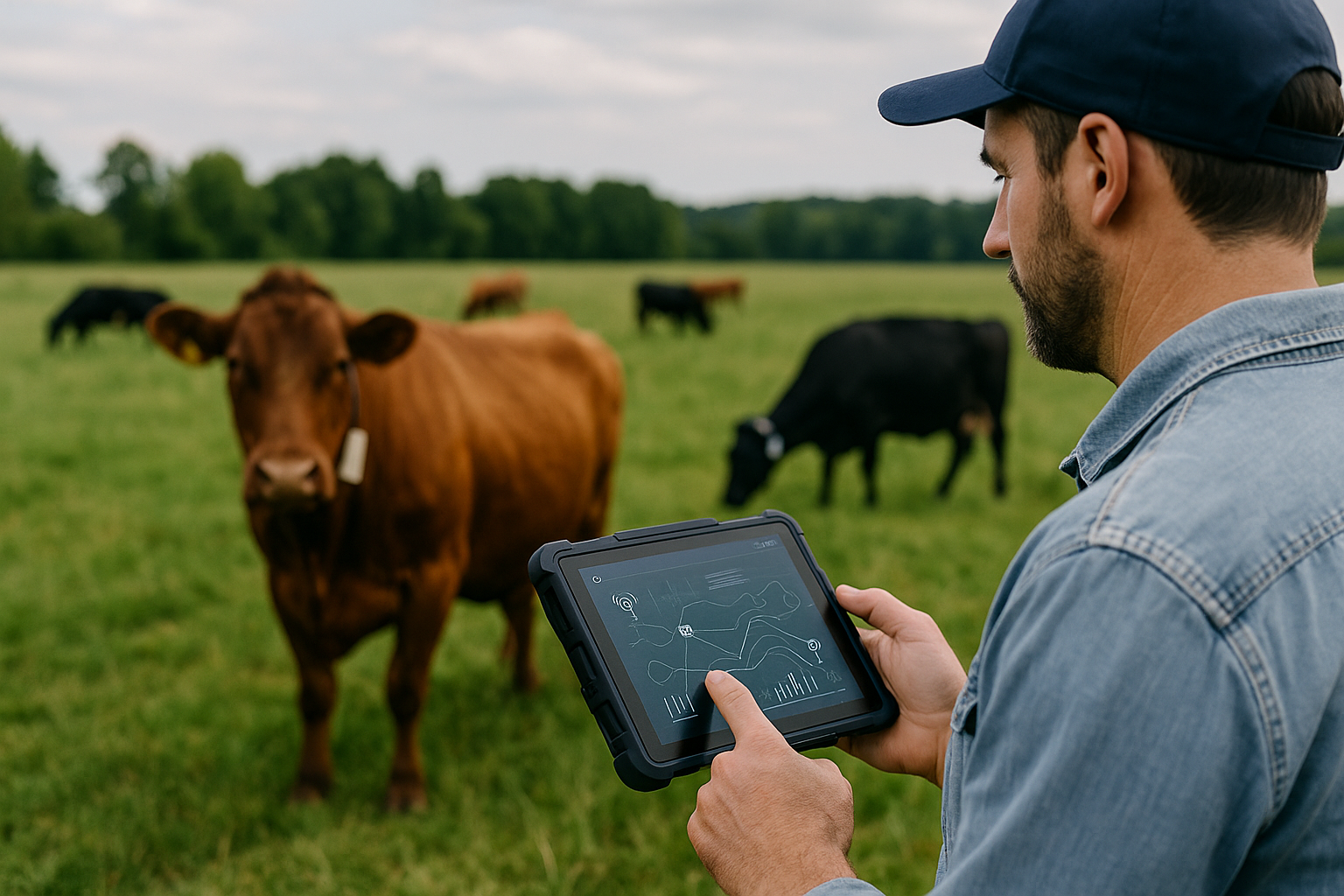
According to researchers, adopting automation and sensor-based technologies gives farmers the ability to control and manage herds more efficiently by providing abundant information about production, the herd, and individual animals. Without automation, simply keeping track of animals becomes impractical on large farms; monitoring each animal directly is difficult and can compromise the health and performance of the herd.
The emergence of the Internet of Things (IoT) and advanced GPS tracking has opened the door to smarter farming. By connecting animals, machines, and infrastructure to the cloud, IoT devices turn physical objects into digital entities—so-called digital twins. Sensors collect real-time data about location, health, and environmental conditions. Networks transmit this data to cloud platforms where analytics transform information into actionable insights. Farmers no longer guess; they know.Modern agriculture is undergoing a digital transformation. For centuries, farmers relied on experience and intuition to monitor livestock and manage equipment, but rising demand for agricultural products, climate change, and labour shortages have made traditional methods unsustainable. Farms have grown larger, herds have increased in size, and the margins for error have shrunk.
Challenges in Modern Agriculture
Modern farms face a myriad of challenges that range from labour shortages to environmental uncertainty. Operating costs have climbed steadily, while profit margins remain thin. Farmers must manage herds that number in the hundreds or thousands, maintain fleets of tractors, combines, sprayers, and irrigation systems, and make decisions that affect animal welfare, crop yields, and profitability. Without timely information, it is hard to optimise feed and water usage, maintain equipment, or identify health issues before they become crises.
Weather variability is another major challenge. Droughts, floods, and heat waves can devastate crops or stress animals, but the timing and severity of these events is increasingly unpredictable. Farmers must also contend with stricter regulations on animal welfare, environmental protection, and traceability; meeting these requirements demands accurate data and documentation. Finally, consumer expectations are rising. Buyers want assurance that food products are ethically produced, safe, and sustainable. These pressures have convinced many operators that "good enough" is no longer sufficient; they must adopt technologies that give them real-time insight and control.
IoT and GPS Transform Livestock Management
IoT devices make animals visible. Wearable devices such as ear tags, smart collars, or implantable sensors continuously measure vital signs and location. They track body temperature, heart rate, rumination, activity levels, and position to identify estrus, detect illnesses early, and prevent theft or wandering. By comparing animal behaviour against baseline patterns, machine-learning algorithms can flag subtle anomalies that human observers would miss. On dairy farms, automated milking systems with integrated sensors measure milk production and composition for each cow, helping farmers identify mastitis or nutritional problems sooner.
When data from these devices are transmitted to cloud platforms, farmers can monitor hundreds of animals from a single dashboard. GPS-enabled devices reveal where each animal is grazing and whether it has strayed beyond designated pastures; geofencing alerts are sent when livestock leave safe zones, helping farmers respond quickly and reduce labour. Remote monitoring also improves biosecurity. Farmers can isolate sick animals or adjust herd movements without unnecessary contact, reducing the spread of diseases.
IoT and GPS Transform Equipment Management
Beyond livestock, farm machinery and infrastructure can be instrumented with sensors that track performance and location. Modern tractors and combines come equipped with telematics units that report engine hours, fuel consumption, hydraulic pressure, and error codes. These metrics feed predictive maintenance models that schedule service before breakdowns occur, reducing downtime and extending equipment lifespans. Sensors on irrigation pumps and valves monitor pressure and flow, automatically adjusting water delivery based on soil moisture or weather forecasts. Sprayers outfitted with GPS guidance ensure that pesticides and fertilisers are applied with precision, reducing waste and environmental impact.
With GPS tracking, managers know where each piece of equipment is and how long it has been operating. This knowledge helps allocate assets efficiently across fields and reduces the risk of theft. When combined with soil and crop sensors, equipment data can be layered onto digital maps to plan field operations at the right times and places. For example, a combine equipped with yield monitors can create yield maps that guide variable-rate seeding and fertilising in future seasons. Over time, such data-driven practices lead to higher productivity and lower input costs.
Benefits of IoT-Enabled Agriculture
Implementing IoT and GPS solutions delivers a range of benefits:
- Improved animal welfare and productivity: Continuous monitoring allows farmers to detect health issues like lameness, heat stress, or calving difficulties early, improving recovery rates and reducing veterinary costs. Automated feeding and milking systems ensure animals receive consistent nutrition and care.
- Higher operational efficiency: Remote monitoring and automation reduce manual labour requirements. Farmers can manage larger herds with fewer workers and optimise equipment use, lowering fuel and maintenance costs. According to Eelink's overview of smart farming advantages, IoT sensors gather data on soil, weather, and livestock health, enabling real-time control, cost-effective processes, and automation that minimise human error
- Better resource management: Sensor data drives precision agriculture, ensuring water, fertiliser and energy are applied exactly where needed. When combined with weather forecasts, farmers can irrigate and harvest at optimal times to avoid losses. As Eelink notes, equipment tracking helps monitor run cycles and schedule preventative maintenance, while GPS devices alert stakeholders if livestock wander outside set boundaries.
- Traceability and compliance: IoT systems create digital records of animal movements, feed, treatments, and environmental conditions. This audit trail helps meet regulatory requirements and assures consumers that products come from ethical and sustainable sources.
- Enhanced decision-making: With comprehensive data, farmers can analyse trends, benchmark performance, and test new strategies. Data-driven insights lead to better breeding decisions, more accurate feed formulation, and optimised planting schedules.
Implementation Considerations
While the benefits are compelling, adopting IoT solutions requires careful planning. Farmers should begin with clear goals: Do they need better heat detection, automated feed management, or equipment tracking? The choice of devices depends on the species, farm size, and infrastructure. Ruggedness is essential—devices must withstand mud, rain, impact, and extreme temperatures. Connectivity options like cellular (2G, NB-IoT, LTE-M), LoRaWAN, or Wi-Fi should be assessed based on coverage and cost. Data security and privacy are critical; farms should ensure encrypted transmissions and restrict access to authorised personnel.
Integration is another challenge. Data from sensors, GPS units, and existing farm management software must be combined into a cohesive dashboard. Many vendors, including Eelink, offer cloud platforms that aggregate and visualise data from multiple devices, but some farms may need custom integrations. Staff training is also vital. Workers must learn to interpret dashboards, respond to alerts, and maintain equipment. Starting with pilot projects—perhaps instrumenting one herd or one piece of equipment—allows farmers to evaluate ROI before scaling up.
Case Study: A Smart Dairy Farm
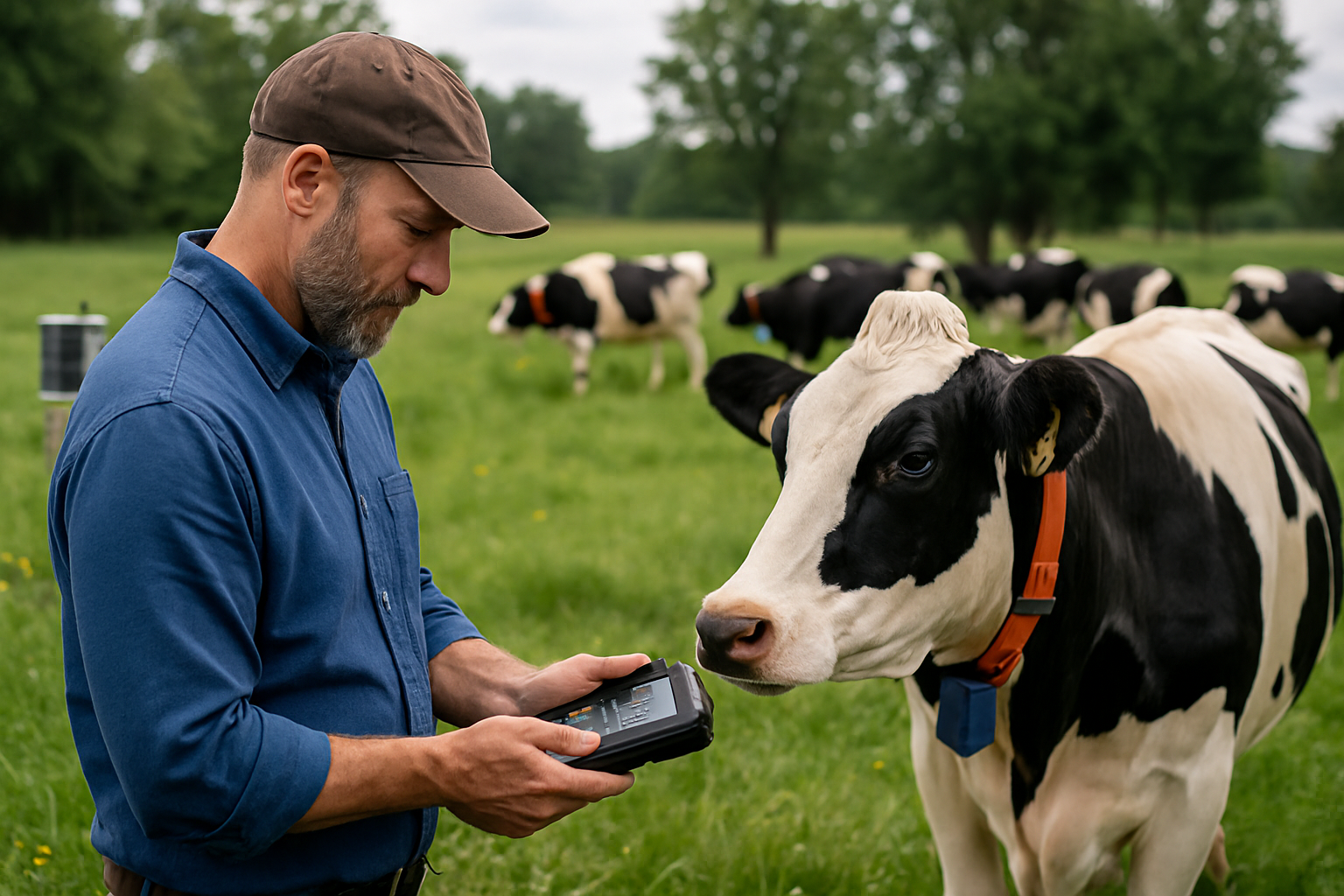
Consider a 500-cow dairy farm that installed smart ear tags, rumination sensors, and automated milking robots. Within months, the farm noticed fewer lameness cases and improved reproduction rates. Sensors detected subtle changes in activity that signalled heat cycles and health issues, prompting timely interventions. Milk yield increased as the robots monitored each cow's production and adjusted feed rations accordingly. By monitoring fertility indicators and scheduling insemination at optimal times, the farm improved pregnancy rates and reduced the calving interval. These improvements mirrored findings from researchers who noted that automation and sensor-based technologies provide dairy farmers with rich information for production】. Coupled with GPS-based geofencing, the farm also reduced incidents of cows escaping grazing boundaries and improved grazing management.
Future Trends and Innovations
The next decade will see even deeper integration of IoT, artificial intelligence, robotics, and connectivity. Edge computing will process data locally on farms, enabling faster alerts without reliance on cloud connections. Computer vision systems will analyse video from barn cameras to detect behaviours like lying, standing, or limping, providing another layer of health monitoring. Robotics will expand beyond milking to include autonomous feeding, mowing, and manure management. In crop production, drones equipped with multispectral sensors will map fields in high resolution, while self-driving tractors will plant and harvest with minimal human intervention.
New networking technologies like 5G and low-earth-orbit satellites will deliver reliable coverage to remote areas, enabling farmers to deploy more sensors without worrying about connectivity. Blockchain technology may provide secure, immutable records of product origin and handling, enhancing traceability. The concept of "digital twins"—virtual replicas of animals and equipment—will evolve to incorporate AI that continuously simulates scenarios and recommends actions. As more data is collected, predictive models will become more accurate, helping farmers foresee disease outbreaks, forecast yields, and optimise breeding programs.
Conclusion
IoT and GPS technology are transforming agriculture by giving farmers eyes and ears in places they could never reach before. With sensors on animals and equipment, real-time data flows into dashboards that reveal patterns, flag anomalies, and drive automated responses. Farms that embrace these tools benefit from healthier herds, more efficient operations, better resource management, and greater transparency for consumers and regulators. Challenges remain—choosing the right devices, integrating disparate data, and protecting privacy—but early adopters already see strong returns.
The digital transformation of agriculture is still in its early stages. As technology costs fall and connectivity improves, even small operations will be able to deploy smart collars, GPS trackers, and cloud analytics. For innovative farmers, the question is no longer whether to adopt IoT-based livestock and equipment tracking, but how to incorporate it into a long-term strategy for sustainable, profitable farming.