
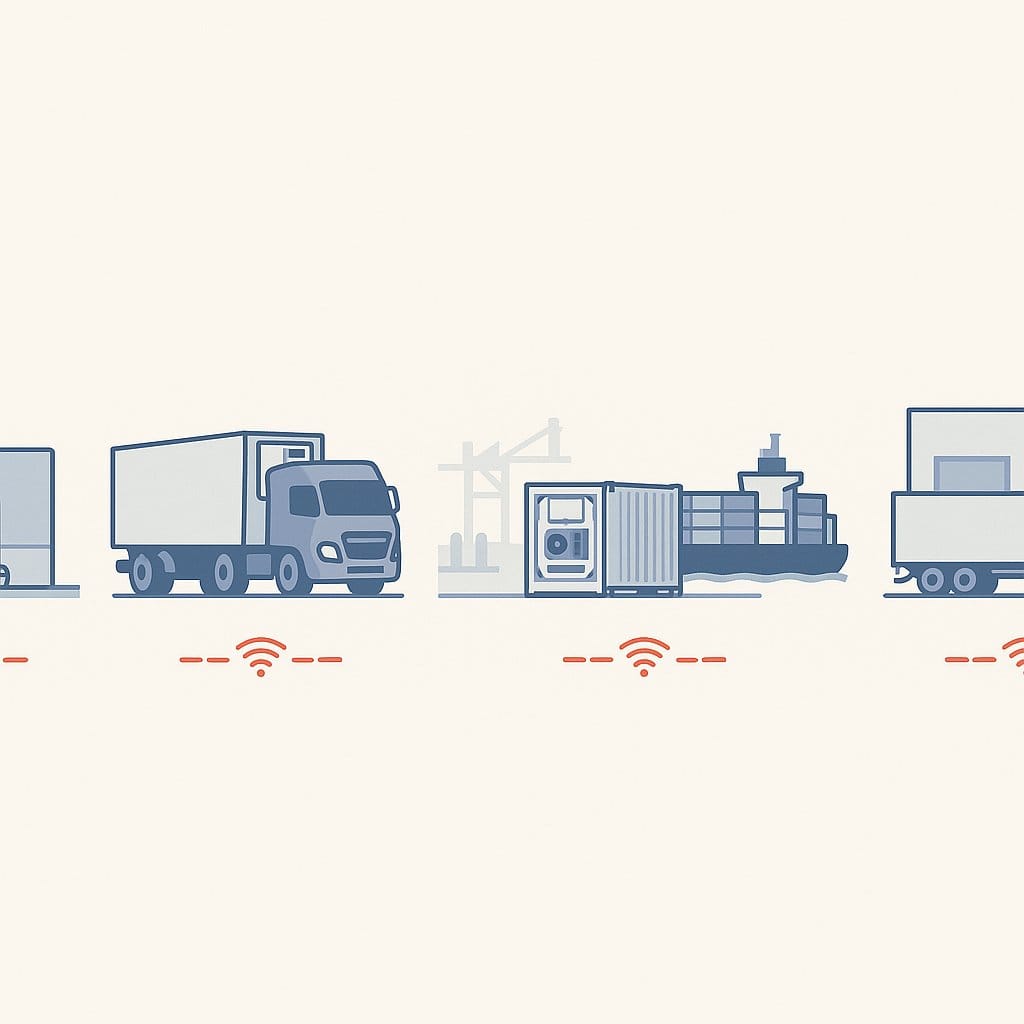
The reefer unit usually isn’t the problem. The gaps between custody are.
Ask a logistics team where their cold chain is most likely to fail, and most will point at the equipment: a reefer compressor that quits, a freezer that drifts overnight, a container that loses power at sea. Equipment failure is real. One analysis of cold chain incidents attributes roughly 31% of temperature excursions to mechanical malfunction. But many of the hardest failures to reconstruct don’t happen while a shipment sits inside one well-run system. They happen in the seams between systems, the moment a pallet changes hands.
Across IoT hardware deployments in global logistics, the same pattern repeats from vaccines to seafood: the box is monitored, the truck is monitored, the warehouse is monitored, and too often no single party keeps a continuous record of the shipment itself as it crosses from one to the next.
The cost is real. Industry estimates put global losses from temperature excursions, spoilage, and compliance breaches near $35 billion a year, and a 2025 cold chain logistics market analysis found that excursions touch an estimated 7–9% of cold shipments worldwide. Those are not edge cases; they are a recurring tax on the whole industry.
What is cold chain visibility?
Cold chain visibility is the ability to maintain a continuous condition record for a temperature-sensitive shipment, its location and its temperature, across every leg and every custody transfer, from packing to receipt. The defining word is continuous: not necessarily a live signal every second, but a record with no gaps, live where networks exist and autonomously logged and backfilled where they don’t.
A system that captures flawless data inside a trailer but goes dark the instant that trailer is unhooked produces snapshots with blind spots in between. And those blind spots line up almost exactly with where the risk lives.
Where does cold chain visibility actually break?
It breaks at the handoffs. The journey from pallet to container to reefer trailer is, underneath, a chain of custody transfers, and each transfer is a point where data continuity can snap. Studies of multimodal cold chain operations consistently flag these transition points, where cargo moves between carriers and between environmental-control systems, as the highest-risk periods for temperature excursions, and international, intermodal moves are the most fragmented of all.
It helps to walk the three classic transfer zones.
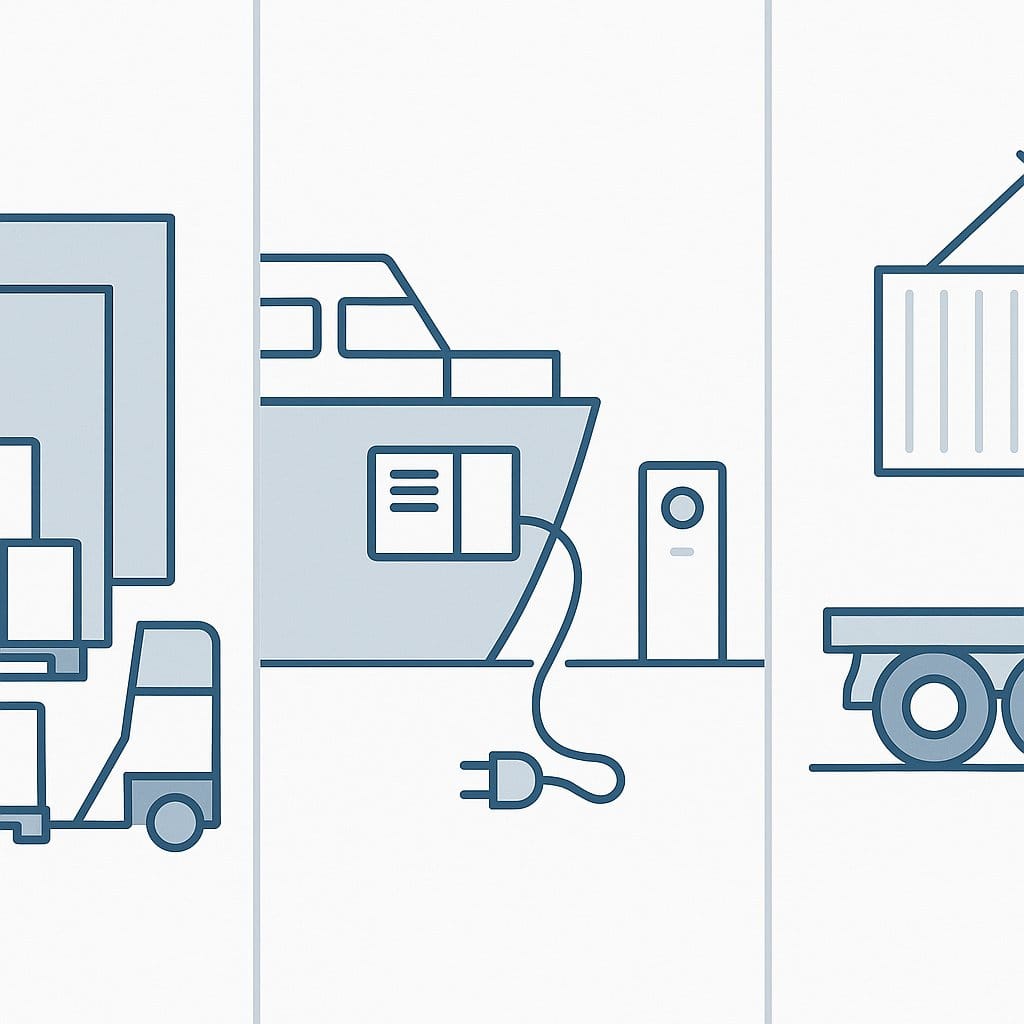
The dock: from pallet to vehicle
The standard pre-loading checks, confirming the equipment is pre-cooled and set to the range named in the shipping instructions (the load tender, the SOP, or the bill of lading), verify a starting condition. They say little about what happens once the doors close. A reefer is built to hold temperature, not to pull warm product down, so anything that isn’t already pre-conditioned starts the leg behind. The real exposure lives in the gaps: product staged in an ambient bay, a mismatch between staging temperature and product core temperature, the wait for a driver. None of that shows up on a setpoint check, and a signature on a custody form is a single point in time, not a record of the leg.
The ocean leg: container at port and at sea
A reefer container depends on shore power at origin, ship power at sea, and shore power again at destination. From a data standpoint, “connected to power” is a prerequisite, not proof: it shows current is flowing, not that the air around the cargo stayed in range. The least-visible moments are the most critical: unplugging from the vessel, transhipment between ships, a brief disconnect during terminal maintenance. For shipment-level devices that rely on cellular networks, live reporting stops mid-ocean; unless the lane uses satellite-enabled or carrier-integrated reefer telemetry, the condition history may only backfill once the box returns to coverage.
The drayage and trailer leg: container to trailer to DC
Drayage and intermodal are among the hardest legs to monitor cleanly, because they pull in the most parties and are prone to delay at every stage. Each transfer means a new carrier, a new system, and a fresh chance to lose the thread. By the time a shipment reaches the distribution center, it may have passed through four or five custody changes, each one a place where the record can quietly go blank.
Every handoff is a new carrier, a new system, and a new data-loss risk. Stitching five carriers’ logs together after delivery is not the same thing as a continuous record.
Why do the usual monitoring approaches miss the gaps?
Because most of what passes for cold chain monitoring is built around the asset or the leg, not the shipment, and that framing is why the gaps survive. A monitor bolted to a vehicle stops at the vehicle’s boundary; a log kept by one carrier ends at that carrier’s handoff. The goods keep moving; the data does not follow.
Manual logging, a driver noting the reefer’s display every few hours onto a custody form, is point-in-time, error-prone, and hard to verify. It also documents the wrong thing: the equipment’s reading, not the condition of the cargo.
Single-mode telematics track one carrier’s leg and stop at that carrier’s boundary. They are useful within the leg, but they were never designed to follow goods across a handoff.
Asset telematics on the reefer or container monitor the unit’s setpoint and power state. That matters for the equipment, but the setpoint is not the same as the air around the product: return-air and supply-air readings differ, probe placement and airflow obstruction skew the number, and events like defrost cycles or door openings may be missing from basic feeds or invisible to whoever is reviewing the shipment’s record. And the monitoring goes silent the moment the goods leave that unit.
The result is a market that monitors a great deal and still flies partly blind. In a 2025 temperature-controlled 3PL guide, only 23% of shippers said they were confident their current 3PL had adequate temperature control, a striking number for a service whose entire premise is keeping things cold.
| Monitoring approach | Covers handoffs? | Data continuity | Audit-ready record | Who holds the data |
|---|---|---|---|---|
| Manual custody forms | No | Point-in-time only | Weak, manual, unverifiable | Carrier / driver |
| Asset telematics (reefer / container unit) | Partial — only while attached | Breaks at unhook | Equipment-level only | Carrier / leasing co. |
| Single-mode TMS feeds | Per-leg only | Breaks at each handoff | Fragmented across systems | Each carrier |
| Shipment-level monitoring | Can cover handoffs if device placement, data access, and backfill are defined | Continuous across modes | Complete record possible | Set by contract, not automatic |
What does genuinely continuous visibility require?
It requires changing the unit of measurement from the vehicle to the shipment. If the failure mode is the handoff, the answer is not another isolated dashboard. It is a custody model in which condition data travels with the goods, logging continues through network gaps, and every party knows who owns the record. A few design principles follow, none tied to any one product:
- The monitor travels with the goods, not the vehicle. Coverage that ends at a custody boundary keeps the same blind spots; a monitor riding with the pallet or carton crosses those boundaries with it.
- Logging is autonomous, not connectivity-dependent. There is no live signal mid-ocean or in a dead zone, so readings are captured and stored on the device, then backfilled when a connection returns, with the original capture timestamps preserved.
- The data is standardized across modes, normalized into one timeline rather than a pile of incompatible logs.
- It measures condition, not just location and power, sensing temperature, and often humidity, light, and shock, near the product.
- Alerting fits the network. Where connectivity exists, exception-based alerts surface a drift while the shipment is still moving; where it doesn’t, autonomous logging preserves the record for investigation and claims.
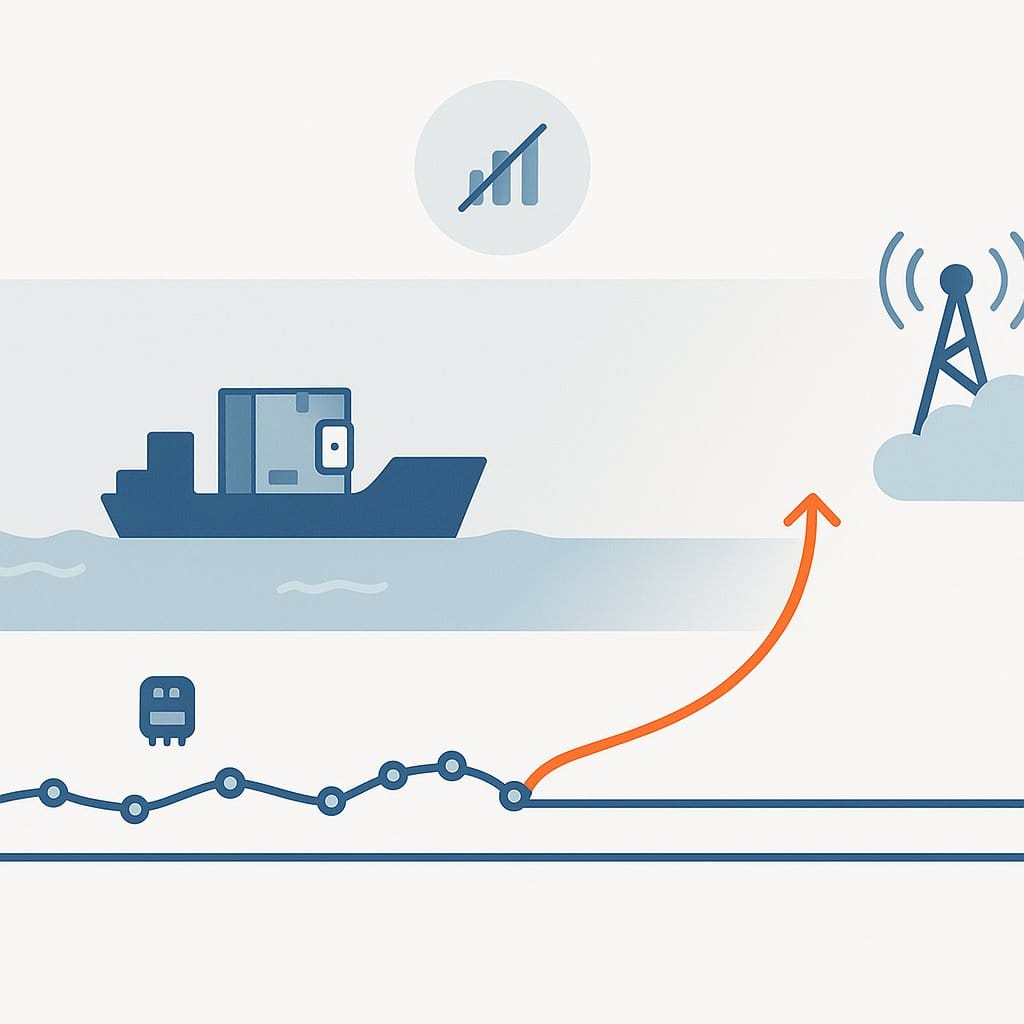
The reefer keeps the product cold. A condition record shows when it didn’t, and, where the network allows, in time to act. Those are two different jobs, and the second one fails most often at the handoffs nobody owns.
What does this mean for 3PLs, carriers, and shippers?
The same gap lands differently on each party — the shipper, the carrier, the 3PL — but it lands on everyone. Each holds a different piece: the party with the liability, the party increasingly asked to prove conditions rather than just report status, and the party sitting on the handoffs where the record tends to break.
Shippers carry the product and the regulatory exposure but usually not the data; it’s scattered across every carrier they touched. Holding a single shipment-level record changes the shipper’s position in a rejection dispute and in an audit. Regulators have been moving this way for years: transportation and records requirements under the FDA’s Food Safety Modernization Act have pushed food shippers toward stronger documentation of temperature-control procedures and custody, and its Food Traceability rule (FSMA 204) adds traceability records for certain foods. In pharmaceuticals, EU Good Distribution Practice and WHO GDP place heavier emphasis on documented temperature control, qualification, deviation handling, and defensible records.
For carriers, the same shift is an opening rather than a burden: a cleaner, gap-free condition record can reduce disputes when cargo is rejected despite arriving in range, and it is becoming something shippers ask to see.
3PLs are often in the best position to coordinate continuity across the legs they manage. But the responsibility has to be explicit in contracts, SOPs, and data-access rules, because control may sit with the shipper, a forwarder, a carrier, or the quality owner depending on the lane.
A note on cost, since the figures get quoted loosely. In high-value pharmaceutical and life-sciences lanes, a single temperature excursion can run into six figures; some 3PL guidance places the range around $100,000 to $500,000. In food and beverage, which makes up the bulk of cold chain demand, the loss usually shows up as spoilage, rejection, demurrage, and recalls rather than one six-figure event. Either way, the bill is large enough that the blind spots are worth closing.
What are the most common questions about cold chain visibility?
A few questions come up in almost every conversation with operators trying to close their gaps. These are the ones worth answering directly, because the wrong assumption about each is what tends to leave shipments unmonitored at the moments that matter most.
What is cold chain visibility?
Cold chain visibility is a continuous condition record, location and temperature, for a shipment across every transport leg and custody transfer, from packing to receipt. The defining feature is a gapless record: live where networks exist, autonomously logged and backfilled where they don’t.
Where does the cold chain most often fail?
At the transition points between systems, the handoffs between carriers and between environmental-control systems, rather than inside a single well-run leg. These are among the highest-risk windows for temperature excursions and the points where tracking data most often breaks.
Isn’t monitoring the reefer unit enough?
Not on its own. Asset telematics report the equipment’s setpoint and power, which is useful but incomplete: the setpoint is not the air around the product, and the monitoring ends the moment the goods leave the unit.
Why do manual temperature logs fall short for compliance?
A reading copied off a display every few hours is point-in-time, manually entered, and hard to verify, and it captures the equipment’s number rather than the cargo’s condition. Auditors increasingly expect a continuous, tamper-resistant record instead.
What’s the difference between asset tracking and shipment-level monitoring?
Asset tracking follows the vehicle or container; shipment-level monitoring follows the goods. At handoffs, that distinction decides whether the record stays continuous or resets, though shipment-level monitoring only delivers it if device placement, data access, and backfill are actually defined.
What are the key takeaways?
The cold chain doesn’t only fail where people are looking. Many of the hardest failures to catch happen in the gaps between systems, where no single party owns the record — and closing those gaps is less about better equipment than about following the shipment instead of the vehicle.
- The hardest failures to detect and to prove tend to occur at handoffs between custody, not inside well-run equipment.
- “Reefer at setpoint” and “connected to power” are prerequisites, not proof the product stayed in range.
- Manual logs and single-mode telematics produce snapshots with blind spots; intermodal and international moves are the most fragmented.
- A continuous record means the monitor travels with the goods, logs autonomously through dead zones with original timestamps, and normalizes into one timeline across modes.
- For shippers the issue is owning the record; for carriers and 3PLs, gap-free continuity is increasingly something they are asked to provide, and responsibility for it has to be written down.
For teams working through where their own cold chain goes dark — and which handoffs they actually own — the first step is mapping each custody transfer against who holds the record. To compare notes on that mapping, get in touch.
The figures here are directional industry estimates drawn from 2025 cold chain market and 3PL analyses — useful as orders of magnitude, not audited benchmarks.