
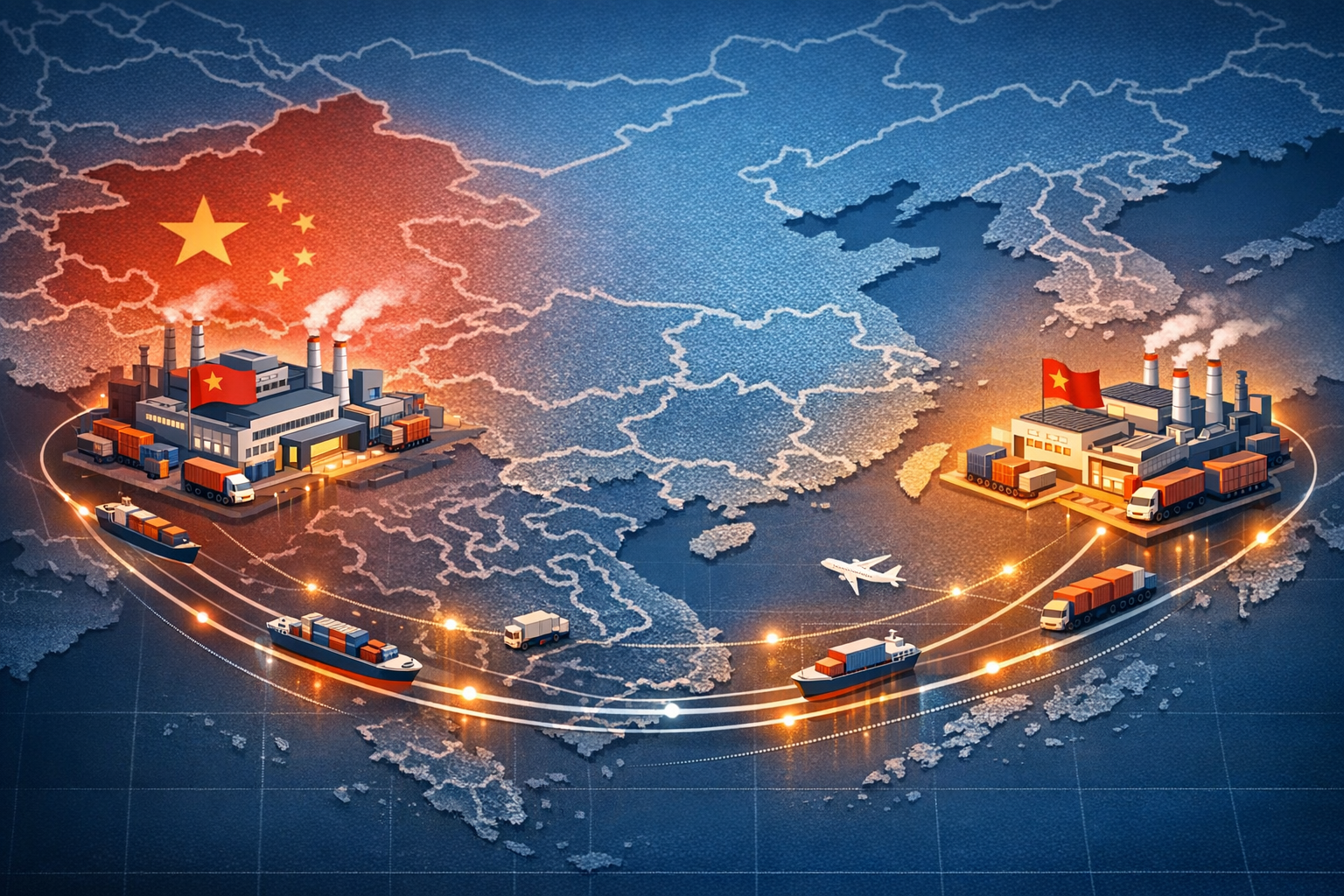
Building Resilient Supply Chains: Diversifying Manufacturing in China and Vietnam
Global supply chains have faced significant challenges in recent years. Trade tensions, pandemics, and shifts in consumer demand have underscored the need for companies to evaluate where and how they manufacture critical components. For B2B customers deploying industrial‑grade IoT tracking hardware, on‑time delivery at scale requires more than thoughtful product design – it depends on building resilience into the manufacturing footprint. One way to achieve that resilience is by diversifying production across multiple locations, rather than concentrating all manufacturing in a single country.
Labour cost and workforce dynamics
China has dominated high‑tech manufacturing thanks to its extensive infrastructure and deep expertise. That strength comes at a cost: the average hourly wage for manufacturing workers in China was around US$6.5 in 2020, reflecting a mature and skilled workforce. Vietnam, by comparison, offers labour costs that are roughly half that level at about US$3 per hour, making it attractive for labour‑intensive assembly work. Importantly, Vietnam is investing in vocational training programmes that are producing a sizeable, well‑educated workforce prepared for industrial roles. When selecting manufacturing partners, it is critical to assess not only wages but also the availability of trained workers and the long‑term sustainability of labour supply.
Manufacturing capabilities and quality
China remains the world’s largest manufacturing economy; it produced more than one‑quarter of global high‑tech exports in 2023. The country’s factories span consumer electronics, advanced machinery, and everything in between. Vietnam, historically known for textiles and footwear, has been moving up the value chain. Major firms such as Samsung, LG Electronics, Nokia and Intel have invested billions of dollars to build factories there. Vietnamese manufacturers are aligning their production standards with international benchmarks – around 60 percent of national standards are now harmonised with global norms. While both countries have improved their quality control systems, due diligence and supplier vetting remain essential to ensure consistent quality and regulatory compliance.
Logistics and shipping realities
China’s logistics sector is vast: thousands of shipping companies and forwarders move millions of tonnes of cargo every year, helping keep freight rates competitive. Vietnam’s shipping industry is smaller but increasingly competitive; ocean freight from Vietnam to the United States generally takes 24–41 days, similar to shipments from China. However, the surge of companies adopting a “China Plus One” strategy has strained some Vietnamese ports. In 2024 the average transit time for apparel shipments from Vietnam to the U.S. nearly doubled as ports operated beyond their design capacity and dockworker shortages and stricter customs inspections caused delays. These challenges illustrate why relying on a single country is risky – bottlenecks or policy changes in one location can ripple through the entire supply chain.
Why diversification matters
Operating factories in both China and Vietnam isn’t just about spreading risk – it offers strategic advantages for customers who depend on timely deliveries of custom IoT tracking devices. By splitting production between the two countries, companies can:
- Optimise costs: labour‑intensive processes can be performed in Vietnam to take advantage of lower wages, while highly automated or technology‑intensive operations remain in China.
- Balance capacity: surges in demand or unexpected shutdowns in one region can be absorbed by shifting work to the other factory.
- Mitigate geopolitical and regulatory risks: trade disputes or sudden regulatory changes in one country have less impact when production is geographically diversified. Diversification is not about avoiding duties; rather, it provides flexibility to adapt to evolving policies while complying with all applicable trade laws and rules of origin. Transshipment is legal in international logistics but becomes unlawful if used deceptively to evade tariffs or trade restrictions. Companies should therefore ensure that goods are accurately labelled, meet local value‑added requirements, and follow proper documentation procedures.
- Enhance supply‑chain resilience: dual manufacturing enables flexible shipping routes, allowing companies to pivot between ports and carriers if congestion or strikes appear.
Engineering discipline meets supply‑chain strategy
Dual manufacturing only works when combined with disciplined engineering. Our product development follows rigorous engineering verification testing (EVT), design validation testing (DVT), and production validation testing (PVT) stage‑gates. We design hardware for testability and reliability and build traceability into every device that leaves the factory. These processes ensure that prototypes mature into production‑ready products and then are manufactured consistently across two facilities. Clear traceability and transparent record‑keeping are also essential to demonstrate compliance with rules of origin and customs requirements.
Visualising the difference
The chart below illustrates why blending capacity across China and Vietnam makes sense. Labour costs differ significantly, yet shipping times remain similar. By leveraging both locations, companies can achieve a balance of cost efficiency and timely delivery that neither country alone can guarantee.
Conclusion
Building resilient supply chains requires deliberate decisions about where to invest, how to manage risk, and when to diversify. For B2B customers deploying industrial IoT tracking hardware, a diversified manufacturing strategy offers a pragmatic path forward. It harnesses the scale and technical maturity of China while drawing on Vietnam’s cost advantages and agility. Importantly, diversification supports compliance with evolving trade regulations; it is not a means to avoid duties. By investing in transparent supply chains and adhering to regulatory requirements, companies can build networks designed not only to survive the next disruption but to deliver reliably for years to come.