

Walk around any large yard full of containers or trailers and you'll notice a simple pattern: some GPS trackers are still doing their job, some are damaged or missing, and many assets have no tracker at all. The technology exists to track things, but field teams are often busy doing other work. Swapping batteries, checking SIM cards and rebooting frozen devices sounds trivial until you factor in safety rules, travel time and the sheer number of assets out there.
Our team at Eelink set out to design a tracker that would rarely need human attention. The GPT12‑X Ultra doesn't just have a bigger battery or a more modern modem – it reflects dozens of small design decisions aimed at staying on an asset for years at a time. This post is not a spec sheet; it's a set of field notes about what we learned when long life is not a marketing bullet but a hard requirement.
The real cost of field maintenance
During early research we heard the same story again and again: technicians spend more time touching trackers than actually learning from the data. Climbing under a trailer with a tool belt, bringing an asset back to a depot, obtaining yard access or waiting for the right moment in a port schedule all add up. A twenty dollar battery change can easily cost a hundred dollars in labour and downtime. When you multiply that across thousands of assets, the economics of tracking start to look fragile.
That insight led us to a blunt goal: once installed, a tracker should be left alone for several years. Everything from the communications protocol to the way we write debug logs had to support that goal. Many features that felt "nice to have" in the lab were dropped because they would shorten
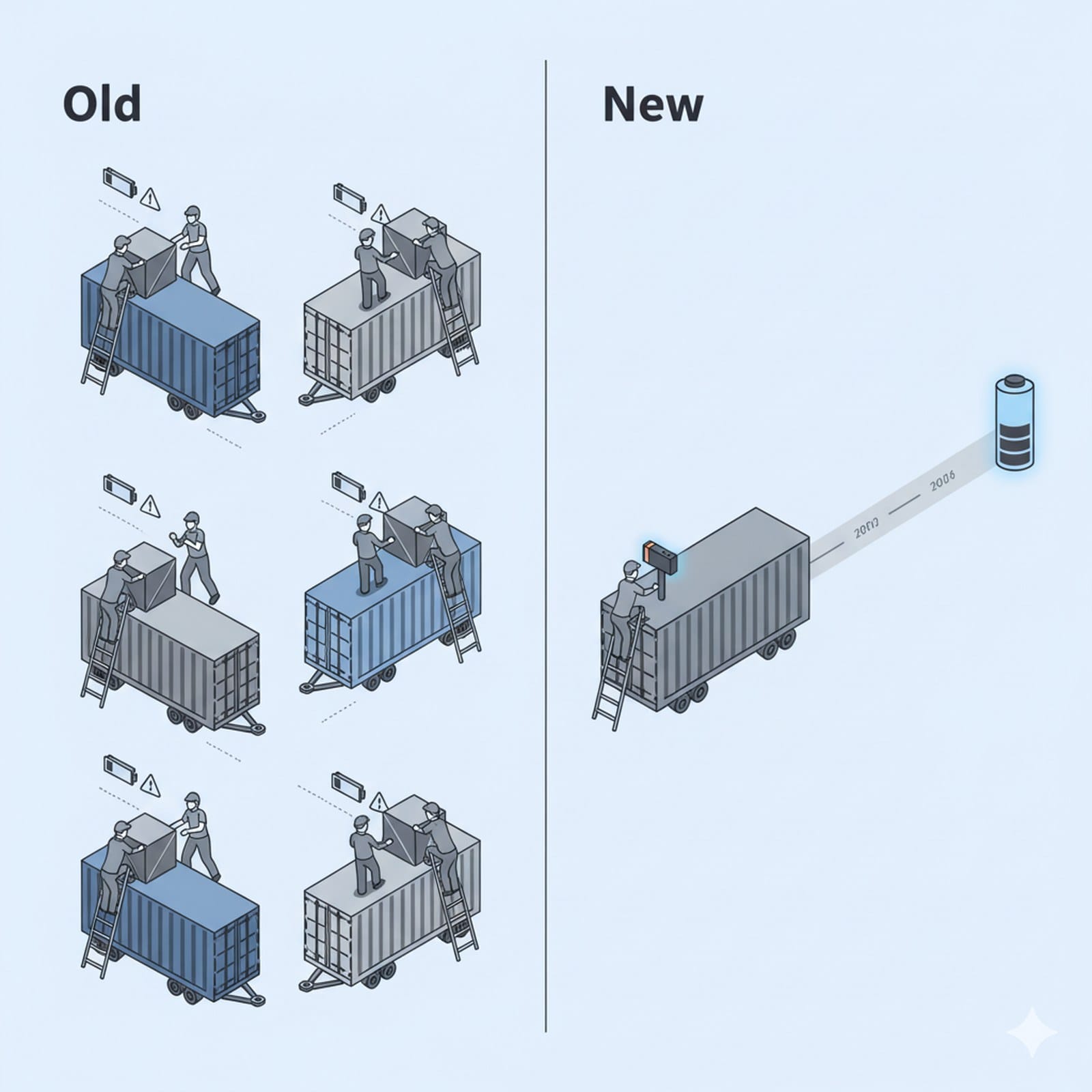
Choosing a primary battery and living with its constraints
We chose a 5000 mAh primary lithium‑manganese cell for GPT12‑X Ultra. It can't be recharged, but it offers low self‑discharge and good performance across temperature extremes. Making that choice forced discipline. There is no constant LED to reassure you, no permanent network connection keeping the radio warm. We placed strict limits on how long the GNSS can hunt for satellites and how often the modem wakes up.
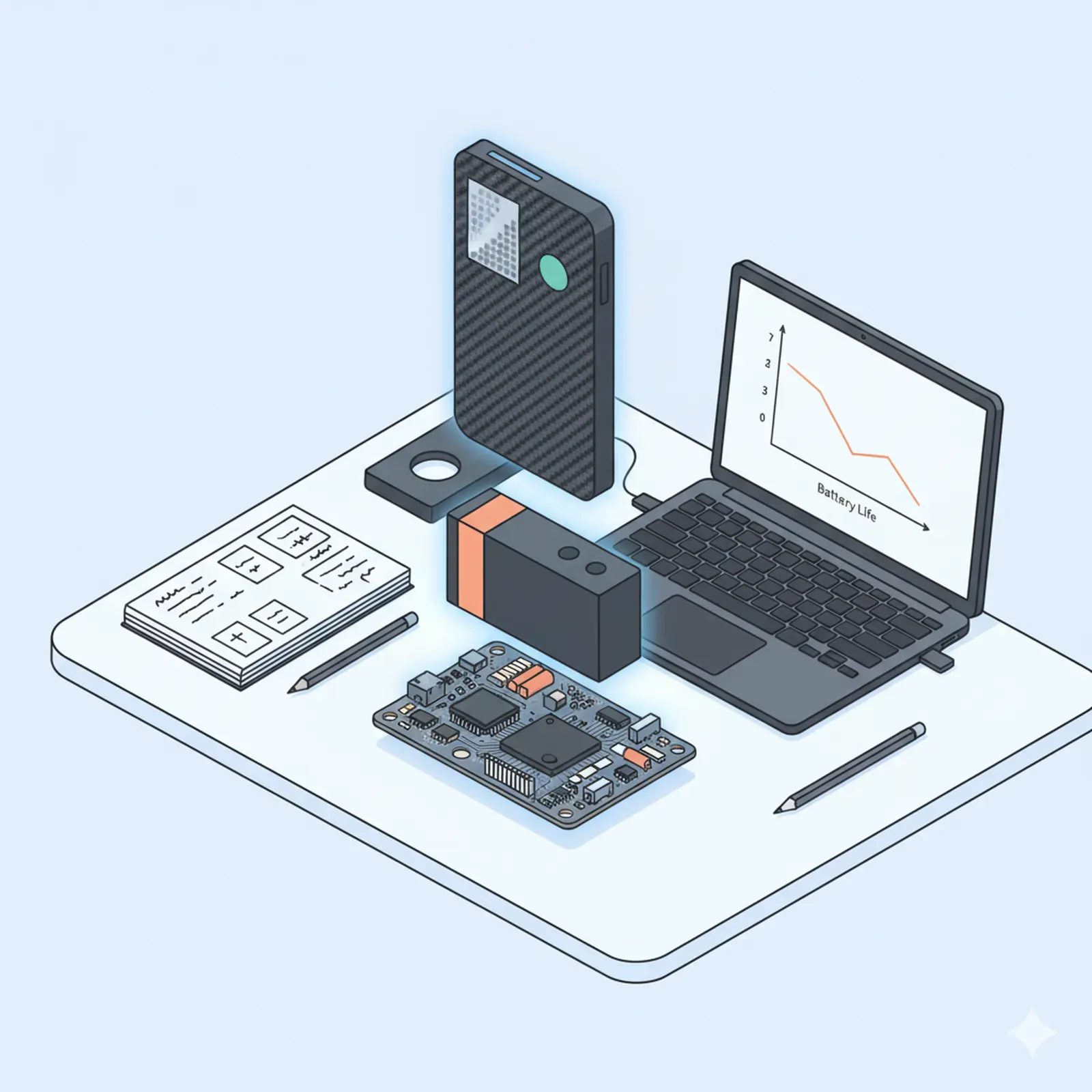
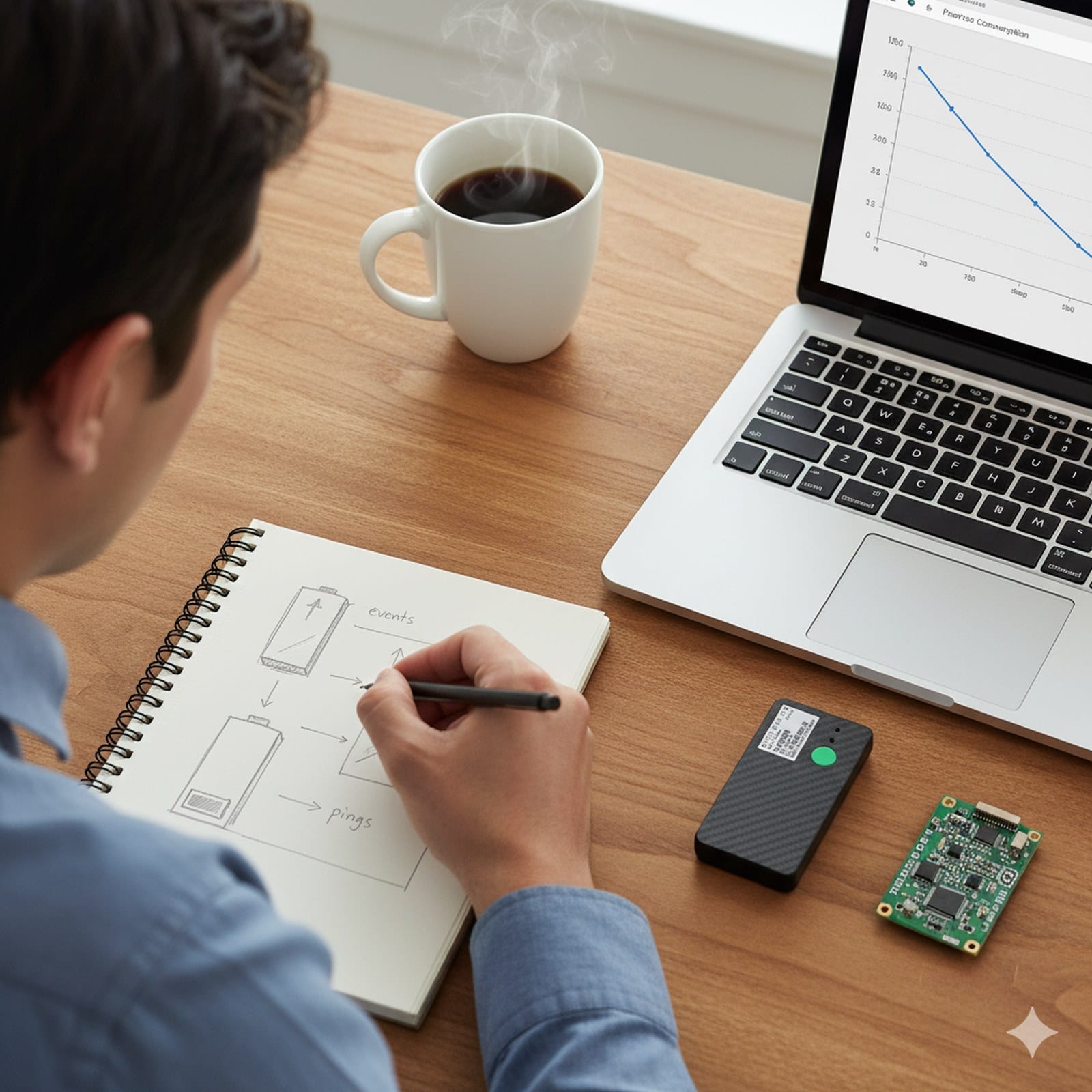
In the lab we built early prototypes that updated position every few minutes. On a static bench the numbers looked fine. When we simulated a real drive with intermittent coverage, poor sky view and lots of motion triggers, the battery curves dropped sharply. That experience convinced us to switch from "as much data as possible" to "as much data as you actually need".One integrated SiP, many benefits
Instead of stitching together a separate modem, GNSS module, MCU and security chip, we built around Nordic’s nRF9161 system‑in‑package. The benefits go beyond a smaller PCB. When your application, radio and GNSS live on the same piece of silicon, you can orchestrate sleep and wake cycles without juggling multiple power domains. There are fewer solder joints to fail after years of vibration and temperature swings, and firmware upgrades cover the whole stack, not just one component.
Security also comes built‑in. TrustZone and hardware crypto blocks let us secure the boot process and encrypt traffic end‑to‑end. That matters when you expect hardware to live in the field for five years or more – over‑the‑air (OTA) updates are not optional, and you want confidence that those updates can't be
.
Event‑driven firmware: sending data only when it matters
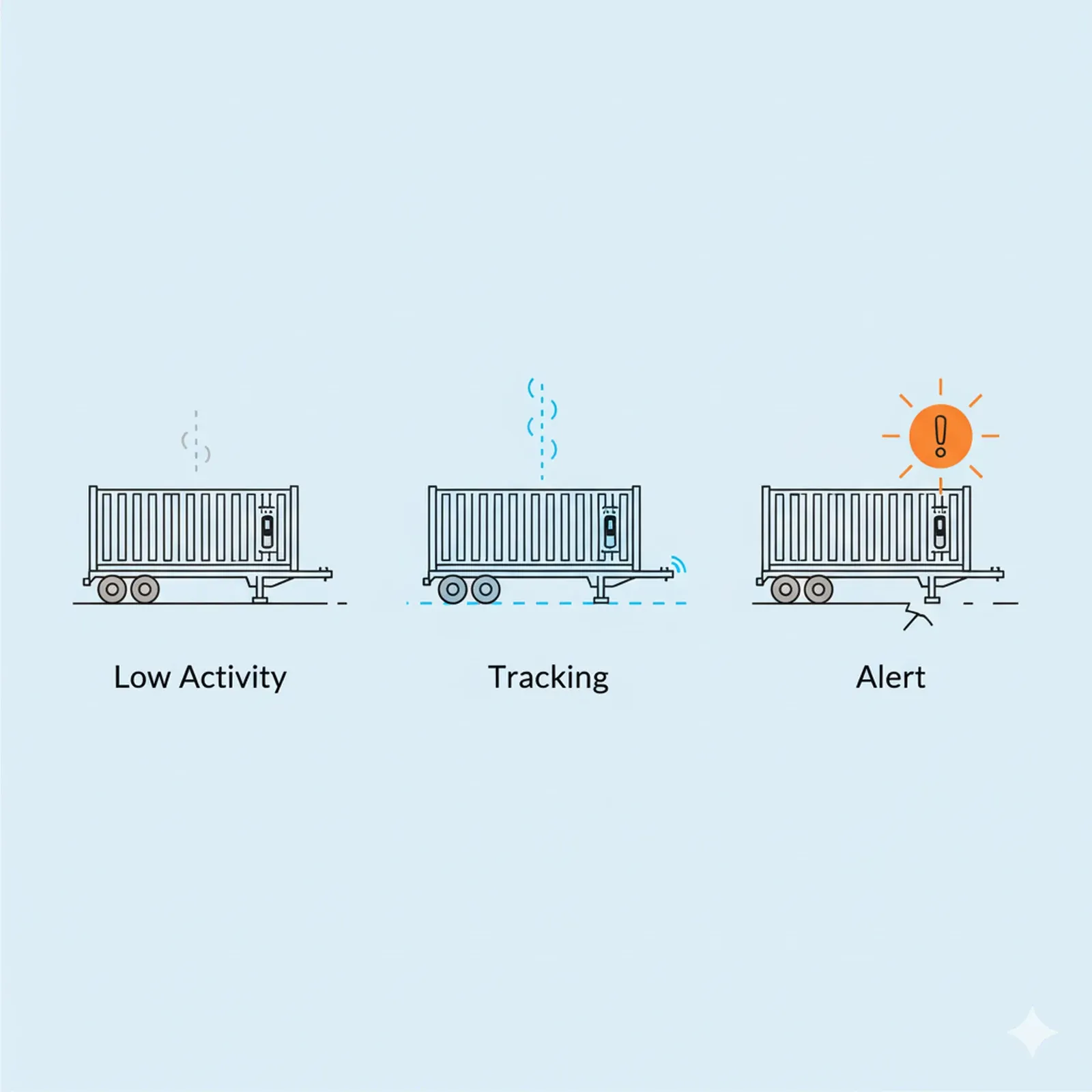
Many people imagine a GPS track as a smooth line of dots, like a blue trail in a mapping app. For a battery‑powered tracker that mindset is deadly. The biggest power savings come from letting the device sleep deeply and only waking it when something meaningful changes. In GPT12‑X Ultra the accelerometer acts as a gatekeeper: when the asset is idle, the device sleeps and sends only infrequent heartbeats. When motion is detected, the firmware switches automatically into a trip profile with more frequent reporting. Once the movement stops, it dials back again.
On the network side we lean heavily on LTE‑M and NB‑IoT power‑saving features like PSM and eDRX. These modes allow the tracker to stay registered while shutting off its receiver for long intervals. Commands from the platform are queued and delivered during scheduled listening windows. If a shipment is missing or at risk, the platform can remotely instruct the device to enter a high‑frequency mode for a defined period.
A quiet sensor set: GNSS, accelerometer and light
When people hear "tracker" they often ask for extra sensors: temperature, humidity, door switches, cameras. We decided early on that every sensor should earn its place. More sensors mean more data to transmit, more wires to break and more battery drain. GPT12‑X Ultra sticks to a very small set: multi‑constellation GNSS for position, a three‑axis accelerometer for motion and shock, and a light sensor for tamper detection.
The light sensor is perhaps the most underrated. Under normal installation it sees darkness. If someone removes the device or opens a cabinet where it is hidden, the sudden change in light level is obvious and triggers an instant alert. It's a cheap, reliable way of answering the question "has anyone touched my tracker?" without needing magnets or micro‑switches.
Housing and mounting: small decisions, big consequences
You can build the smartest electronics in the world and still fail if the housing and mounting don't suit the real world. GPT12‑X Ultra had to be thin enough to hide under a trailer beam or behind a panel, rugged enough to survive rain and road spray, and easy enough for non‑engineers to install. We went through several revisions where water pooled in the wrong places or the unit was too tall for certain clearances.
Mounting options matter, too. We provide adhesive pads, screw holes and magnet brackets so fleets can choose what works best. Our documentation includes photos of actual installations, not just diagrams. When a device is meant to disappear into a workflow for years, the physical design is just as important as the silicon inside.
Lessons from our early pilots
Our first pilot customers taught us that long battery life is meaningless if the data does not answer operational questions. One customer installed trackers on a few containers but left the reporting profile at a conservative default. Months later they complained that the data wasn't useful: they didn't know exactly when a unit left the yard or who moved it between locations. We worked with them to create customised modes: a yard inventory mode with idle heartbeats and entry/exit events, a trip mode with higher frequency while in motion, and a security mode with aggressive tamper and shock alerts but minimal background reporting.
We also learned that integration matters. Some customers were happy using our cloud platform; others pulled data straight into their own TMS. For the second group the main requirement was stability: the tracker should behave like a quiet, predictable data source that doesn't monopolise bandwidth.
Planning your own long‑life IoT rollout
If you're considering multi‑year trackers, a few questions are worth asking at the beginning:
- How often will you realistically touch each device? If the answer is "only when it breaks", let that guide every design decision.
- Which events actually matter? For most logistics applications, the moments when an asset is loaded, unloaded, delayed or tampered with are more important than constant breadcrumbs.
- Do you have a secure OTA path? Networks change, security standards evolve. Make sure your devices can be updated remotely for the next decade.
- Can non‑specialists install it? If only one engineer knows how to mount the tracker correctly, your deployment will stall as soon as that person is busy.
- Have you tested worst‑case conditions? Simulate poor coverage, extreme temperatures and repeated motion triggers to understand how your power budget holds up.
Looking ahead
Long‑life trackers are not magic: they are the result of dozens of small, stubborn decisions to save energy, reduce complexity and resist the urge to do "just one more thing." The quiet success of GPT12‑X Ultra is that it disappears into an asset's life. Weeks or months go by with no interaction, and then, when something unexpected happens, the device wakes up and delivers exactly the information you need.
If you are exploring ways to bring this kind of ultra‑low‑touch tracking into your own fleet or equipment, I hope these notes help you avoid some of our mistakes and build on our lessons. Feel free to reach out for a deeper conversation about the messy reality behind the marketing slides.