
Battery compliance isn’t just a matter of filling out forms when your hardware is ready to ship; it’s a set of design choices that ripple through every stage of an IoT tracker’s life. Whether you are integrating a primary lithium cell into a remote asset tracker or architecting a rechargeable pack and charger for a fleet of logistics devices, regulatory standards and safety tests should shape your architecture from day one. When compliance is treated as an afterthought, the impact is felt in delays, re‑testing costs and cancelled shipments.
This article demystifies the landscape of standards, test regimes and documentation around lithium batteries. It walks through chemistry selection, mechanical design, firmware behaviors, shipping logistics and documentation management – all framed for field engineers who are building cellular asset trackers. You’ll also find a short FAQ at the end to answer common operational questions.
1. Navigating the Three Compliance Lanes
Lithium battery regulations are often lumped together, but in practice three distinct “lanes” run in parallel. Each lane has its own tests and paperwork, and each may involve different internal teams and external labs. The lanes are:
- Battery and device safety: Rechargeable packs based on lithium‑ion or lithium‑polymer chemistries must satisfy the requirements of IEC 62133‑2, which covers protection circuitry, over‑charge abuse, short‑circuit tests and mechanical abuse. Primary lithium cells such as Li‑MnO₂ or Li‑SOCl₂ align with IEC 60086‑4, focusing on safe performance under normal and misuse conditions. Device‑level standards (e.g., IEC 62368‑1 for IT equipment) reference but do not replace battery safety tests.
- Transport regulations: Every lithium cell or pack that flies must be tested under UN 38.3, a sequence of eight tests (altitude, thermal cycling, vibration, shock, external short circuit, impact/crush, overcharge and forced discharge) that demonstrate robustness during transport. Airlines and freight forwarders typically request a UN 38.3 test summary in addition to the full report. Classification under IATA PI 965–970 then determines packaging, labeling and whether the shipment can travel on passenger aircraft.
- Market access and certification: EMC, RF and cellular approvals (FCC, IC, CE, UKCA, RCM) are not battery tests, yet they influence firmware behavior and sometimes drive battery variant choices. Cellular devices may also need PTCRB/GCF certification. These approvals are often handled in a separate track with their own test labs.
Keeping these lanes aligned on the product schedule is key. A slip in one lane often cascades into others; for example, changing a pack vendor late in a project can reset both safety and transport testing.
2. Choosing the Right Chemistry for the Job
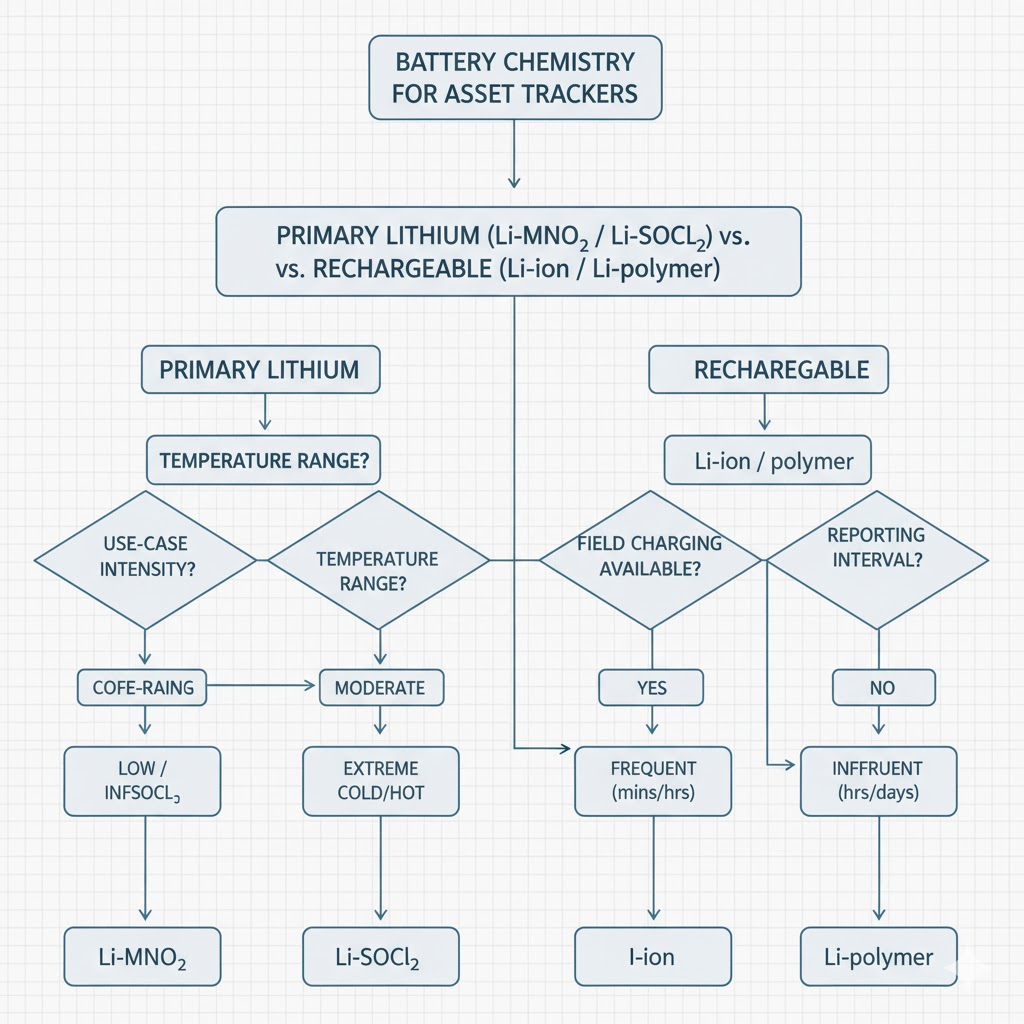
Battery chemistry defines more than energy density; it influences thermal tolerance, self‑discharge, permissible depth of discharge during shipment and even radio design. Avoid choosing a chemistry “because we always used it.” Instead evaluate your use case against the strengths of primary and rechargeable lithium chemistries:
- Primary lithium (Li‑MnO₂ / Li‑SOCl₂) offers very low self‑discharge and broad operating temperatures. This makes it ideal for multi‑year standby devices that operate in harsh outdoor conditions and have no field charging infrastructure. The trade‑off is that there is no recharge, so designs that report frequently will drain early. Compliance follows IEC 60086‑4 and UN 38.3 with lithium metal UN codes.
- Rechargeable lithium (Li‑ion / Li‑polymer) supports bursty data and frequent reporting when users can recharge the device. You must design protection circuitry and define a shipping state of charge (SoC) to meet IEC 62133‑2 requirements. The pack must also offer the ability to discharge to the prescribed SoC after end‑of‑line testing so that units ship safely.
Another important consideration is the 100 Wh boundary: exceeding 100 Wh pushes the pack into a different regulatory class with stricter packaging and labeling rules. For primary lithium, pay attention to the lithium metal content; crossing certain gram limits similarly affects how you ship.
3. Designing for UN 38.3 Test Success
Many teams treat UN 38.3 as something to schedule right before first shipment. It should instead inform your mechanical and electrical design from the start. Passing UN 38.3 means the pack and enclosure survive shock, vibration, temperature cycling and crush tests without venting, catching fire or showing dangg dangerous deformation. Practical tips inclue::.
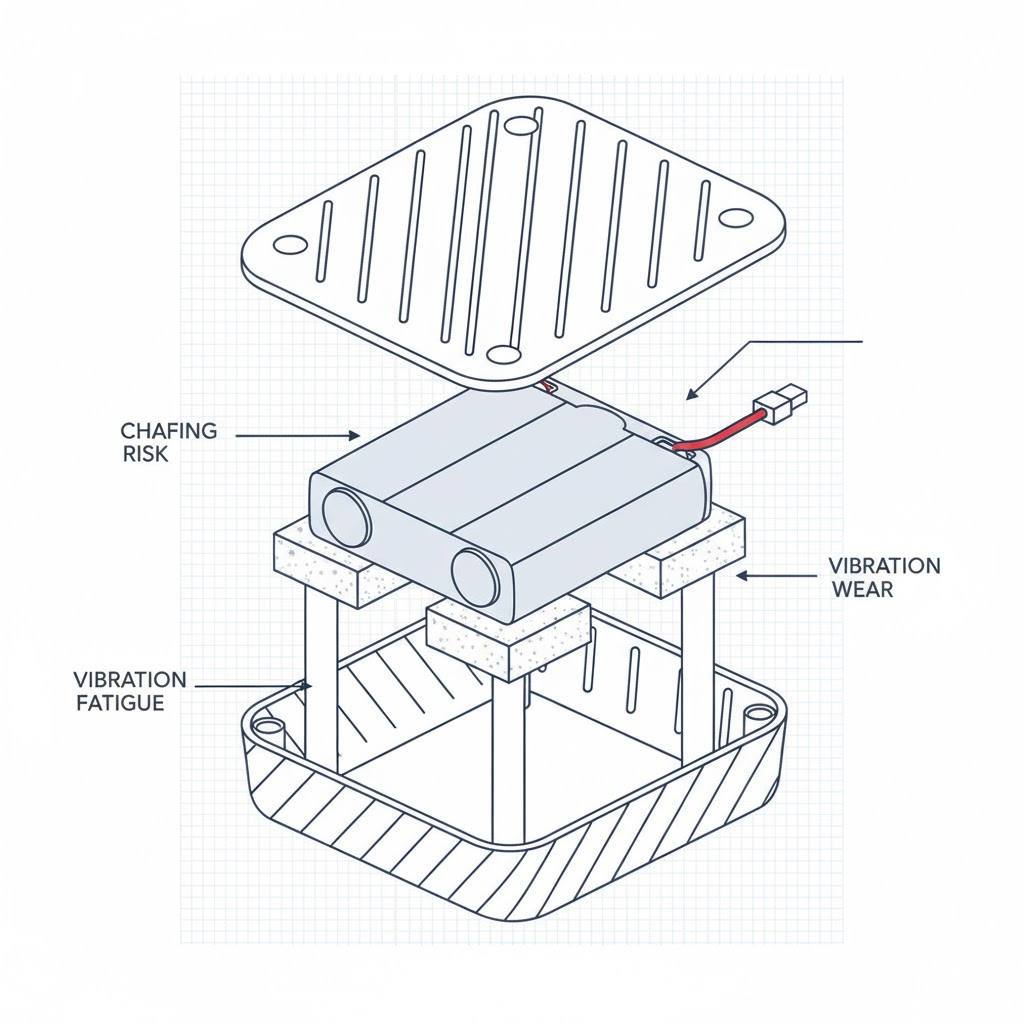
- secure the pack. Use standoffs and foam inserts so the pack cannot
/ or chafe against hard edges during vibration. Consider a chamfer on internal ribs to eliminate knife‑like features. The diagram below highlights typical chafing and vibration fatigue risks
- Harness discipline. Keep battery leads as short as possible and strain‑relieved. Avoid routing near moving parts or sharp features. Provide extra support near connectors to prevent them backing out during mechanical tests.
- Thermal foresight. Do not place a pack next to a radio or processor hotspot without a heat path. Elevated temperature cycles in UN tests reveal poor thermal layout. Heat also impacts internal resistance and state‑of‑charge measurement accuracy.
Runningabbreviated vibration and thermal cycles on pilot builds helps expose weak spots while the CAD is still flexible. When you finally send samples to the lab, make sure they truly represent final production – not prototypes with temporary foam or unpotted w./
4. Firmware as a Compliance Tool
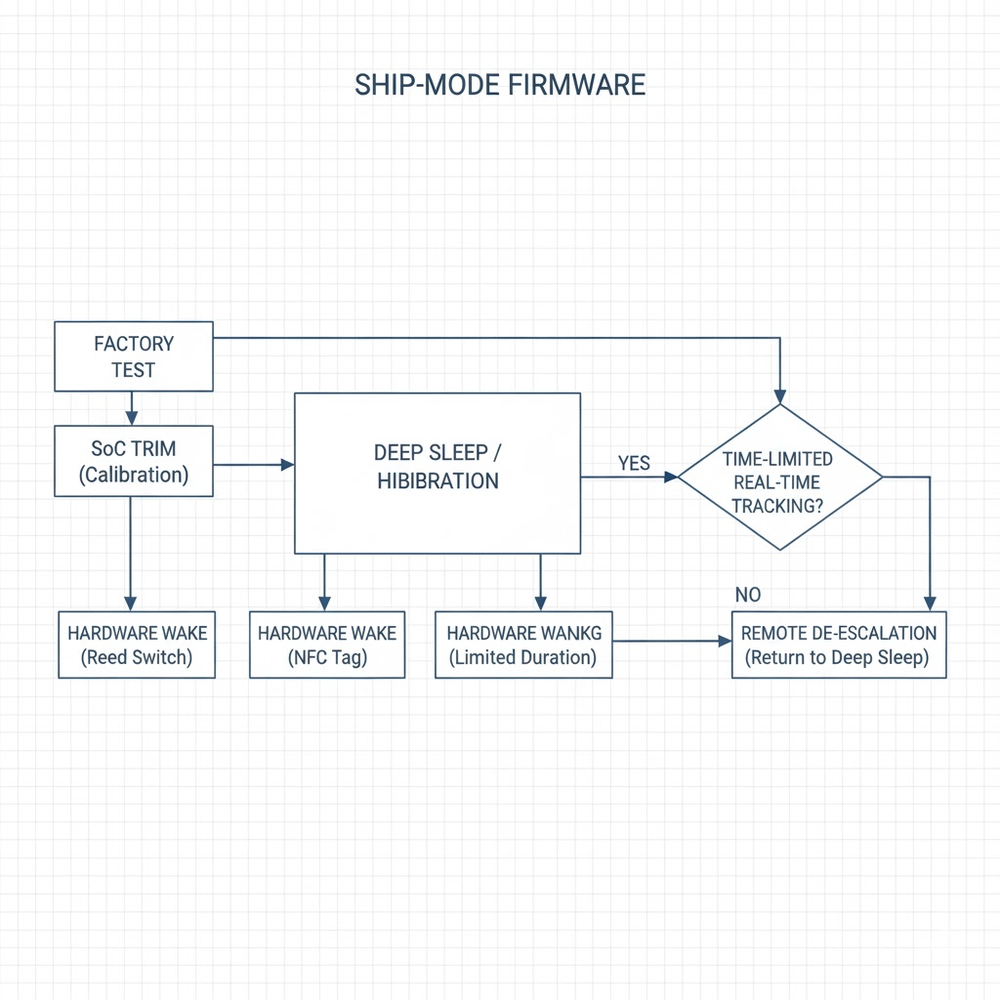
Firmware can do more than budget current draw; it can enforce compliance by controlling state of charge and limiting duty cycle. A well‑designed ship mode should:
- Trim the state of charge after factory test so that devices leave the line within the allowed SoC window. This may involve a calibration step followed by a controlled discharge.
- Enter deep sleep with extremely low quiescent current, waking only when an approved hardware trigger is detected – e.g., a reed switch, NFC tag or time‑limited wake for a short functional test. The wake triggers should be robust against accidental activation during transit.
- Support time‑limited real‑time tracking in the field. If a device escalates to high‑rate reporting, firmware should automatically revert to low‑duty operation after a configured duration. A remote de‑escalation command provides an extra safety net.
By combining hardware wake channels with firmware guardrails, you prevent units from shipping at full charge or staying in high‑power modes that could violate your compliance
5. Packaging, Labels and Logistics
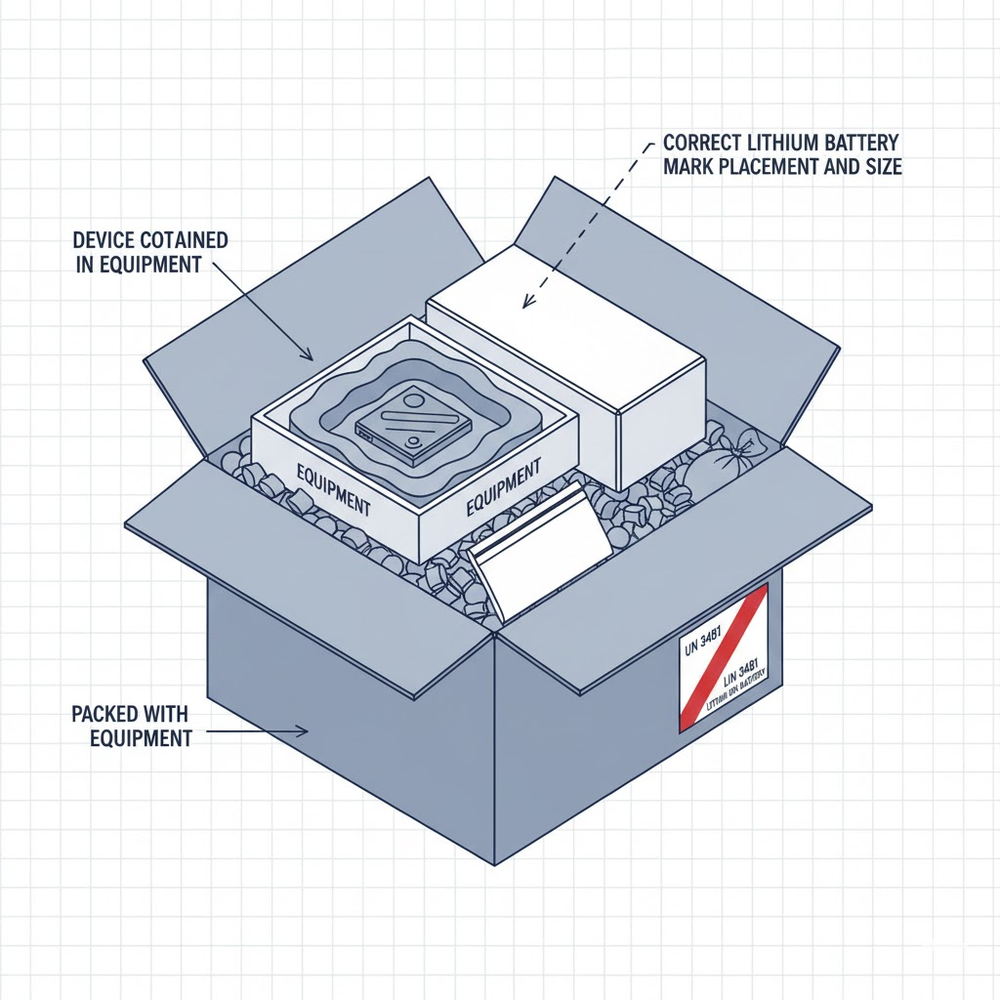
Even the best battery and firmware design can be undermined by poor packaging. IATA Dangerous Goods Regulations and the UN code assigned to your shipment define the size and placement of lithium battery marks and hazard labels. To keep logistics smooth:
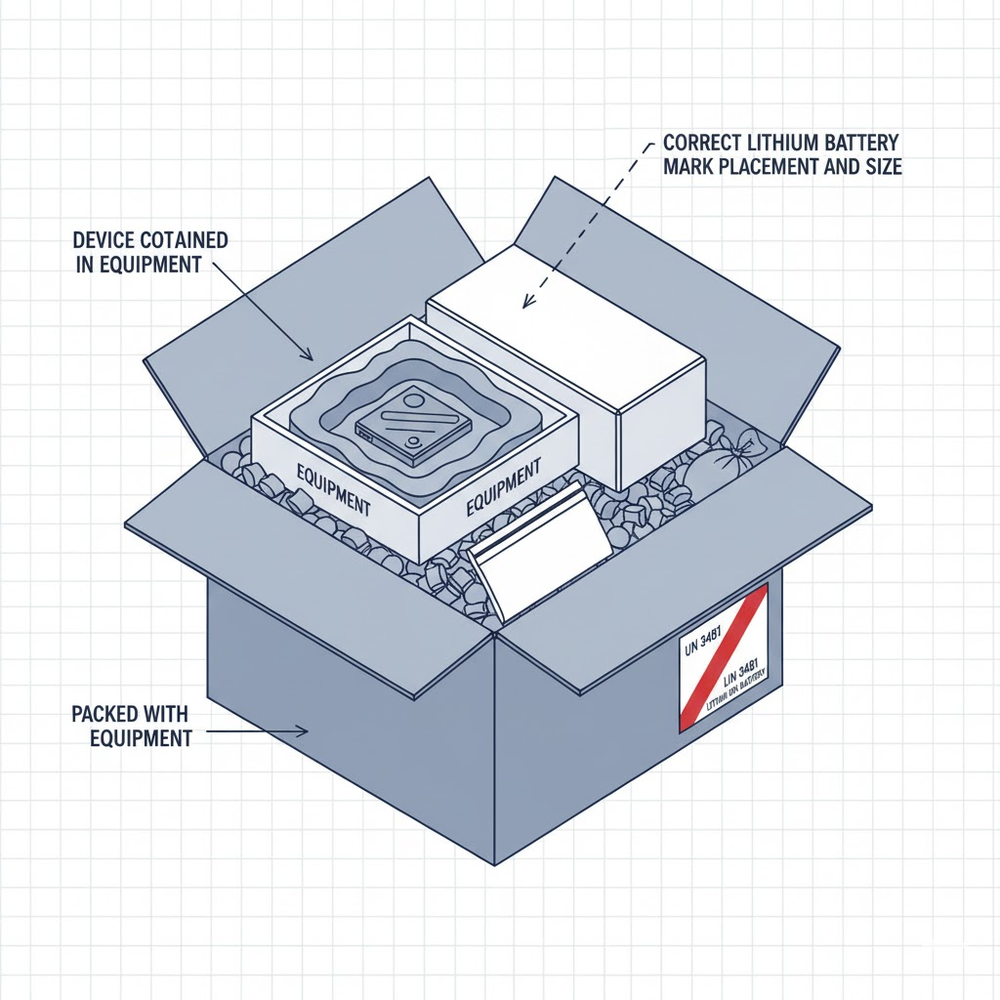
- Train the packaging line. Provide a one‑page photo guide showing exactly where the lithium mark should go, what size border is required and how to differentiate between “contained in equipment” and “packed with equipment.”
- Standardize inner cushioning. Use foam cut to keep the pack centered and separated from the enclosure walls. This helps avoid the most common failure in vibration tests: pack leads rubbing through insulation.
- Prepare a routing guide for forwarders. Spell out which IATA PI (965–970) applies to each SKU configuration, along with examples of typical mistakes. This helps carriers make quick decisions when your cartons arrive at the airport.
Proper packaging is the last mile of compliance. When dozens of units are shipped by third‑party warehouses, a photo standa
rd and routing guide prevent errors that could ground an otherwise compliant product.
6. Managing Changes and Evidence
Lithium battery packs and cells are commodities; suppliers change chemistries, separator materials and protection circuits over time. Not every change triggers new tests, but some definitely do. An effective change control process should:
- Require engineering change requests (ECRs) or notices (ECNs) whenever a different cell or pack variant is proposed. The design authority can then assess whether re‑testing is required.
- Document the decision: re‑test needed, delta analysis only or no action. Delta analysis compares the new and old cells for differences in chemistry, form factor or protective circuitry.
- Refresh the compliance packet: update the UN 38.3 test summary, safety report reference, safety data sheet (SDS) and label examples. Update shipping documents and inventory systems to reflect the new configuration.
Storing all compliance evidence in a structured battery compliance packet makes it easy for sales teams, forwarders and auditors to grab the right version. A recommended folder structure includes subfolders for UN 38.3 reports, safety reports, SDS documents, label samples and delta analyses. Each file should be versioned and dated.
7. Internal Resources and Further Reading
To dive deeper into specific aspects of low‑power design and long‑life trackers, consider the following Apple Ko Blog posts:
- Engineering notes on the GPT12-X Ultra – a behind‑the‑scenes look at radio design and power management on a palm‑sized tracker. It explores how RF placement and thermal layout influence battery life.
- Long-standby 4G asset tracker – a case study on designing a 4G tracker you can forget about for years, with insights on power budgets and operational trade‑offs.
8. Frequently Asked Questions
Q1. Do I need to repeat UN 38.3 testing if I change the battery supplier but the chemistry and form factor remain the same?
If the protective circuit specifications and chemical composition are identical, a delta analysis may suffice. However, if the impedance curve, over‑current threshold or electrolyte differs, you should assume re‑testing is required. Always document the rationale in your compliance packet.
Q2. What is the difference between “contained in equipment” and “packed with equipment” for shipping?
“Contained in equipment” means the battery is installed inside the device. “Packed with equipment” means the battery is packaged alongside the equipment but not installed. Different IATA PI numbers apply, and the lithium mark placement changes accordingly.
Q3. How do I choose the correct shipping state of charge for rechargeable packs?
Refer to UN 38.3 guidelines and your pack supplier’s recommendations. Many labs advise shipping Li‑ion cells at 30–50 % SoC. Your firmware should include a ship‑mode routine to discharge to this level after functional tests.
Q4. Are primary lithium cells exempt from market access certifications like FCC or CE?
The cell itself does not require FCC/CE, but the device it powers does. For cellular trackers you still need FCC/IC and CE/UKCA compliance on the radio and digital interfaces. Battery safety evidence is simply part of the technical documentation package for these approvals.
Conclusion
Bringing a cellular asset tracker to market involves more than a clever PCB and good cellular coverage. Selecting the right battery chemistry, designing for safety and transport resilience, coding ship‑mode firmware, training your packaging team and managing documentation will determine whether your product clears customs and customer acceptance tests smoothly. Treat battery compliance as a design feature rather than an administrative task, and you’ll avoid scrambling to finish tests when your first shipment is sitting on a pallet.
Disclaimer: Regulatory standards evolve. This article is for informational purposes only and does not constitute legal advice. Always consult your compliance laboratory and freight partners for the latest requirements.