

Every year, pharmaceutical companies lose an estimated $35 billion to temperature excursions during transit. The painful irony? Most of these losses occur on shipments that were technically "tracked" — with a GPS device dutifully reporting coordinates every few hours while the cargo silently degraded.
The problem isn't tracking. The problem is that location is not evidence.
I've spent two decades in the IoT hardware industry, designing and deploying tracking devices across 100+ countries for fleet management, cold chain logistics, and supply chain visibility. What I've learned is this: the gap between what logistics teams think their tracker provides and what auditors actually examine is where compliance failures happen. Here's what regulators expect in 2026 — and why single-sensor devices create dangerous blind spots.
What Is Compliance-Grade Cold Chain Monitoring?
Compliance-grade cold chain monitoring is the practice of using multi-sensor IoT devices to continuously capture, timestamp, and transmit environmental condition data — temperature, humidity, light exposure, mechanical shock, orientation, and location — throughout the pharmaceutical distribution chain. Unlike basic GPS tracking, which answers "where is my shipment?", compliance-grade monitoring answers the question auditors actually care about: "is my shipment still safe?"
The distinction matters because regulatory frameworks including FDA FSMA Section 204, EU Good Distribution Practice (GDP), and WHO Technical Report Series No. 961 are converging on a single principle: verifiable, multi-dimensional evidence of product condition at every critical point in the supply chain.
The Regulatory Landscape in 2026
Two frameworks dominate pharmaceutical cold chain oversight, and both are tightening.
FDA FSMA Section 204 establishes enhanced traceability requirements built around Critical Tracking Events (CTEs) and Key Data Elements (KDEs). The compliance deadline has been extended to July 2028, but the framework's principles — capture verifiable data at every critical handoff, retain for 24 months, produce within 24 hours of request — are already being adopted by pharmaceutical 3PLs as operational best practice.
EU GDP Chapter 9 goes further for pharmaceuticals. It explicitly requires that temperature mapping and monitoring during transport produce documented evidence that products remained within specified conditions throughout the distribution chain. GDP guidelines are unambiguous: a GPS coordinate alone does not constitute evidence of product condition.
The convergence is unmistakable. Regulators no longer ask "where was the shipment?" They ask "what happened to the shipment?" — and they expect multi-dimensional evidence to answer that question.
The Six Evidence Categories Auditors Examine
Having worked with logistics teams preparing for GDP and FDA inspections across North America, Europe, and the Middle East, I've observed a consistent pattern. Auditors evaluate six categories of evidence — and GPS covers exactly one.
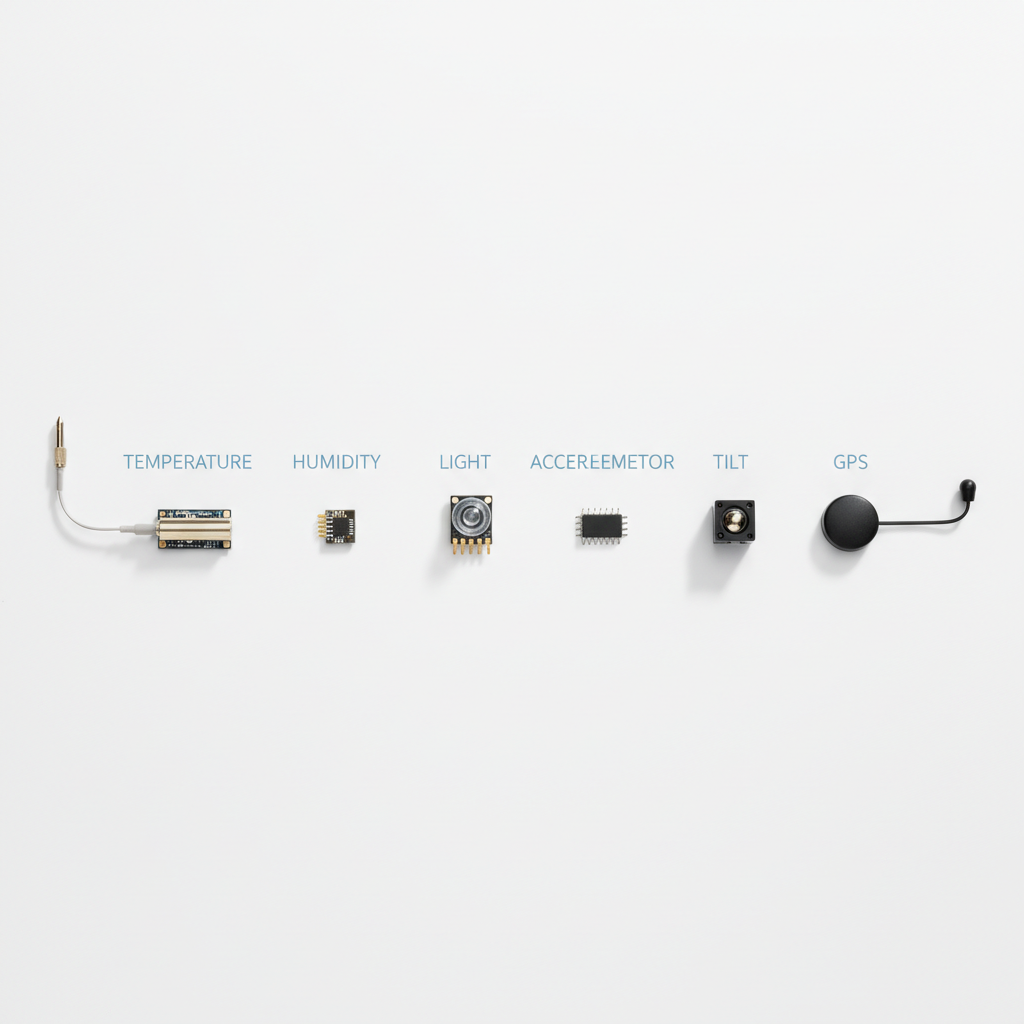
1. Temperature Continuity
This is the baseline. Every cold chain tracker provides temperature data. But auditors don't just want to see that temperature stayed within range — they want continuous, timestamped records with no gaps. A reading every 15 minutes creates 96 data points per day. A reading every 4 hours creates 6. Which one survives an auditor's scrutiny?
More critically, auditors look for excursion response documentation: when a breach occurred, was it detected in real time? Was a corrective action triggered and timestamped?
2. Humidity Levels
Many pharmaceutical products — particularly lyophilized (freeze-dried) drugs, diagnostic reagents, and certain biologics — are humidity-sensitive. EU GDP acknowledges environmental conditions beyond temperature. A shipment that maintained 2-8°C but was exposed to 95% relative humidity for 36 hours may have compromised product integrity without triggering a single temperature alarm.
GPS-only trackers don't capture humidity. Period.
3. Light Exposure Events
Photosensitive pharmaceuticals degrade when exposed to light. But light sensors serve a more universal compliance function: they detect unauthorized container openings.
When an auditor sees a light exposure event at 2:47 AM during a cross-dock transfer that wasn't documented in the chain of custody log, questions follow. When there's no light sensor data at all, the shipper can't prove the container remained sealed.
4. Shock and Vibration
Drop events during handling can crack glass vials, compromise pre-filled syringe plungers, or damage blister packaging. A 3-axis accelerometer captures these events with timestamps, creating an objective record of handling quality.
This data is particularly valuable for high-value biologics where a single pallet can represent $500,000+ in product value. Accelerometer data provides evidence that either supports or refutes handling complaints — evidence a GPS coordinate cannot provide.
5. Motion and Tilt Detection
Certain pharmaceutical shipments have orientation requirements. Blood products, cell and gene therapies, and hazardous chemical precursors must remain upright during transit. A tilt sensor provides continuous evidence of orientation compliance.
Motion detection serves a different function: it distinguishes between planned stops and unplanned stops. When combined with GPS data, motion sensing transforms raw coordinates into an intelligent narrative of shipment behavior.
6. Location (GPS/GNSS)
Yes, location matters. But notice where it falls — it's one dimension of a six-dimensional evidence requirement. GPS tells you where. The other five sensors tell you what happened there.
Key Takeaway: The most dangerous assumption in cold chain logistics is that knowing a shipment's location means knowing its condition.
The Evidence Gap in Practice

Consider this scenario. A pharmaceutical 3PL ships insulin from Frankfurt to Milan. The GPS shows the expected route: Frankfurt → Brenner Pass → Verona → Milan. Transit time: 14 hours. Location data: perfect.
What the GPS doesn't show:
- The trailer's refrigeration unit cycled off for 47 minutes during the Brenner Pass crossing — temperature excursion from 4°C to 11°C
- A dock worker opened the container during an unscheduled stop near Innsbruck (light exposure event at 03:12)
- Relative humidity spiked to 88% when the door opened in rain
- The pallet was dropped from 0.8 meters during reloading (2.4g shock event at 03:18)
The insulin arrived. GPS said everything was fine. The product was potentially compromised by four events — none captured, none documented, none available for quality review.
With a multi-sensor device, every event would have been recorded and timestamped. That's the difference between tracking and monitoring.
Evaluating Your Monitoring Hardware
For a deeper look at how sensor data flows from device to decision in real time, our engineering analysis of the 47 milliseconds that determine cold chain integrity covers the signal processing architecture behind multi-sensor compliance devices.
| Evidence Category | Sensor Required | Regulatory Basis | GPS-Only | Multi-Sensor |
|---|---|---|---|---|
| Temperature continuity | Calibrated thermistor (±0.5°C) | EU GDP Ch.9, WHO TRS 961 | Sometimes | ✅ |
| Humidity monitoring | Capacitive RH sensor (±2-3%) | EU GDP Annex 1 | ❌ | ✅ |
| Container seal integrity | Ambient light sensor | Chain of custody | ❌ | ✅ |
| Handling quality | 3-axis accelerometer | Damage liability | ❌ | ✅ |
| Orientation compliance | Tilt/motion sensor | Product-specific | ❌ | ✅ |
| Location tracking | Multi-constellation GNSS | Chain of custody | ✅ | ✅ |
If your device covers only the last row, you have a tracker. If it covers all six, you have a compliance tool.
The Business Case Beyond Compliance
Insurance and liability. When pharmaceutical cargo claims arise — single claims can exceed $1 million — sensor data provides objective evidence. Accelerometer logs showing no shock events above 1.5g shift liability away from the carrier. Without this data, every claim becomes a negotiation without evidence.
For organizations building resilient, multi-node supply chains across multiple geographies, sensor data at every handoff point becomes the connective tissue that holds the audit trail together.
Predictive quality management. Condition data collected over hundreds of shipments reveals patterns invisible to spot checks. Which lanes consistently show humidity spikes? Which carriers have higher shock event rates? Which cold storage facilities have the most temperature variation? This is the foundation of continuous improvement in cold chain operations.
What to Look For in a Compliance-Grade Device
Sensor calibration and accuracy. Temperature accuracy of ±0.5°C or better is essential for pharmaceutical applications. Humidity accuracy should be ±2-3% RH. For GNSS positioning, look for multi-constellation support (GPS + BeiDou + GLONASS + Galileo) with A-GNSS for faster time-to-first-fix.
Data integrity during connectivity gaps. Pharmaceutical shipments cross borders, pass through tunnels, and sit in shielded warehouses. The device must buffer all sensor data during connectivity blackouts and retransmit with original timestamps when signal returns. No data loss is acceptable for compliance records. Look for devices supporting MQTT protocol with TLS encryption and GPS-synchronized timestamps.
Battery life versus reporting frequency. This is the fundamental engineering tension. The best devices use intelligent wake-on-event logic: deep sleep until a sensor threshold is crossed, then immediate high-frequency reporting. This approach achieves both continuous multi-sensor monitoring and multi-year battery life without compromise.
Zero-installation deployment. Pharmaceutical logistics operates at scale. A device requiring complex provisioning or external antennas will never achieve the deployment density needed for pallet-level monitoring. The ideal device is drop-in: place it on the shipment, power on, and go.
Frequently Asked Questions
What is compliance-grade cold chain monitoring?
Compliance-grade cold chain monitoring uses multi-sensor IoT devices to capture six categories of evidence — temperature, humidity, light exposure, shock/vibration, tilt/motion, and GPS location — producing timestamped, auditable records that satisfy FDA FSMA, EU GDP, and WHO guidelines.
What sensors does pharmaceutical cold chain compliance require beyond GPS?
Beyond GPS, pharmaceutical compliance requires calibrated temperature sensors (±0.5°C), humidity sensors (±2-3% RH), ambient light sensors for container seal integrity, 3-axis accelerometers for shock and drop detection, and tilt/motion sensors for orientation compliance.
Does FDA FSMA 204 apply to pharmaceutical cold chain shipments?
FSMA 204 targets food traceability with a compliance deadline extended to July 2028. While it does not directly govern pharmaceuticals, its framework of Critical Tracking Events (CTEs) and Key Data Elements (KDEs) is being adopted by pharmaceutical 3PLs as best practice. EU GDP Chapter 9 more directly governs pharmaceutical distribution.
How long should cold chain monitoring records be retained?
FDA FSMA 204 requires records retained for 24 months, produced within 24 hours of request. EU GDP requires records throughout the distribution lifecycle. Best practice is minimum 24 months with digital, sortable storage.
What is the difference between cold chain tracking and cold chain monitoring?
Tracking tells you where a shipment is (GPS location). Monitoring tells you what happened to it — temperature excursions, humidity spikes, unauthorized openings, shocks, and orientation changes. Regulatory compliance requires monitoring, not just tracking.
Key Takeaways
- GPS-only trackers provide location but fail to capture five of the six evidence categories that pharmaceutical compliance audits increasingly require
- FDA FSMA 204 and EU GDP are converging on a standard demanding multi-dimensional, timestamped, verifiable condition data
- The six evidence categories are: temperature, humidity, light (container seal), shock (handling), tilt/motion (orientation), and location
- Multi-sensor data creates operational value beyond compliance: insurance defense, predictive quality management, and customer confidence
- When evaluating devices, prioritize sensor accuracy, data integrity during connectivity gaps, intelligent power management, and zero-installation deployment
Looking to evaluate whether your current cold chain monitoring meets emerging compliance standards? Let's discuss your specific requirements — I've helped logistics teams across 40+ countries build audit-ready monitoring programs.