
Why Choose GPT12 X for Long‑Haul Tracking?
If you manage containers, trailers, or high‑value gear that disappears for months at a time, you don’t want a tracker that needs babysitting. The GPT12‑X is built for exactly that job: a palm‑sized LTE‑M/NB‑IoT tracker with GPS, BeiDou and GLONASS support, a 5000 mAh primary battery and rugged construction. Mounted properly, it will quietly ping home for years and still be reachable on demand via SMS wake‑up. There’s no charging port to worry about – the USB‑C socket is only for firmware updates.
How It Achieves Multi‑Year Standby
The secret to the GPT12‑X’s longevity isn’t magic, it’s power management. Its radio spends most of its time in PSM/eDRX deep‑sleep; the accelerometer and light sensor watch for movement or tampering at micro‑amp levels and only wake the modem when something happens. You can configure the reporting interval anywhere from 10 minutes to 24 hours or more, and if a situation demands live tracking, an SMS will pop the device awake. When it does get a fix, it listens to multiple constellations so position is fast and accurate even with limited sky view.
Working Modes at a Glance
Below is a visual summary of the four operating modes. Use “Long Standby” for assets that move rarely, “Trip” to log the start and end points of journeys, “Activity” to leave a breadcrumb trail while moving, and “Emergency” for real‑time recovery. A note beneath
the graphic reminds you that deep‑sleep and SMS wake require network and S
Real-World Battery Life vs. Reporting Interval
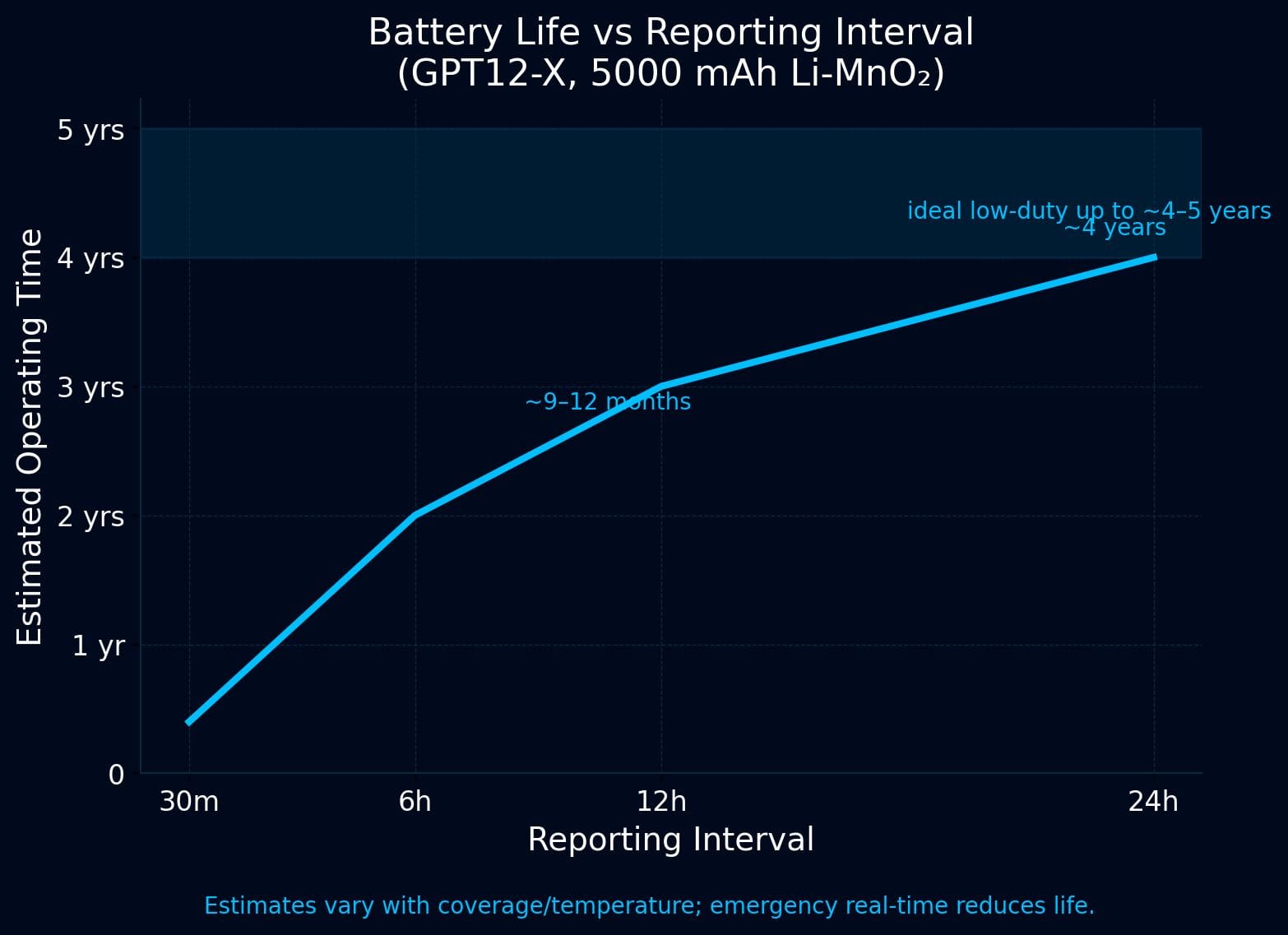
How long will it really last? The answer depends on how often you ask it to talk. In ultra‑low‑duty cycles – say, one ping per day – three years is a sensible planning baseline and some deployments squeeze out up to five years. If you bump the interval to hourly, expect 9–12 months; continuous five‑minute updates drain the cell in weeks. The chart below visualises the trade‑off so you can pick a schedule that balances visibility and battery life
.
Installation Tips and Best Practices
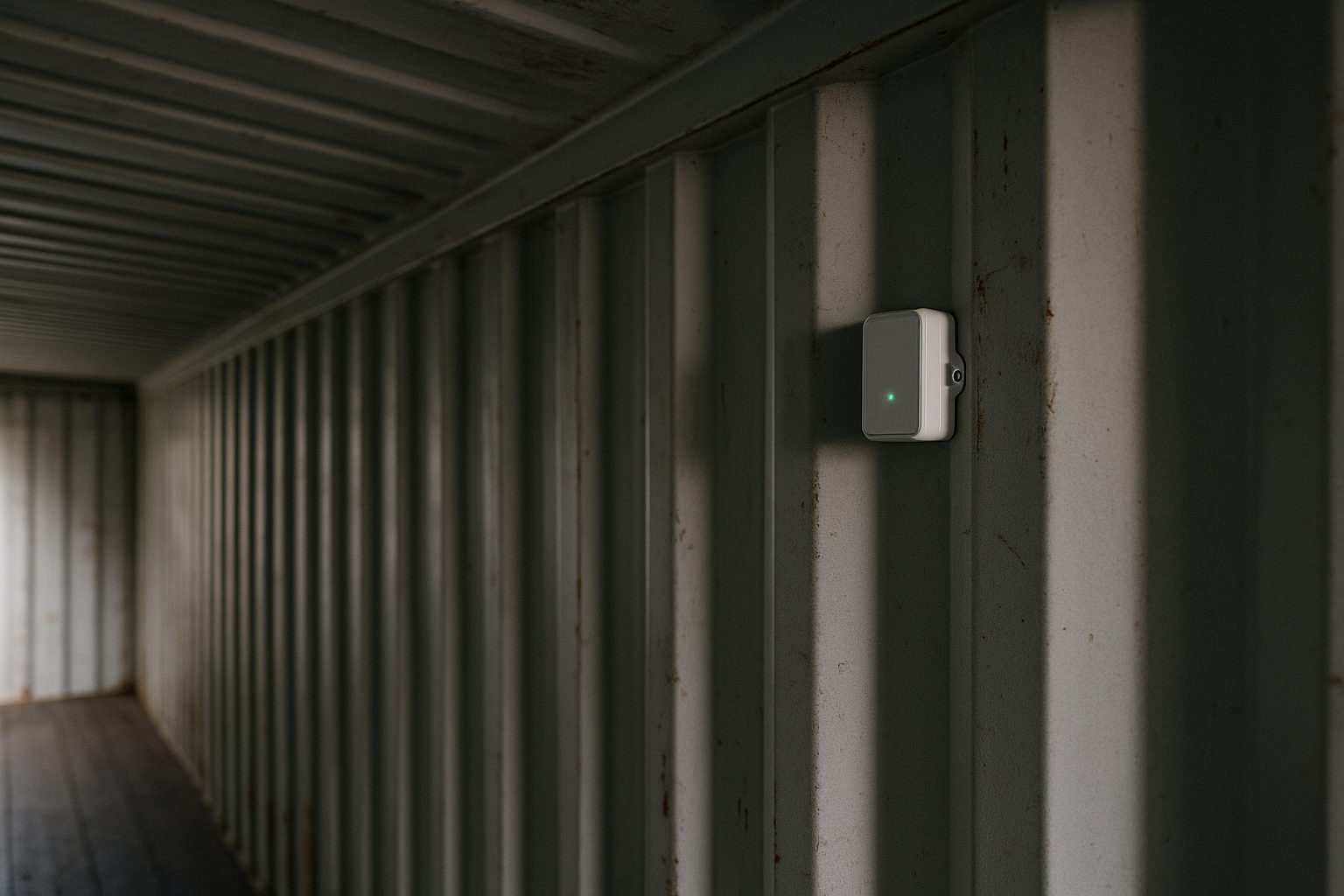
The unit ships with a SIM slot (disable the PIN and ensure your plan includes data and SMS) and a single button to power on. Install or replace the SIM while the device is off, press and hold the button for three seconds to boot, and watch the LEDs: red flashes mean it’s looking for network, blue flashes mean it’s looking for satellites. For the best GPS performance, mount the face marked “Towards sky” pointing upward and avoid placing it under metal, heater film or tinted glass. The photo at the top of this article shows a typical hidden install.
Supported Networks and Coverage
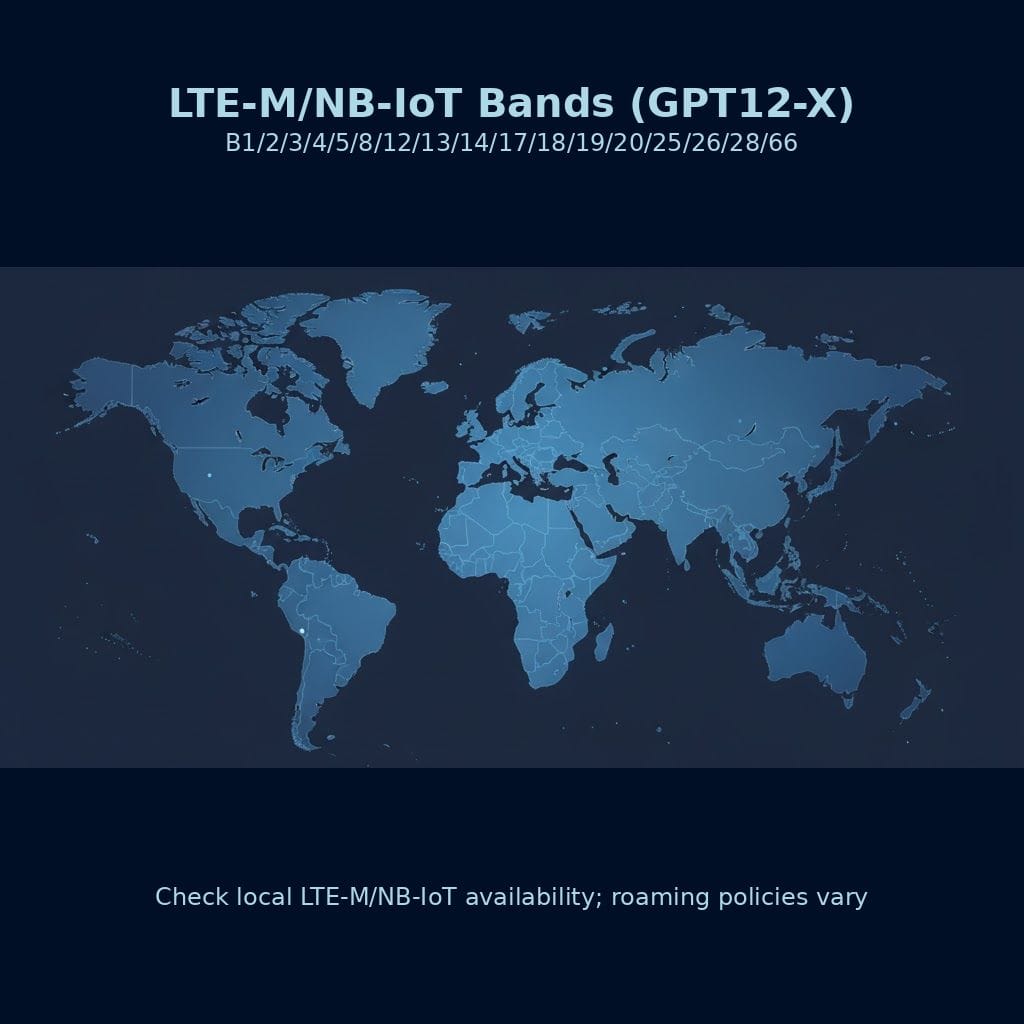
With LTE‑M and NB‑IoT radios that cover bands B1/2/3/4/5/8/12/13/14/17/18/19/20/25/26/28/66 and multi‑GNSS positioning, the GPT12‑X will roam on most current LPWAN networks. There is no 2G fallback; in fringe areas it falls back to cellular LBS for a coarse fix. Always check local LTE‑M or NB‑I oT/ANB-IoT availabilityur band map below is a starting point, but operators’ rollouts and roaming policies v
Key Takeaways
- Plan for ~3 years of life at one report per day; emergency mode is for short bursts.
- Pick the mode and interval that make sense for your asset’s duty cycle.
- Use SMS wake (requires eDRX) to get live data without burning the battery.
- Verify network coverage and perform a pilot install to confirm GNSS and waterproofing before a large roll‑out.
For more operational guidance on managing fleets of long‑life trackers, see our operational playbooks for long‑life LTE‑M/NB‑IoT trackers. A
And if you’re building your own devices, check out our engineer’s guide to designing low‑power cellular trackers for hardware and firmware tips.