
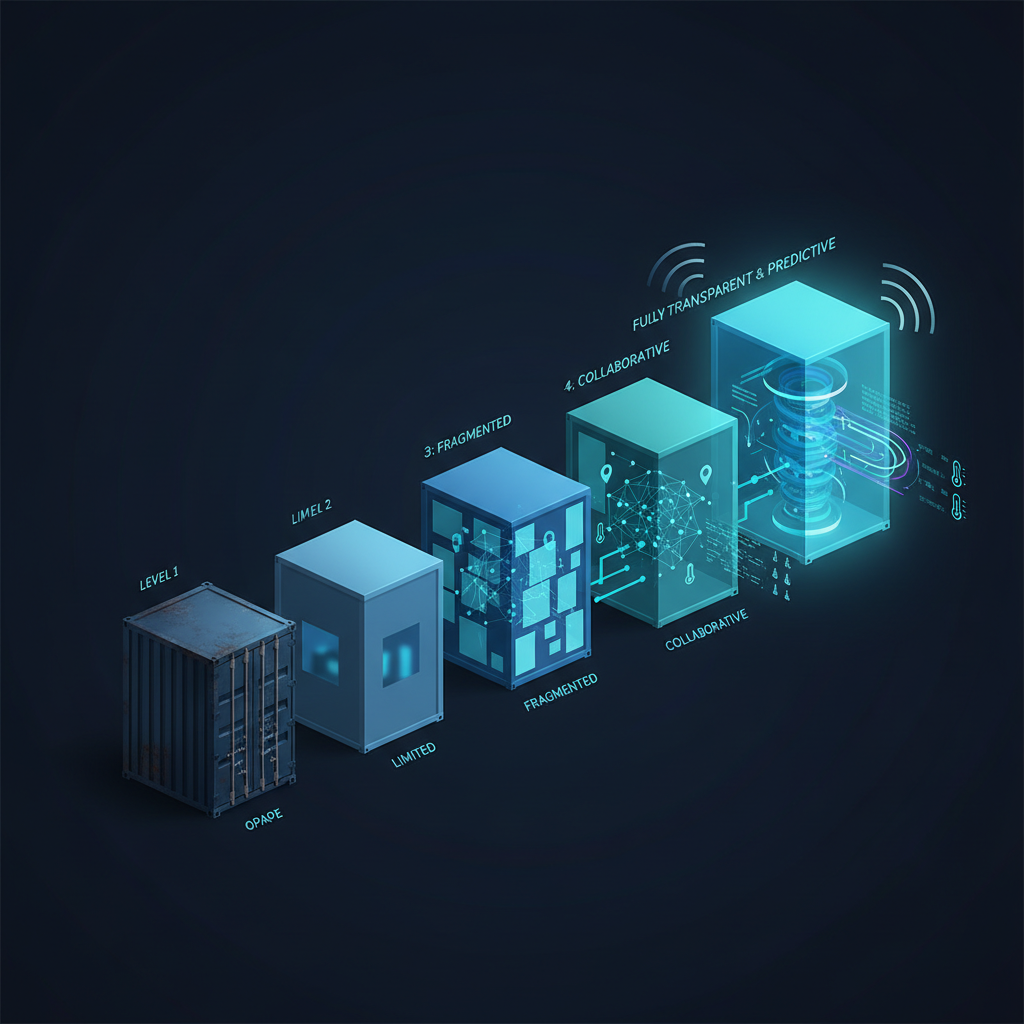
Supply chain visibility is the ability to track and monitor goods, shipments, and assets in real time as they move through the stages of a supply chain — from origin to final delivery. It encompasses location tracking, environmental condition monitoring, and predictive analytics, and exists on a spectrum from basic shipment confirmation to fully autonomous logistics intelligence.
I’ve spent over two decades working in IoT hardware for logistics and supply chain operations across 100+ countries. And I can tell you from firsthand experience: the gap between what companies think they can see and what they actually can see is where the money leaks.
I’ve had hundreds of conversations with logistics managers and supply chain directors. Almost every one of them says they have “full visibility” over their supply chain. What they usually have is a shipping confirmation email and a tracking number that updates twice a day. That’s not visibility. That’s a notification.
So I built a simple framework. Five levels. Let me walk you through each one — and explain why Level 2 is the trap most companies can’t escape.
Level 1: Blind Shipment
This is the baseline. You hand your cargo to a carrier, get a receipt, and hope for the best. You find out something went wrong only when the customer calls to complain.
Surprisingly, a lot of regional freight still works this way — especially in emerging markets or when subcontractors are involved. There’s no tracking device, no API integration, no ETA calculation. Just trust and a phone number.
If you’re reading this blog, you’re probably past Level 1. But don’t skip ahead too fast — your subcontracted last-mile carriers might still be here.
Level 2: Milestone-Based Tracking
This is where most companies get stuck, and where they mistakenly believe they have “visibility.”
At Level 2, you get milestone updates: picked up, departed warehouse, arrived at port, cleared customs, delivered. These events are logged by carriers or scanned at checkpoints. The data is accurate, but it’s historical — you’re always looking in the rearview mirror.
The problems with Level 2 are subtle and expensive. You can’t predict ETAs, only confirm what already happened. Dwell time at intermediate points is invisible. Temperature excursions, route deviations, and unauthorized stops don’t show up. You can’t trigger automated alerts because there’s nothing to alert on — you only get data when someone scans a barcode.
Most TMS and ERP systems default to this level. The data looks clean in dashboards. KPIs get green checkmarks. But when a shipment goes sideways, you find out 48 hours too late.
Level 2 is the comfort zone. It feels like visibility. It’s actually just record-keeping.
Level 3: Real-Time Location Tracking
This is where GPS and cellular IoT enter the picture. A tracking device on the asset — whether it’s a container, pallet, trailer, or vehicle — reports its position at regular intervals. You can see where things are right now, not where they were yesterday.
The jump from Level 2 to Level 3 is significant. Suddenly you can calculate live ETAs. You can set geofences and get alerts when a truck deviates from its planned route. You can see that a container has been sitting at a port for 72 hours instead of the expected 24.
But Level 3 has its own blind spots. You know where your cargo is, but not what’s happening to it. Is the temperature inside that reefer container still within spec? Was the door opened at an unauthorized location? Is the device still powered, or has the battery died and you’re looking at stale data?
Most companies that invest in GPS tracking stop here. They can point to a dot on a map and say “it’s there.” That’s a massive improvement over Level 2 — but it’s still only half the story.
Level 4: Condition-Aware Visibility
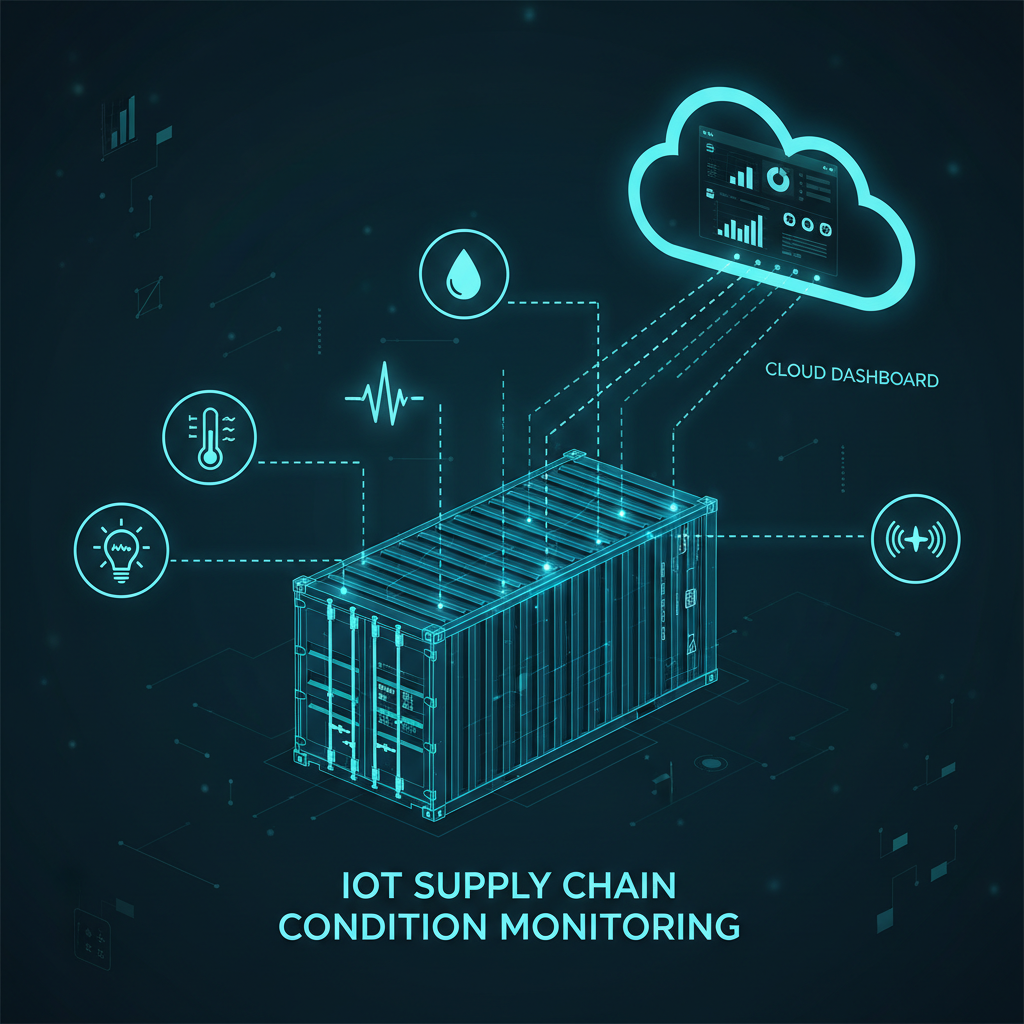
Level 4 adds sensor data to location data. Now you’re not just tracking where, but how: temperature, humidity, shock, light exposure, door open/close events.
This is where supply chain visibility starts to actually prevent losses instead of just documenting them. A pharmaceutical shipment that breaches its cold chain tolerance can be intercepted and rerouted before the entire load is wasted. A container that gets opened at an unscheduled stop triggers an immediate security alert.
The technical challenge at Level 4 isn’t the sensors — those are commodity hardware now. The challenge is data architecture. You’re suddenly dealing with 10x to 100x more data per shipment. Every tracker might report temperature every 5 minutes alongside its GPS fix every 15 minutes. Multiply that across thousands of assets, and you need infrastructure that can ingest, process, and act on that data stream in near-real-time.
The companies that do Level 4 well tie sensor thresholds directly to automated workflows: if temperature exceeds X for Y minutes, create an incident ticket, notify the customer, and flag the shipment for inspection upon arrival. No human in the loop for the detection — only for the response.
The ones that do Level 4 poorly collect all this sensor data and dump it into a dashboard that nobody checks until after the claim is filed.
Level 5: Predictive and Autonomous Visibility
This is the frontier. At Level 5, the system doesn’t just tell you what’s happening — it tells you what’s going to happen, and in some cases, acts on it automatically.
Predictive ETAs that account for weather, port congestion, and historical lane performance. Automated carrier re-routing when disruptions are detected upstream. Dynamic inventory allocation based on real-time in-transit positions. Proactive customer notifications sent before the customer even knows there’s a problem.
Very few companies operate at Level 5 across their entire supply chain. But the building blocks — machine learning models, event-driven architectures, robust IoT data pipelines — are becoming accessible to mid-market operators.
The prerequisite for Level 5 is having Level 3 and Level 4 nailed down. You can’t predict what you can’t measure.
Comparing the Five Levels
| Level | Data Type | Latency | Can Prevent Loss? |
|---|---|---|---|
| 1 — Blind | None | N/A | No |
| 2 — Milestone | Checkpoint scans | Hours to days | No |
| 3 — Real-Time GPS | GPS position | Minutes | Partially (location only) |
| 4 — Condition-Aware | GPS + sensors | Minutes | Yes (automated alerts) |
| 5 — Predictive | GPS + sensors + ML | Proactive | Yes (predictive + automated) |
Why the Level 2 Trap Is So Sticky
If Level 3 and above are clearly better, why do most companies stay at Level 2? Three reasons.
First, Level 2 is free. Carriers provide milestone tracking as part of their service. Moving to Level 3 means buying hardware, paying for connectivity, and integrating new data sources. There’s a real cost — and someone has to justify it.
Second, Level 2 looks like it’s working. Dashboards are green. Reports get generated. Nobody gets fired for having milestone tracking. The losses — late deliveries, spoiled goods, cargo theft, detention fees — get absorbed as “cost of doing business” because there’s no data to prove they were preventable.
Third, the jump is organizational, not just technical. It means changing how operations teams work. It means rewriting SLAs with carriers. It means training people to respond to real-time alerts instead of reviewing yesterday’s reports. Technology is the easy part. Change management is the hard part.
Self-Assessment: Where Are You Really?
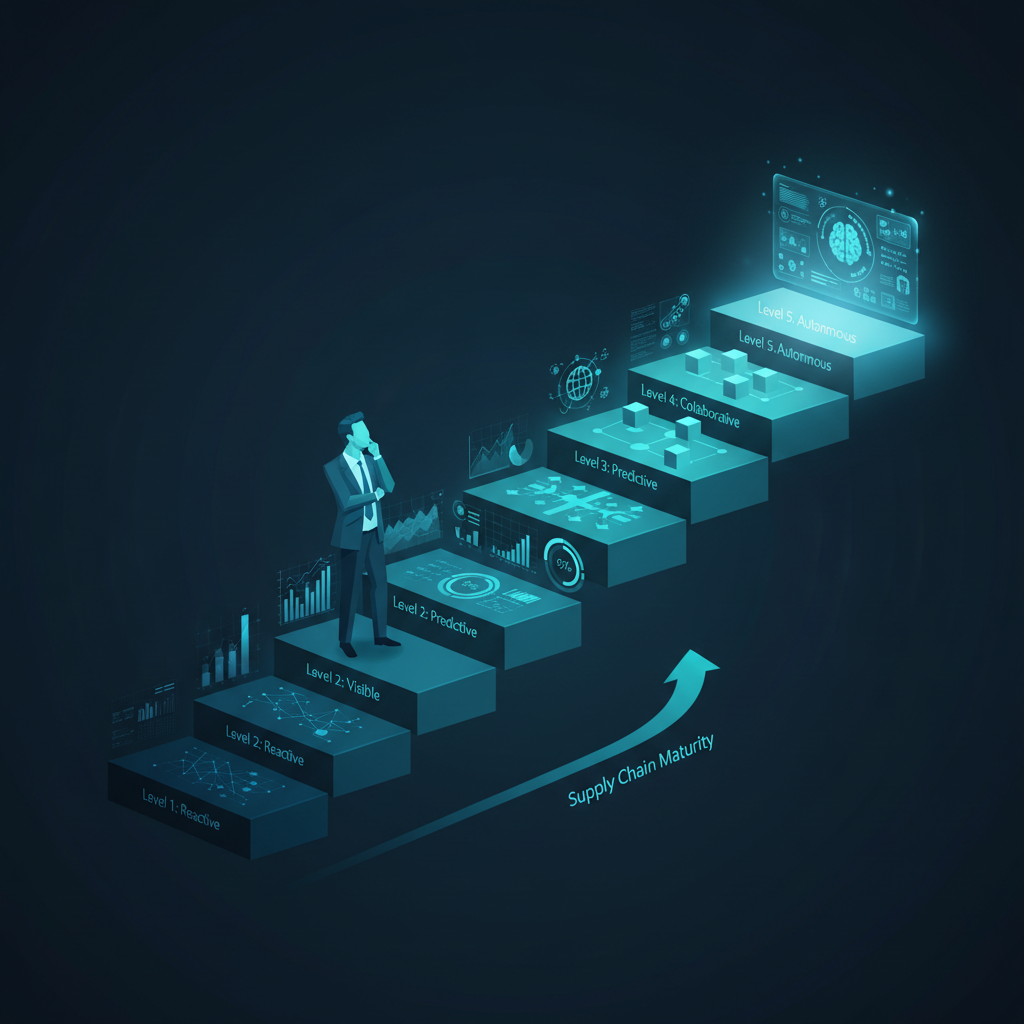
Answer these four questions honestly:
1. Can you tell me, right now, the exact GPS coordinates of your three most valuable in-transit shipments? If no — you’re at Level 2 or below.
2. Can you also tell me the temperature inside those shipments? If no — you’re at Level 3.
3. Does your system automatically alert you if a condition threshold is breached, without anyone checking a dashboard? If no — you’re at early Level 4.
4. Does your system predict arrival times using real-time conditions, not just carrier estimates? If yes — you’re approaching Level 5.
Most people I talk to answer “no” to the first question. And that’s okay. The point is to be honest about where you are so you can invest wisely in where to go next.
What is supply chain visibility?
Supply chain visibility is the ability to track and monitor goods, shipments, and assets across every stage of a supply chain in real time. It encompasses location tracking, environmental condition monitoring, and predictive analytics. True visibility means your operations team can see not just where something is, but what’s happening to it and what’s likely to happen next.
What is the difference between milestone tracking and real-time GPS tracking?
Milestone tracking provides retrospective checkpoint updates — picked up, arrived at hub, delivered — typically with hours or days of latency. Real-time GPS tracking uses cellular IoT devices mounted on assets to report live positions at configurable intervals, enabling live ETA calculation, geofence alerts, route deviation detection, and dwell time monitoring.
Why do most companies stay at Level 2 visibility?
Three reasons: Level 2 is free because carriers provide it as a default service. It appears to work because dashboards show green checkmarks. And upgrading requires organizational change — new workflows, carrier SLA updates, and training — beyond just buying hardware.
What is condition-aware supply chain visibility?
Condition-aware visibility (Level 4) combines GPS location tracking with onboard environmental sensors — temperature, humidity, shock, vibration, and light exposure. This enables automated alerts when conditions breach thresholds, allowing intervention before cargo is damaged rather than documenting the loss after the fact.
How do I assess my current supply chain visibility level?
Ask four sequential questions: Can you see live GPS positions of your most valuable shipments? Can you see their environmental conditions? Does your system alert automatically on threshold breaches? Can it predict ETAs from real-time data? Each “no” tells you which level you’re currently at, and where your next investment should go.
Key Takeaways
- Supply chain visibility is a spectrum with five distinct levels, not a binary capability
- Most companies operate at Level 2 (milestone tracking) and mistakenly believe they have full visibility
- The jump from Level 2 to Level 3 (real-time GPS) is the single highest-ROI upgrade for most logistics operations
- Level 4 (condition monitoring) is essential for cold chain, pharmaceutical, and high-value cargo
- Level 5 (predictive) requires solid Level 3 and 4 foundations — you can’t predict what you can’t measure
- The biggest barrier to upgrading isn’t technology — it’s organizational change management
Don’t try to jump from Level 2 to Level 5. Start with Level 3 on your highest-risk asset class. Get comfortable with real-time data. Then layer in condition monitoring. Then build predictive capabilities on that foundation.
The cost of staying at Level 2 isn’t obvious — it shows up as claims, delays, customer churn, and insurance premiums. The companies that figure this out first don’t just save money. They win contracts their competitors can’t.
What level are you at today? Let’s discuss your requirements — I’d love to compare notes.