
When operations leaders talk about “visibility,” they rarely mean a single tool or dashboard. They mean something broader and more technical: the ability to measure what matters at the edge, transport those measurements reliably, and use the data in ways that stand up to audits, contracts, and—more frequently—ethical expectations around automation. In 2025, three concrete developments illustrate how that stack is maturing at once:
- dry containers are becoming instrumented at scale;
- responsible AI now has a formal management system standard; and
- cold chains are upgrading from event logging to real-time telemetry with actionable interventions.
These aren’t marketing slogans. They are the consequences of engineering constraints, compliance pressures, and the steady normalization of sensor-rich networks. Below, we unpack each development—not as isolated headlines, but as design signals for anyone building or buying industrial IoT systems.
1) From steel box to smart node: dry containers finally get a reliable nervous system
For decades, the dry container has been the supply chain’s paradox: an asset that moves the world’s goods but has been functionally “deaf and blind” between checkpoints. That is rapidly changing. In October 2025, Evergreen Line began equipping its dry container fleet with ORBCOMM’s smart container technology—an adoption that pushes containerization further into the era of persistent telemetry rather than sporadic milestone scans.
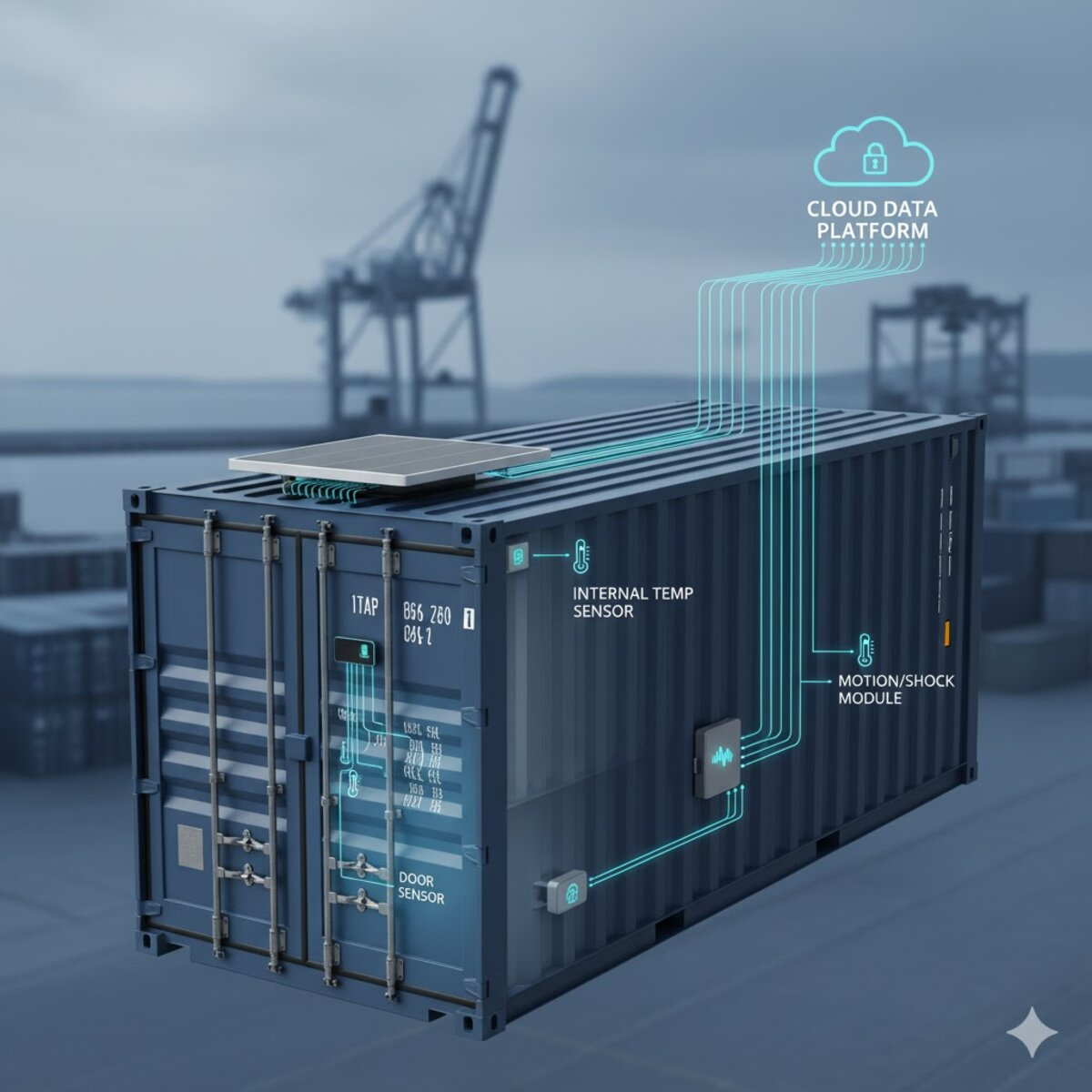
If you've worked on maritime visibility before, you know the usual objections: power , harsh RF environments, mount-point durability, false alerts from doors flexing, and the operational expense of retrofits. What makes the recent wave notable is that the hardware and the device-to-cloud plumbing have crossed a threshold where trade-offs are manageable at fleet scale. ORBCOMM’s current dry-container lineup (e.g., CT1000/CT1010 and matching accessories) reflects that shift with solar-assisted power, integrated or paired door sensing, ambient/internal temperature options, shock/motion detection, and an application stack that emphasizes quick deployment and open integration
What’s different this time?
Power discipline meets usable sampling. Solar-assisted architectures extend autonomy beyond the seasonal edge cases that used to kill the business case. Duty-cycled GNSS, sensor sampling and reporting intervals now align with realistic utilization patterns: long idle periods, punctuated by movement bursts and geofence transitions.
Door events that don’t cry wolf. A good door sensor on a container is more than a reed switch. It’s a packaged strategy for filtering structural flex, handling vibration, and reconciling “open” with context (e.g., in-port vs. high-seas). The newer stacks focus on reducing false positives so that exception workflows aren’t overwhelmed. orbcomm.com+1
Fire and temperature intelligence that matters. Not all temperature monitoring is equal. Positioning thermal sensors—internal vs. ambient—affects what excursions you catch, how quickly you respond, and how you correlate events with handling. ORBCOMM’s material highlights internal heat detection and rate-of-change monitoring to surface incidents like external fire risk, a use case that wasn’t mainstream even five years ago. orbcomm.com
The design lens: installing intelligence at scale
Turning a steel box into a smart node is an integration problem as much as it’s a device problem. In practice:
- Mounting and survivability. Adhesives and rivets each impose trade-offs; adhesives reduce penetrations and speed retrofits but must be validated for salt fog, thermal cycles, and paint chemistries. Cabling (if any) needs relief strategies that tolerate forklift mishaps and weather sealing that survives both deserts and polar routes.
- RF and antenna placement. The container is a partial Faraday cage. Solar lid + antenna consolidation is popular, but RSSI drift through stacking, vessel structures, and terminal clutter still demands conservative link budgets and multi-bearer strategies where available.
- Event semantics. “Arrival,” “dwell,” “route deviation,” and “tamper” are not self-evident; they are engineered from thresholds, deadbands, and cross-sensor logic. The best programs start with clear definitions testable in data—so that operations, insurance partners, and auditors read the same story when an alert fires.
- APIs before dashboards. Evergreen’s choice signals an ecosystem bent: edge data must land in the systems that run the business—TMS, WMS, ERP, claims, and customer portals—not just a vendor UI. That is why open, well-documented APIs now feature prominently in smart-container narratives. orbcomm.com
The upshot: smart dry containers are no longer pilot novelties. They’re becoming a default expectation in maritime programs that prize loss prevention, asset utilization, and verifiable handoffs. Evergreen’s rollout is important not because it’s first, but because it’s a visible indicator that the ROI math works at line-haul scale. ship-technology.com+1
2) Responsible AI gets operationalized: ISO/IEC 42001 emerges as the governance backbone
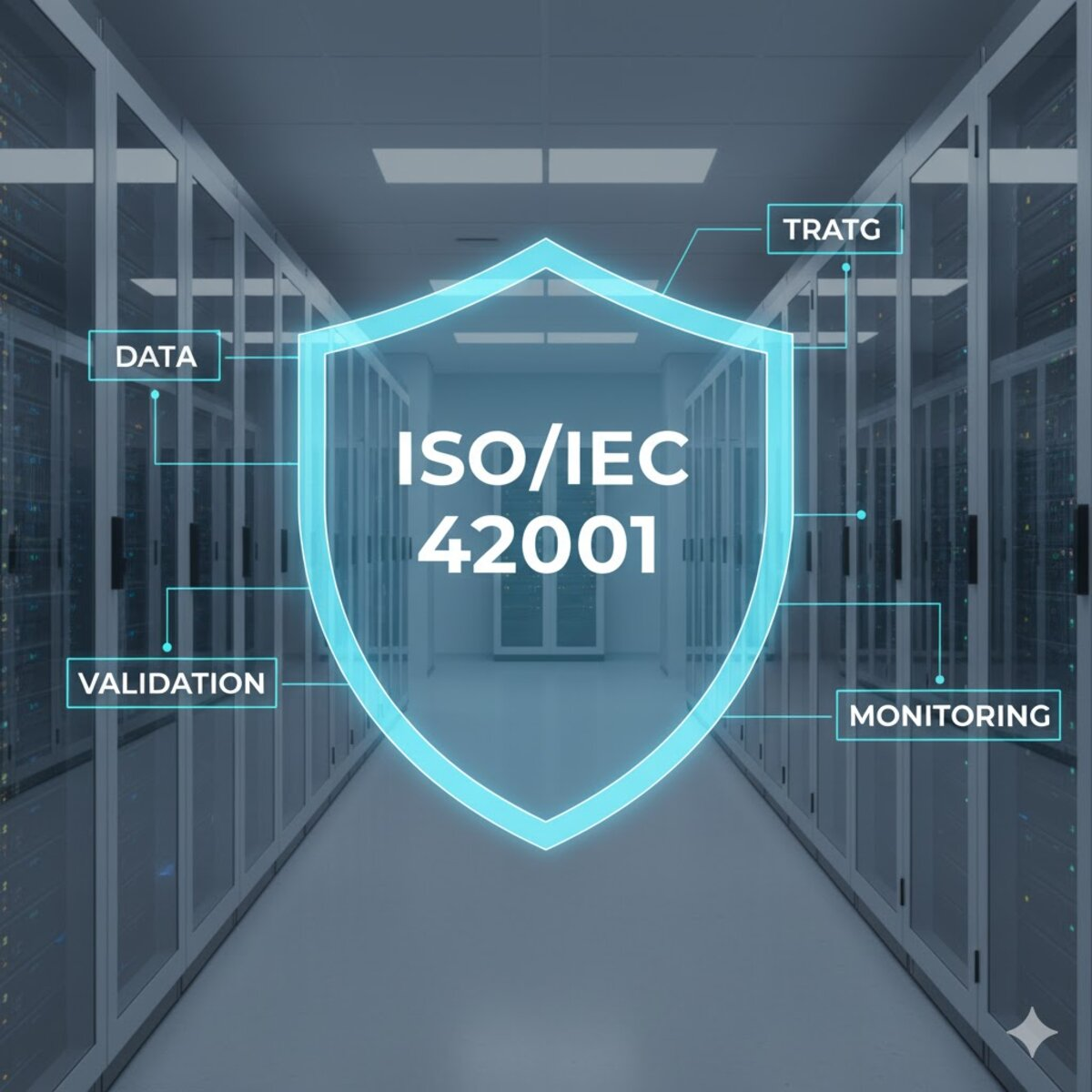
Edge telemetry feeds models; models influence dispatch, claims, intervention timing, and even pricing. But until recently, “AI governance” lived mostly in policy decks and overlapping frameworks. With ISO/IEC 42001 (the world’s first international standard dedicated to AI Management Systems), there is now a single, auditable scaffold for how organizations establish, implement, maintain, and continually improve the management of AI across its lifecycle. iso.org
The standard connects familiar governance instincts—risk management, transparency, accountability—to AI-specific lifecycle tasks: data provenance, model training/validation, monitoring, bias control, explainability expectations for downstream stakeholders, supplier oversight, and incident response. Importantly, 42001 does not tell you which algorithm to use; it tells you how to run AI responsibly as an organizational system, much like ISO/IEC 27001 did for information security. KPMG+1
Why does this matter to supply-chain telemetry?
- Traceability of decisions. When a platform flags a door-open anomaly or predicts temperature excursions, compliance teams increasingly want to know how that conclusion was reached, what data supported it, and how the model behaved historically. 42001 makes those questions routine rather than exceptional.
- Vendor alignment. If your operations depend on third-party AI—vision for yard operations, anomaly scoring for containers, ETA predictions—42001 helps you set consistent expectations and controls across suppliers, not just inside your own walls. KPMG
- A tangible benchmark. In October 2025, Samsara announced it had earned ISO/IEC 42001 certification, becoming one of the first 100 organizations worldwide to do so. Regardless of your vendor choices, that milestone illustrates a market where AI assurance is moving from “nice to have” to purchasing criterion. samsara.com+1
For practitioners, the presence of 42001 doesn’t magically eliminate gray areas: model explainability vs. performance, human-in-the-loop thresholds, or how to quantify “harm” in logistics contexts remain nuanced. But it reduces the meta-uncertainty—there’s now a common language to negotiate these decisions, document them, and prove that you’re operating on purpose rather than by habit.
3) Cold chains pivot from logging to live intervention
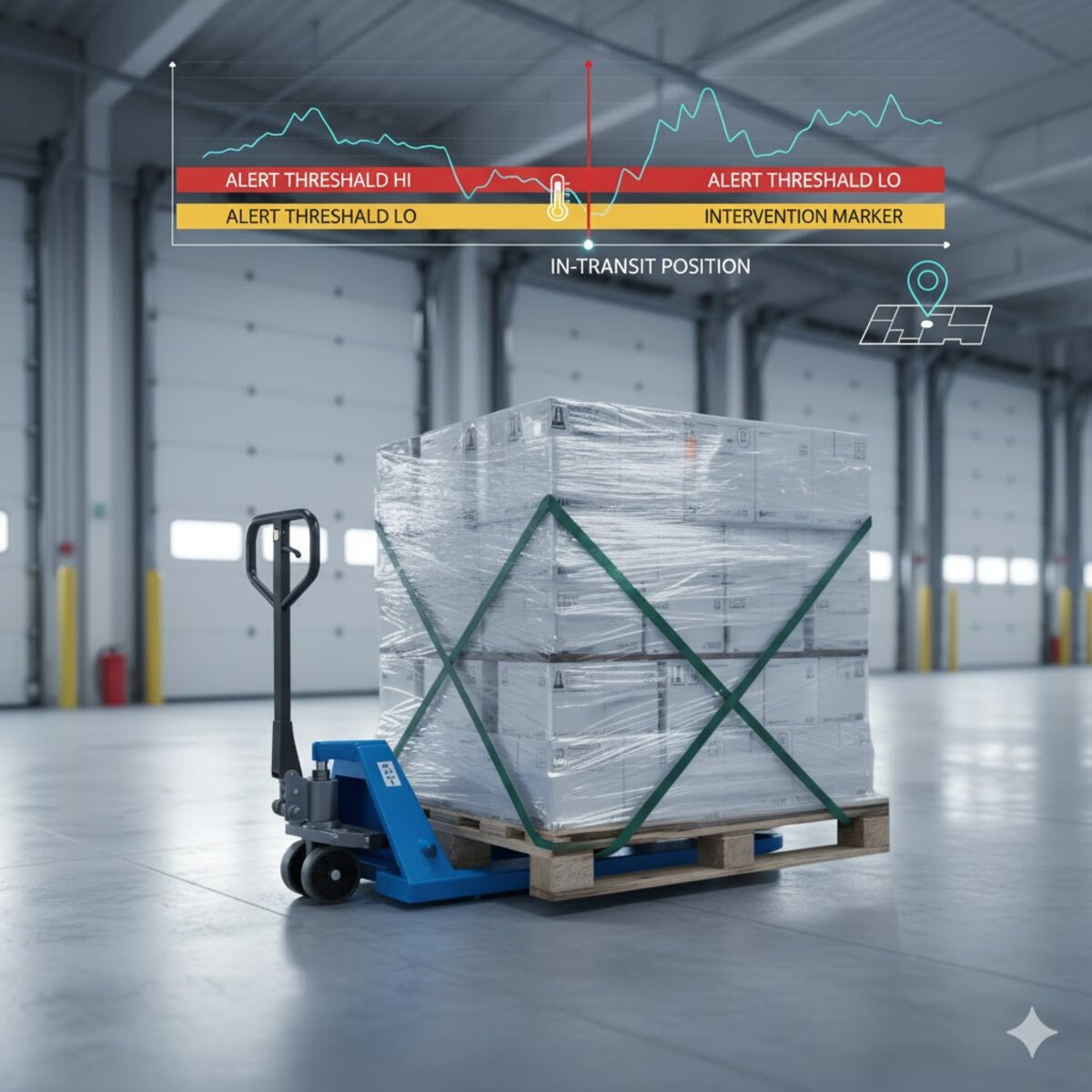
Pharmaceutical and biologics supply chains have always had sophisticated SOPs. What’s changing is the shift from after-the-fact logging to real-time visibility with coordinated responses across partners. Cold Chain Technologies (a long-standing thermal packaging and solutions provider) has collaborated with ParkourSC to add continuous temperature and location visibility into shipments, highlighting how telemetry plus decision orchestration shortens time-to-intervention and reduces spoilage. ParkourSC
ParkourSC positions its cold-chain stack around “dynamic decision intelligence,” digital twins, and continuous risk monitoring—language that only matters if it maps to concrete, auditable actions at the edge: alerting at the right threshold, enabling corrective moves in transit or at cross-dock, and providing chain-of-custody evidence that resonates with regulators and quality teams. ParkourSC
Under the hood, programs like this live or die by details that rarely show up on pitch slides:
- Sensor placement and thermal mass. A probe jammed near a door seam behaves differently than one anchored within a payload’s thermal core. For biologics, measuring the product state (or a well-calibrated proxy) beats measuring ambient air that reacts faster than the drug actually does.
- Time-above-threshold accounting. It’s not just whether you crossed 8°C—it’s for how long, and whether the product’s stability curve tolerates that exposure. Richer telemetry makes these calculations defensible rather than heuristic.
- Intervention latencies. Alerting is meaningless unless you can act. Programs must pressure-test whether a depot actually holds gel packs, whether a 3PL can re-ice a pallet after cut-off, and whether the consignee can accept re-staged appointments. “Real-time” is often constrained by human and facility clocks.
- Audit posture. The payoff isn’t just saving a shipment. It’s being able to show, unambiguously, that you managed risk according to plan—something quality and compliance teams value as much as the operations savings.
The message for ops leaders is pragmatic: visibility is only valuable at the speed of the slowest actor who needs to move. Cases like CCT × ParkourSC illustrate that the field is becoming more about coordinating interventions than merely detecting issues. ParkourSC+1

Through-line: trustworthy measurements + governed use
Look across the three signals and a pattern emerges:
- The measurement substrate is maturing: what used to be fragile pilot tech (door sensing, ambient vs. internal temperature, on-box power management) is now robust enough for line operations. orbcomm.com
- The use of those measurements is becoming governable: AI outputs can be tied to auditable processes, with organizational controls defined by ISO/IEC 42001. iso.org
- The business dependability story evolves: risk becomes more quantifiable; exceptions are addressed sooner; and evidence is encoded as data exhaust rather than narrated after the fact.
Hardware implications (for device makers and buyers)
From an engineering vantage point, the industry’s direction is clear:
- Ultra-low-power isn’t a bragging right; it’s what makes telemetry credible between handoffs. That means disciplined sleep states (PSM/eDRX), sparse but meaningful reporting, and event-driven wake strategies.
- High reliability is more than IP ratings. It includes mount longevity, fuse/ESD protection, RF tolerance under stacking, and survivable enclosures that don’t compromise antenna performance.
- Industrial-grade design includes lifecycle logistics: UN38.3 conformity, sustainable battery strategies, and replacement workflows that can be executed by non-specialists in ports, yards, and depots.
- Trustable data requires sensor calibration plans, tamper-evidence strategies, and clock discipline (because a “wrong time” can sabotage an otherwise perfect dataset).
These aren’t slogans; they are the minimum kit for turning assets into verifiable data sources across multi-party networks.
A practical 90-day playbook (non-vendor specific)
If you’re considering a new visibility lane—be it instrumented containers or a cold-chain corridor—resist the urge to “boil the ocean.” Instead:
- Pick a lane with measurable pain. Examples: a port-pair with habitual dwell issues, or a biologics route with seasonal excursion spikes. Write down your three decision questions and the workflows that would change if you had answers.
- Define event semantics first. What counts as “arrival,” “dwell,” “unscheduled door,” or “excursion”? Codify thresholds and context rules. If two people can read the same graph and reach different conclusions, your semantics are not ready.
- Instrument narrowly but well. Deploy enough devices to cover throughput variance and stacking patterns. Log both telemetry and interventions (who did what, when) to close the loop.
- Integrate upstream and downstream. Send events to the systems that matter (TMS/WMS/quality). A pilot that never leaves a vendor portal isn’t testing the real problem.
- Audit like a regulator. At day 60, pretend you’re defending a claim or responding to a deviation investigation. Can you show unambiguous evidence for your alerting logic and actions taken?
- Decide, don’t admire. At day 90, either scale with specified exceptions or declare what didn’t work. Both outcomes are progress if your semantics and evidence are sound.
What 2025 actually tells us
The shift is not about gadgets; it’s about measurement literacy. Smart containers show that hardware, power, and retrofit economics can align with line-haul realities. ISO/IEC 42001 signals that the governance conversation has matured beyond policy kudos to auditable practice. And cold-chain examples demonstrate that “real-time” earns its keep when interventions are coordinated, not simply detected.
For teams building the hardware substrate underneath these systems, three through-lines continue to hold: ultra-low-power, high reliability, and industrial-grade design—all in service of delivering trustworthy data into customer platforms. Ultimately, modern supply chains are evolving from mere connectivity to the trio of sensing, reasoning, and trustworthy execution.
Related Resources
- Operational Playbooks for Long‑Life LTE‑M/NB‑IoT Trackers
- Designing Low‑Power Cellular Trackers for Logistics
Frequently Asked Questions (FAQ)
Q1: What are smart dry containers and why are they important in 2025?
Smart dry containers are shipping containers equipped with sensors (such as door, ambient/internal temperature, shock/motion and power modules) and solar‑assisted power systems. They provide continuous telemetry about location, temperature, door status, and shock events, turning previously "deaf and blind" containers into smart nodes that communicate in real time. In 2025, ocean carriers like Evergreen Line are adopting this technology at scale, enabling more reliable shipment tracking and proactive interventions.
Q2: How does responsible AI relate to supply‑chain telemetry?
Supply‑chain telemetry feeds data into AI models that support decisions like dispatch, claims, and pricing. Responsible AI focuses on establishing governance frameworks (such as ISO/IEC 42001 for AI Management Systems) to ensure data provenance, model training/validation, monitoring, bias control, explainability, and compliance across the AI lifecycle. Implementing these controls helps organizations trace decisions, manage risks, and maintain transparency when AI is used in logistics operations.
Q3: What makes real‑time cold‑chain monitoring different from traditional logging?
Traditional cold‑chain programs often relied on data logging for audits after shipments were delivered. Real‑time monitoring pairs sensors with decision‑making platforms to alert teams at the right threshold, enabling corrective actions during transit (such as re‑icing or rescheduling deliveries). By reducing time to intervention and providing chain‑of‑custody evidence, real‑time cold‑chain monitoring helps preserve product quality and meet regulatory standards.
Q4: Why is event semantics crucial when instrumenting supply‑chain assets?
Event semantics refers to clearly defining what counts as an "arrival," "dwell," "unscheduled door," or "excursion". Without consistent semantics, teams may interpret sensor data differently and reach conflicting conclusions. Codifying thresholds, deadbands, and context rules ensures that supply‑chain partners, insurers, and auditors interpret events uniformly, enabling reliable handoffs and meaningful analytics.
Q5: What challenges do hardware designers face when adding telemetry to containers?
Designers must navigate trade‑offs related to mounting and survivability (adhesives vs. rivets), RF and antenna placement (containers act like Faraday cages), solar and battery power constraints, and event detection logic. They must also plan for API integration, ensuring that data flows to relevant systems (TMS, WMS, ERP) and that devices are durable enough to survive harsh maritime environments.
Q6: How does ISO/IEC 42001 support AI governance for logistics?
ISO/IEC 42001 is the first international standard specifically for AI Management Systems. It provides a framework for organizations to establish, implement, maintain, and continually improve AI governance across the lifecycle, covering risk management, transparency, accountability, data provenance, model training/validation, monitoring, bias control, incident response, and audit processes. For logistics, adhering to ISO/IEC 42001 ensures that AI‑driven decisions (like anomaly detection or predictive maintenance) are trustworthy and compliant.
Q7: What steps should companies follow to launch a visibility program with instrumented containers or cold chains?
- Pick a lane with measurable pain: start with a specific route or product that has clear dwell issues or temperature excursions.
- Define event semantics: codify thresholds and context rules so that all stakeholders interpret events the same way.
- Instrument narrowly but well: deploy enough devices to capture variance and log both telemetry and human interventions.
- Integrate upstream and downstream: ensure events flow into TMS, WMS, quality systems, and customer portals.
- Audit like a regulator: capture unambiguous evidence for alert logic and actions taken, anticipating future claims or audits.
- Decide, don’t admire: after the pilot, either scale with specified exceptions or declare what didn’t work and adjust accordingly.