
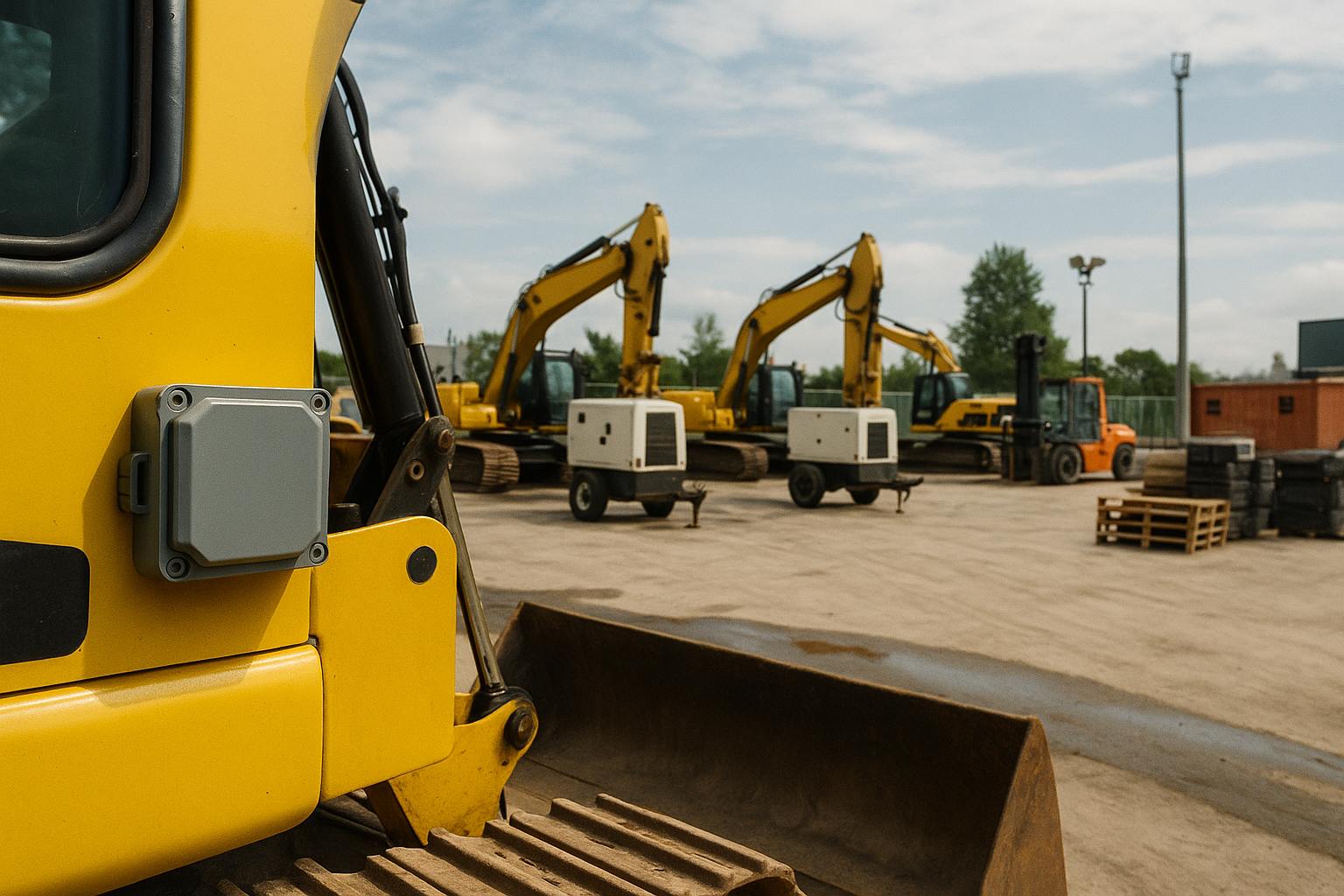
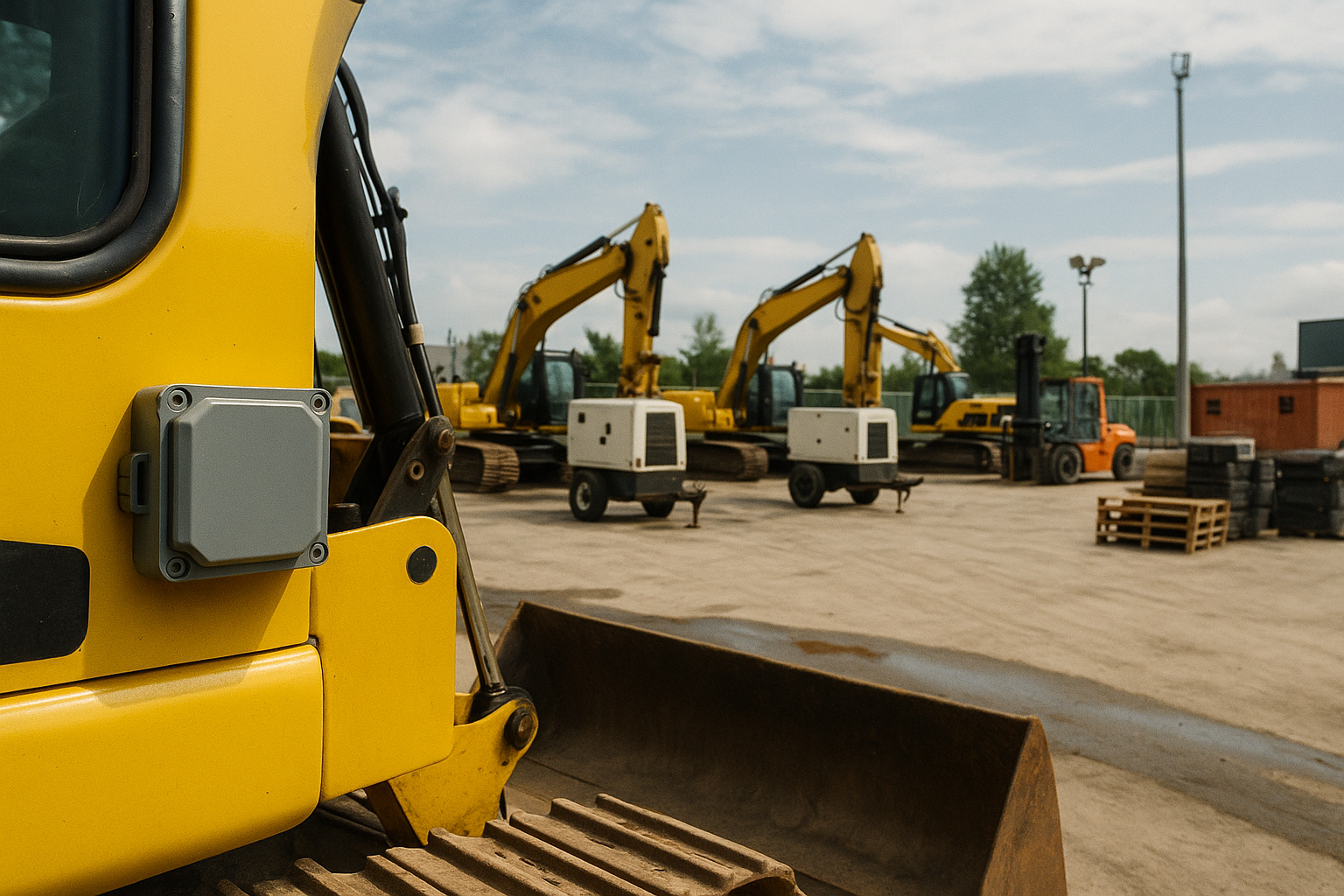
The rental industry has been chasing digital transformation for years. Fleet operators, contractors and job‑site managers all want to know where their assets are and how they are being used. Most of the discussion online revolves around software – dashboards, analytics, geofences and rental management systems – but in my experience, the make‑or‑break factor often sits inside the machines themselves. As a hardware designer and manufacturer, I spend my days focusing on that tiny box bolted onto equipment, the one that quietly records shocks, tilts and unauthorized movements and then whispers its truth to the cloud.
When I joined the IoT world more than a decade ago, our devices simply spit out GPS coordinates. That was enough for a while. But as rental fleets diversified and incidents became more complex, customers began asking for evidence rather than mere location. They needed to know when a generator fell off a flatbed, how hard a compactor was jarred and who opened a secure cabinet after hours. They also needed those answers without adding thousands of dollars in cellular fees or burning through batteries every few months.
In this post I’m going to pull the curtain back on the lessons my team and I learned while designing custom IoT trackers for equipment rental. We don’t operate a rental platform and we don’t sell dashboards. We design the hardware layer – the sensors, power circuits and radio modules – and then we work with customers to make sure our devices integrate with whatever software they already use. Along the way we’ve learned that getting a reliable signal from an unglamorous box on a muddy machine can be far more challenging than building a slick app. Here’s what we’ve discovered.
Evidence Is Harder Than Tracking
If you’ve ever tracked a fleet of vehicles with consumer GPS, you know the basics: you get periodic lat‑long coordinates and maybe a bread‑crumb trail of where the asset has been. That works fine for optimizing routes or making sure a piece of equipment isn’t stolen. But when a rental company wants to hold a customer responsible for damages or claims insurance, simple tracking doesn’t cut it.
An evidence‑grade tracker needs to document more than location. It must capture the type and severity of an event, the exact time it occurred, and the context around it. That often means storing raw accelerometer samples before and after an impact, logging the orientation of the device, verifying whether the enclosure was opened and recording GNSS coordinates to prove the asset wasn’t thousands of miles away when it happened.
In our early prototypes we thought we could get away with a few thresholds: if the accelerometer exceeded, say, 8g for more than 20 milliseconds, we’d flag a shock. Unfortunately, real job sites are messy. Machines vibrate for hours at low frequencies, producing false positives; loaders bounce across uneven terrain, causing multiple brief spikes that look like impacts; and units are sometimes mounted on flimsy brackets that resonate like a tuning fork. We spent months iterating on mechanical mounting kits because sensor placement is just as important as firmware.
We also learned that orientation matters more than most people expect. A generator isn’t supposed to operate on its side, but if the tilt sensor is calibrated relative to the unit’s base and someone mounts it at a 30‑degree angle, you’ll end up with hundreds of false “overturn” events. One customer added our device to the side panel of a compactor and then called to complain about constant tilt alarms. When we visited the site, we saw the bracket was installed backwards, effectively putting “up” at 45 degrees. The lesson here: designing for evidence requires thinking about how the device will be physically installed and making sure the person doing the mounting can’t inadvertently change the coordinate system.
Another challenge is data retention. Evidence is useless if it disappears before someone asks for it. Our devices now include a circular buffer that stores several seconds of pre‑event and post‑event sensor data on flash memory. If a rental operator doesn’t request the logs until weeks later, the device still holds the evidence. On one job we recovered shock logs from a lighting tower that had fallen on a worker; those logs, combined with the location, helped determine whether the unit was tampered with and whether the operator had followed safety procedures. That case taught us that designing for long‑term data retention, even with intermittent connectivity, is critical when you’re dealing with potential legal claims.
FAQ: Why is “evidence grade” necessary?
Q: Can’t I just rely on GPS location to settle disputes?
A: GPS is great for telling you where an asset is but not how it was treated. Evidence‑grade data includes shock force, orientation, and environmental factors, which are essential for assessing responsibility.
Q: Does evidence collection invade privacy?
A: The devices we design focus on asset behavior, not personal tracking. We avoid collecting personal data; instead, we capture mechanical events so operators can verify that equipment was used safely.
Choosing and Calibrating the Right Sensors
One of the first decisions in any hardware project is the sensor set. For rental equipment we typically rely on four core sensor types:
- Accelerometer: to detect shocks and vibration. We select three‑axis devices capable of high‑range measurements (±16g or more) so they can capture impacts without saturating. The sampling rate must be high enough (often hundreds of hertz) to detect short impulses, and the firmware must be able to identify patterns that differentiate a hard landing from normal engine vibration.
- Tilt/orientation: derived from either the accelerometer or a dedicated MEMS gyro. For static detection (is the device upside down?) the accelerometer is usually sufficient; for dynamic applications (measuring slope while in motion) a gyro adds accuracy but increases power consumption.
- Light sensor: sometimes overlooked, but extremely useful for tamper detection. Many rental companies install devices inside a weather‑proof enclosure or metal cabinet. If the light sensor suddenly reads bright daylight, it probably means the door is open.
- GNSS and motion: although location alone isn’t enough for evidence, precise timestamps and location context help to correlate events. When a shock is logged, we can check whether the machine was on the job site or on the back of a trailer miles away.
Each sensor comes with trade‑offs. A high‑range accelerometer captures strong impacts but is less sensitive to minor knocks. A dual‑range design can offer both but adds complexity. We learned that pre‑production prototypes need to be tested across many asset types – from small pumps to large excavators – because the vibration patterns are vastly different. On a vibratory roller, the entire chassis is designed to shake; if the tracker is rigidly attached, the sensor will read a constant high‑g vibration and either burn through power quickly or generate continuous alarms.
Calibrating sensors at scale is another hurdle. In a small pilot you can manually set thresholds and adjust them based on field feedback. Once you deploy thousands of trackers across different models, manually tuning becomes impossible. We built a configuration management system that allows the rental operator to apply different profiles: heavy equipment, light towers, containers and so on. Each profile has threshold tables for shock (g‑force vs duration), tilt (angle vs dwell time) and light (lux thresholds). We also exposed these settings via a REST API so the customer’s platform can adjust thresholds dynamically based on asset usage or weather conditions.
We have seen customers request more and more raw data, especially when they need to present logs to insurance adjusters or legal teams. Instead of sending only high‑level events, our firmware can deliver the raw sensor waveform and a smoothed version. This does increase payload size, but when the extra bytes can settle a dispute worth tens of thousands of dollars, most operators are happy to pay for the data transfer. To support this, our devices include sufficient flash memory and an efficient compression algorithm that reduces the raw log size without losing critical details.
FAQ: How do you handle sensor calibration?
Q: Do I need to calibrate each tracker individually?
A: In the factory we perform baseline calibration so all units start from a consistent zero reference. In the field, calibration is managed via configurable profiles tailored to asset type; the rental operator can adjust thresholds without touching each device.
Q: Can I access raw sensor data?
A: Yes. We can include raw accelerometer, light and orientation samples around event windows. Customers often use these logs to build their own analytics or to provide forensic evidence.
Lessons from Mixed Connectivity: BLE Tags and LTE‑M Hosts
In the early days of fleet tracking, putting a SIM card in every device seemed like the obvious solution. Cellular connectivity offers global coverage and relatively simple integration. The problem surfaces when you have hundreds or thousands of low‑value assets: the SIM fees add up quickly and battery life plummets when each unit has to handle its own uplinks.
Around 2020 we began experimenting with mixed connectivity architectures that combine Bluetooth Low Energy (BLE) and cellular. The basic idea is simple:
- Small, ultra‑low‑power BLE tags are attached to numerous assets – think small bins, accessories and returnable containers. Each tag periodically broadcasts its identity and sensor status. Because BLE is optimized for short bursts of data, these tags can run for years on a coin cell battery.
- A more capable host device with an LTE‑M or NB‑IoT modem acts as a gateway. It listens for the BLE broadcasts, aggregates the data and uploads it to the cloud at configurable intervals. If an event like a severe shock occurs, the host can prioritize that tag’s data and send it immediately.
In rental yards, this architecture shines. We can attach inexpensive BLE tags to dozens of cable reels, light stands and toolboxes. A single host, installed near the office or at the yard gate, gathers all the broadcasts and periodically pings the cloud. The result: vastly reduced connectivity costs and longer battery life without sacrificing visibility. We’ve seen fleet operators go from replacing batteries every six months to every three years simply by offloading the heavy lifting to the host.
However, there are caveats. BLE tags must be robust enough to survive heavy usage and weather. They still require a secure mounting method and a way to deter removal. We started adding tamper loops to the tags so if someone cuts the cable tie or pries off the tag, the host immediately reports a tamper event.
We also had to design the host device with the right balance of power, memory and antenna performance. In one project we underestimated the amount of RAM needed to buffer hundreds of tag broadcasts at once, causing the host to miss some data bursts. After increasing buffer capacity and optimizing our BLE scanning window, we achieved reliable coverage. Another lesson: always place the host in a location with good cellular signal and minimal RF interference, such as near a yard entrance rather than inside a metal container.
/
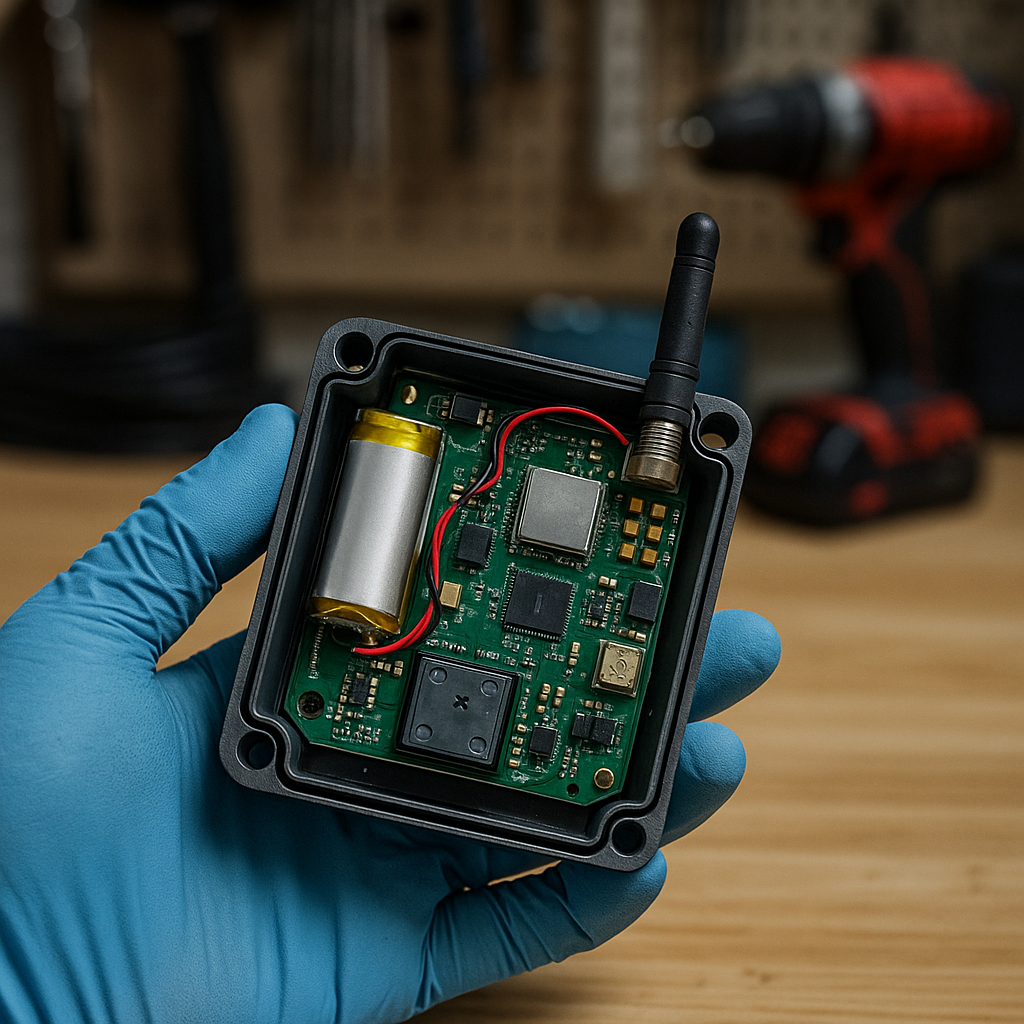
Some customers want to maintain a “one SIM per unit” approach because they value immediate, direct connectivity. That’s perfectly valid in remote deployments where BLE coverage isn’t practical. Yet many have switched to mixed architectures after analyzing the total cost of ownership. As a hardware manufacturer, our job isn’t to enforce a single pattern but to offer building blocks and guidance so operators can choose what works for .them.
Q: Why not use UWB or LoRa instead of BLE?
A: Each technology serves a different purpose. UWB is great for precise indoor positioning but requires more power and specialized infrastructure. LoRa offers long range but lower data rates and often requires private gateways. BLE provides a good balance for dense yards with minimal infrastructure; it works with our cellular hosts without adding extra hardware.
Q: Can mixed connectivity be used across sites?
A: Yes. We can configure multiple hosts at different sites. BLE tags automatically connect to any nearby host. When a tag leaves one yard, it may roam “silent” until it enters another host’s coverage area or it can store data until the next connection.
Working with Platform Providers and Rental Operators
Hardware rarely exists in isolation. Our customers often come to us with existing telematics platforms or in‑house software. Some are using a well‑known rental management system; others have built their own dashboards and analytics. For a hardware manufacturer, success depends on bridging our devices to their environment without forcing them to reinvent their software stack. Here are a few lessons:
- Speak the same language early. Before we ship a single unit, we ask the platform team what data formats they support (JSON, binary, MQTT topics, HTTP). We provide sample payloads and schema documentation. In one project we discovered the customer’s platform could not handle binary payloads longer than 128 bytes; we restructured our messages to send essential fields first and raw logs in a subsequent packet.
- Make thresholds configurable. Operators often want to fine‑tune the sensitivity of shock and tilt detection. Instead of requiring firmware changes, we built a configuration interface that can be updated over the air. The platform can adjust the settings via API calls. This flexibility has saved dozens of truck rolls.
- Provide open APIs. Lock‑in kills adoption. We document our protocols so customers can parse event packages in whichever backend they prefer. One reason fleet managers choose an ODM/OEM partner like us is because we don’t tie them to a single SaaS subscription. We’re happy to integrate with their existing systems or partner with their software vendors. Two internal links illustrate this: our custom IoT tracker hardware solutions page describes our engineering approach, and the contact us page allows operators to reach out with their requirements.
- Test in the field, not just in the lab. Nothing reveals flaws faster than real job sites. We encourage customers to install devices on a small number of diverse assets and to put them through their normal paces. This has uncovered issues from radiated noise due to nearby welding to trackers being pressure‑washed every evening. The faster we discover these problems, the quicker we can improve the design.
- Plan for longevity. Rental assets often last for years, and their trackers should, too. We design our enclosures to be IP‑rated, UV‑resistant and mechanically robust. We use conformal coating to protect PCBs from moisture. And we choose battery chemistries appropriate for temperature extremes. A cheap tracker that needs replacing every year is rarely cheaper than a well‑designed one that lasts the life of the asset.
FAQ: How do I integrate your trackers with my existing software?
Q: Do I have to switch platforms to use your trackers?
A: No. We publish our payload schemas and APIs so you can parse our events within your current system. We can also provide sample code and SDKs.
Q: What if I need a feature that isn’t in your off‑the‑shelf model?
A: Because we operate as an ODM/OEM, we can modify the enclosure, sensors or firmware to meet your requirements. Many of our products started as custom builds for a specific rental company.
Personal Reflections: Making Hardware Invisible
If there’s one takeaway from my years in IoT hardware design, it’s that the best devices are invisible – not because they’re hidden, but because they quietly do their job until you need them. A rental operator doesn’t want to think about trackers every day; they want to receive an alert if something goes wrong and then trust that the data is correct when it matters. I’ve lost count of how many times a customer has said, “I forgot your device was even there, until it saved us in an insurance dispute.” That’s the highest compliment a hardware engineer can receive.
I also appreciate the human side of this work. Our devices may be on machines, but they affect people. A driver dropping off a generator at midnight needs a tracker that won’t buzz incessantly when he hits a pothole. A yard manager responsible for two thousand assets needs a quick way to find which 10 units should be inspected after a heavy storm. And yes, a law firm may one day ask for the logs to verify whether an accident was caused by negligence. When we design with empathy – recognizing that our little box sits in the middle of these human dramas – we build better products.
So, while I may never post a screenshot of an app, I’m proud of our contribution behind the scenes. We design and manufacture hardware that makes modern rental operations possible. We don’t run your platform; we just want to make sure you have evidence when you need it and silence when you don’t.
Frequently Asked Questions
Below are some common questions that rental operators and platform developers ask when they’re considering integrating our IoT tracker hardware into their fleets.
Q: How long do the batteries in BLE tags really last?
A: In most yard deployments, our BLE tags run three to five years on a coin cell. Battery life depends on the advertising interval, environmental conditions and how often the tag logs events. We choose low‑leakage components and allow you to adjust the broadcast rate.
Q: Do your trackers work on assets that travel over long distances?
A: Yes. For assets that leave the yard or cross borders, we offer cellular models with multi‑band LTE‑M/NB‑IoT modems and fallback to 2G. Mixed connectivity is still possible: the tag records events locally and uploads them when it reconnects.
Q: What happens if someone removes or damages the tracker?
A: We incorporate tamper switches and removal detection. If the device is dislodged or the enclosure is opened, an immediate tamper event is logged and sent. Hosts also alert you if a BLE tag disappears from the expected scan list.
Q: Can I customize the enclosure or mounting options?
A: Absolutely. We design enclosures for specific environments (dusty yards, underwater use, cold storage). We can modify mounting brackets to fit your equipment and align the sensor orientation with your preferred reference plane.
Q: How do I get support if I encounter integration issues?
A: We provide integration guides, sample code, and direct access to our engineering team. You can start by visiting our support documentation and submitting a ticket via our contact page.