
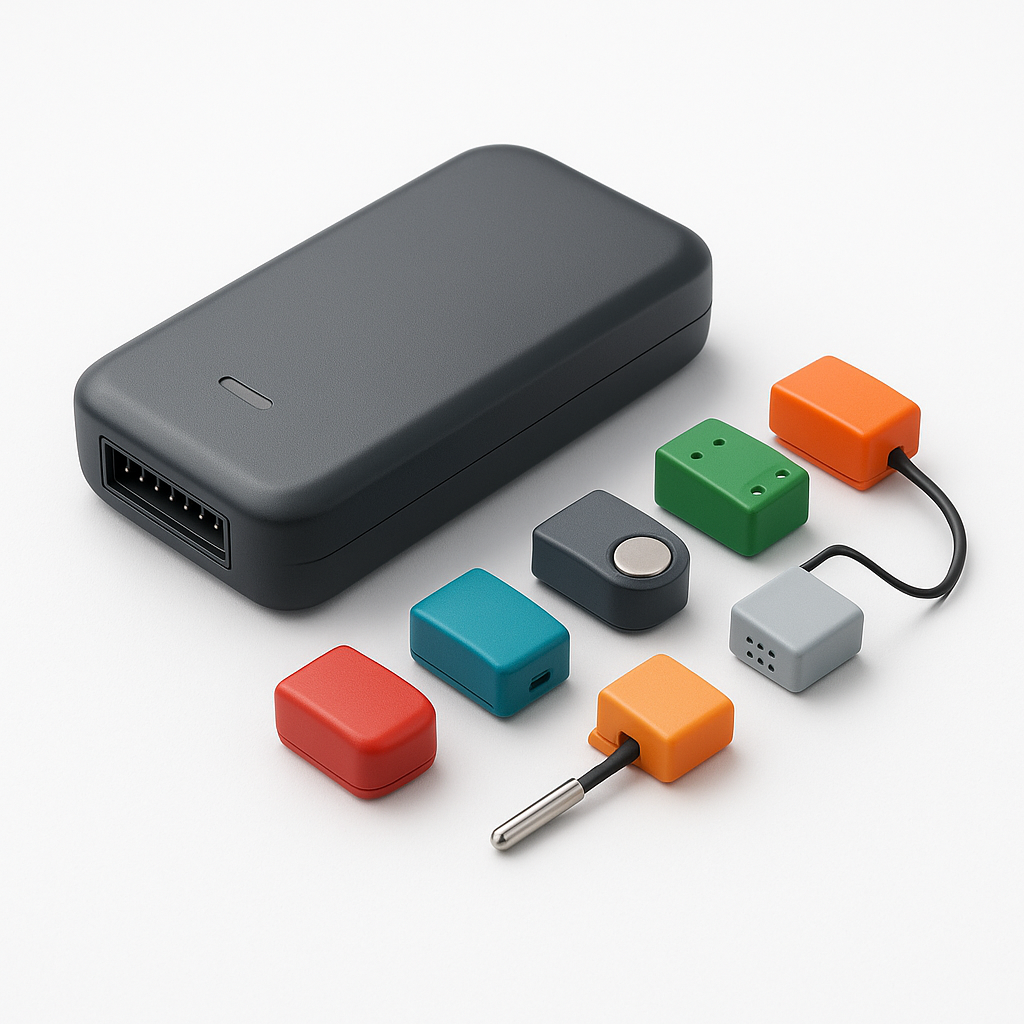
Modular I/O architecture in vehicle tracking is a hardware design approach where a single base tracker unit uses a standardized multi-pin connector with dedicated pins reserved for swappable hardware modules — such as SOS buttons, backup batteries, GPIO expansion, iButton readers, BLE gateways, or temperature/humidity probes — allowing one SKU to serve multiple fleet applications without hardware redesign.
I've spent over 20 years designing and deploying IoT tracking hardware across 100+ countries. The single biggest operational pain point I see in fleet deployments isn't GPS accuracy or cellular coverage — it's SKU sprawl. Fleet operators and telematics service providers end up managing 6, 8, sometimes 12+ different tracker models just to cover their use cases. Every model means a different wiring harness, different firmware branch, different platform integration, and different spare parts inventory. This article explains why modular I/O architecture eliminates that problem and how it works at the hardware level.
The SKU Sprawl Problem
The global fleet management market reached $27 billion in 2025 and is growing at nearly 17% annually. But as the market expands, fleet operators face a paradox: more use cases demand more specialized hardware, but more hardware variants create more operational complexity.
Consider a typical telematics service provider. They need:
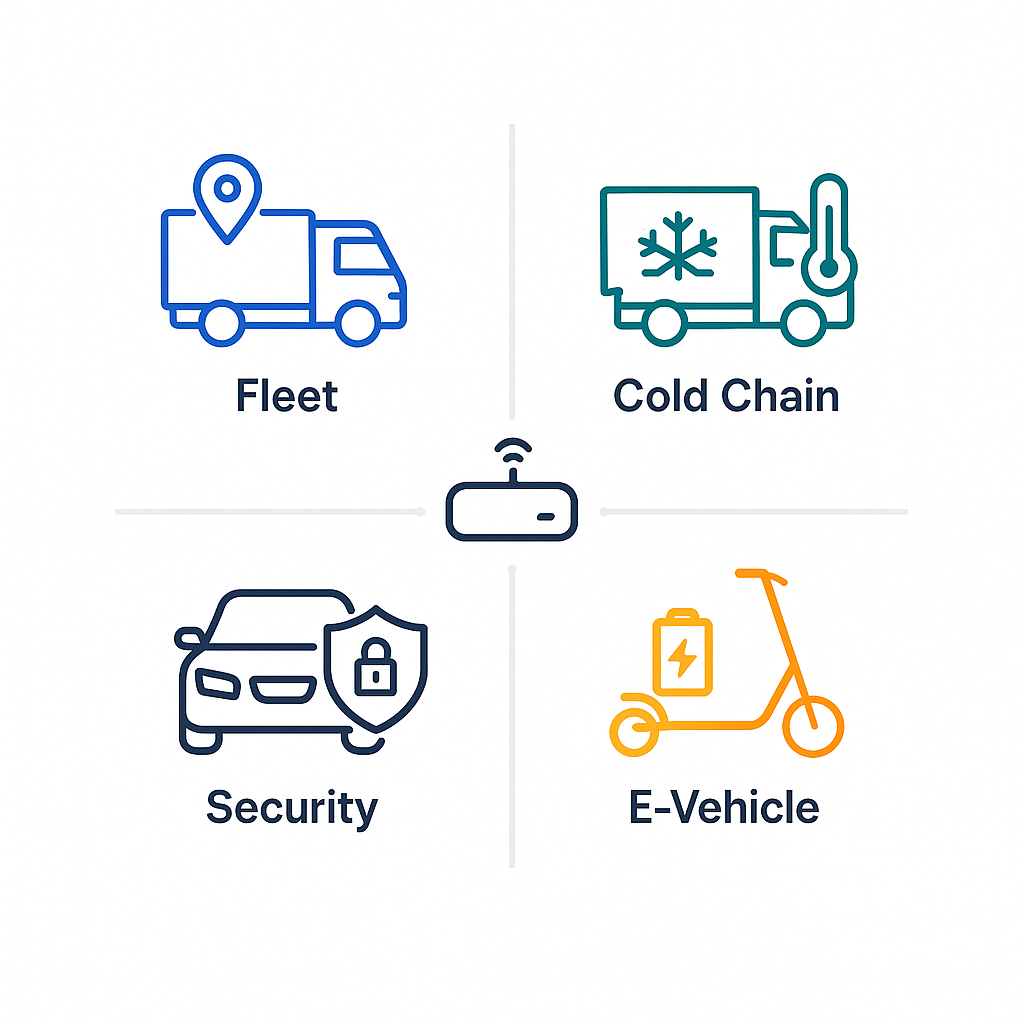
Fleet tracking — basic GNSS + ACC detection + relay for engine cut. Cold chain monitoring — temperature and humidity probes or BLE beacon gateway for cargo. Vehicle security — iButton or BLE driver authentication for anti-theft. Driver safety — SOS panic button for lone workers or high-risk routes. E-vehicle tracking — 48V input support for electric scooters and bikes.
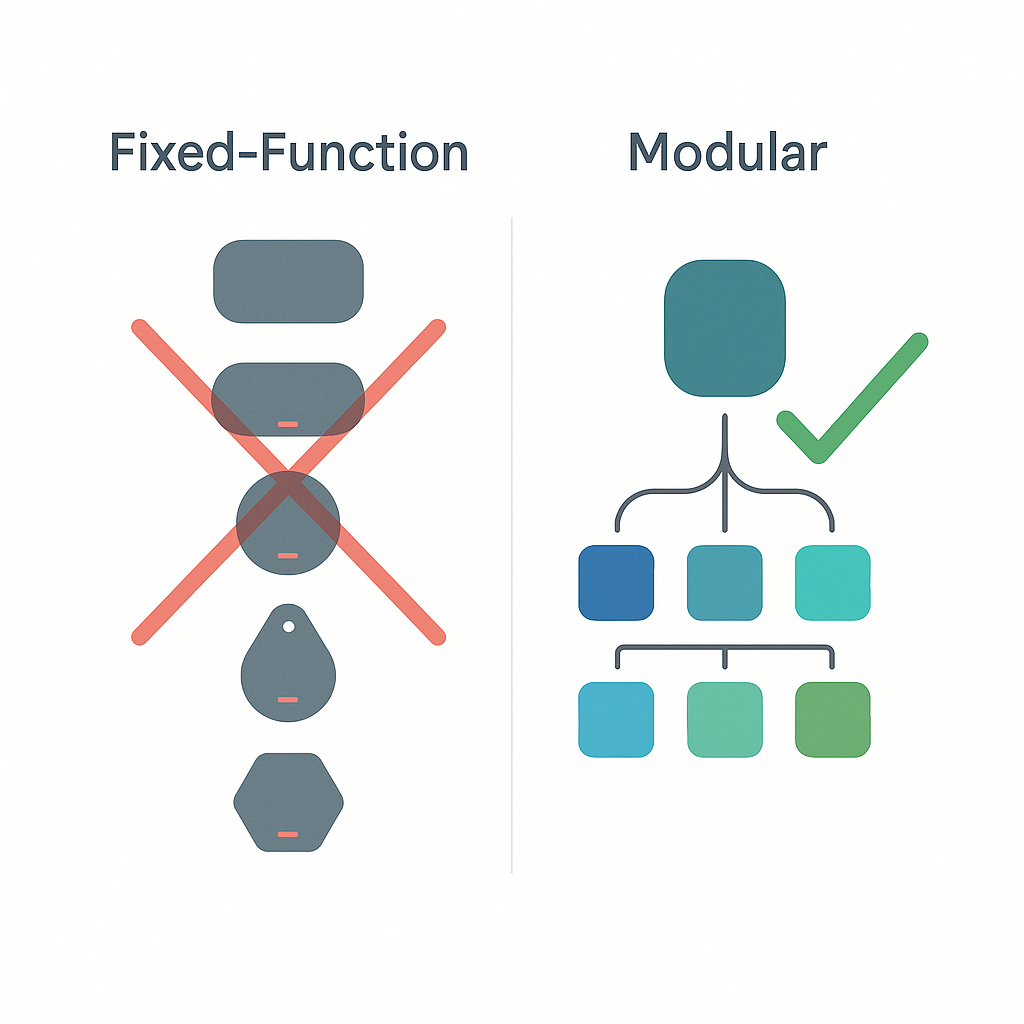
In a fixed-function world, each of these is a separate product with its own PCB, wiring harness, firmware variant, and platform parser. A manufacturer ends up maintaining 40+ active SKUs. A service provider ends up with a warehouse full of devices they can't interchange.
Key Takeaway: The shift from fixed-function to modular architecture isn't about adding features — it's about collapsing a product line into a platform. One base unit, one firmware, one platform integration, N configurations.
How Modular I/O Works: The 9-Pin Architecture
The core idea is straightforward: reserve specific pins on the wiring harness connector for modular functions while keeping power, ground, ACC detection, and relay output as fixed pins.
A practical 9-pin allocation looks like this:
| Pin | Function | Type | Notes |
|---|---|---|---|
| 1 | Power In (9–48V) | Fixed | Wide voltage, no converter needed |
| 2 | GND | Fixed | Common ground |
| 3 | ACC Detection | Fixed | Ignition state monitoring |
| 4 | Module Pin A | Modular | SOS / Battery+ / GPIO-1 / iButton Data / BLE / T&H Data |
| 5 | Module Pin B | Modular | SOS GND / Battery– / GPIO-2 / iButton GND / BLE GND / T&H GND |
| 6 | Module Pin C | Modular | Extended I/O for modules needing 3+ wires |
| 7 | Module Pin D | Modular | Extended I/O for modules needing 4 wires |
| 8 | Relay NO | Fixed | Engine cut — normally open |
| 9 | Relay COM | Fixed | Engine cut — common |
Pins 1–3 and 8–9 are fixed: power, ground, ignition sense, and relay output are universal across all vehicle tracking applications. Pins 4–7 form the modular zone — a 4-wire bus that accommodates six different hardware modules depending on which wiring harness is connected.
The Six Module Configurations
Each module plugs into pins 4–7 with a pre-terminated harness. The firmware auto-detects which module is present at boot and enables the corresponding driver.
SOS Module. A wired panic button for driver safety or lone-worker applications. The button connects to two modular pins (signal + ground). When pressed, the tracker generates a priority alarm packet with GPS coordinates. Used in taxi fleets, ride-hailing vehicles, and high-risk logistics routes.
Backup Battery Module. A small rechargeable cell that keeps the tracker alive for 2–4 hours after main power is disconnected. Critical for anti-theft: if someone cuts the vehicle battery, the tracker continues reporting its location. The battery connects via power and ground pins with charge management handled on the base PCB.
GPIO Expansion Module. Two general-purpose digital inputs for door sensors, fuel level switches, PTO detection, or refrigeration unit status. This turns the base tracker into a light telematics controller without needing a separate I/O expander box.
iButton / Electronic Key Module. A 1-Wire interface for Dallas iButton driver identification. The driver touches a registered key to the reader before starting the engine. Unregistered keys trigger an immobilizer response via the built-in relay. Common in rental fleets, shared-vehicle pools, and construction equipment.
BLE Gateway Module. A Bluetooth 2.4 GHz scanner that detects and reports BLE beacons — for driver proximity sensing, cargo tag tracking, or scanning environmental sensor beacons mounted inside a refrigerated compartment. The BLE module uses 2 pins for UART data plus power/ground.
Temperature & Humidity Probe Module. A wired external probe for direct cargo or cabin temperature and humidity monitoring. The probe connects via a 1-Wire or analog interface on the modular pins. Threshold alarms (high/low temperature, high humidity) are configured via platform commands and reported in the telemetry stream.
Why 9–48V Wide Voltage Matters More Than You Think
Most vehicle trackers are designed for either 12V (cars) or 24V (trucks). A modular tracker needs to go wider. Here's why:
The vehicle tracking system market is projected to reach $33 billion in 2026, and a growing share of that is coming from non-traditional vehicles: electric scooters and bikes (48V), golf carts (36V), utility vehicles, and forklifts. A tracker locked to 12–24V misses these entirely. A 9–48V DC input with integrated voltage regulation handles the full spectrum without external converters — one hardware, all vehicles.
This is especially important for fleet operators managing mixed fleets: delivery vans (12V), heavy trucks (24V), and last-mile e-scooters (48V) all tracked on the same platform, same firmware, same wiring process.
The Platform Integration Advantage
Modular hardware simplifies the software side dramatically. Instead of maintaining separate protocol parsers, device profiles, and configuration templates for each tracker model, the platform sees one device type with a module identifier field in each data packet. The module ID tells the platform which data fields to expect:
Module 0 (no module) → base tracking only. Module 1 (SOS) → base + SOS event. Module 2 (battery) → base + backup voltage level. Module 3 (GPIO) → base + 2 digital inputs. Module 4 (iButton) → base + driver ID. Module 5 (BLE) → base + beacon scan list. Module 6 (T&H) → base + temperature + humidity readings.
One protocol parser. One device configuration template. One firmware branch with module-aware drivers. The operational savings compound quickly: every new tracker model a service provider doesn't have to integrate is weeks of platform development they don't spend. Understanding the design principles behind modern IoT devices makes clear why this convergence toward platform-based hardware is inevitable.
Key Takeaways
- Fixed-function vehicle trackers create SKU sprawl that multiplies inventory, firmware, and platform integration costs.
- Modular I/O architecture uses a standardized connector (e.g., 9-pin) with dedicated modular pins that accept swappable hardware modules.
- Six common module types — SOS, backup battery, GPIO, iButton, BLE gateway, and T&H probe — cover fleet, cold chain, security, and driver safety applications.
- 9–48V wide voltage input eliminates the need for separate car/truck/e-vehicle SKUs.
- Platform integration simplifies from N device parsers to one parser with a module ID field.
- The economics favor early adoption: every SKU you eliminate saves inventory carrying cost, technician training, firmware maintenance, and platform engineering.
What is modular I/O architecture in a vehicle tracker?
Modular I/O architecture uses a single base tracker unit with a standardized multi-pin connector where specific pins are reserved for swappable hardware modules. Instead of designing a separate product for each use case, the manufacturer produces one base PCB and multiple wiring harnesses, each pre-terminated with a different module. The tracker firmware auto-detects which module is connected and enables the corresponding functionality.
How does modular design reduce fleet deployment costs?
Instead of stocking 6+ different tracker models for different use cases, fleet operators stock one base unit and the specific modules needed per vehicle. This reduces inventory carrying cost, simplifies technician training (one installation procedure), and allows a single firmware branch and platform integration. The cost savings compound as fleet size grows.
Can a modular tracker handle cold chain monitoring and fleet management simultaneously?
Yes. With the right module configuration — for example, a temperature/humidity probe or BLE beacon gateway on the modular pins plus the base unit's built-in GNSS, accelerometer, and relay — a single device provides both real-time location tracking and continuous environmental monitoring. This is particularly valuable for refrigerated delivery fleets that need both capabilities.
What voltage range should a modular vehicle tracker support?
A well-designed modular tracker should support 9–48V DC input to cover passenger cars (12V), trucks (24V), utility vehicles (36V), and e-scooters/e-bikes (48V) without requiring external voltage converters. This single voltage range eliminates the need for separate vehicle-type SKUs.
How does modular I/O affect firmware and OTA update design?
The firmware must auto-detect which module is connected at boot, enable the corresponding driver and protocol handlers, and disable unused peripherals to conserve power. OTA updates need to be module-aware so that updates targeting one module's driver stack don't introduce regressions for units running different configurations. A module ID field in the device configuration ensures the OTA server delivers the correct firmware variant.
The shift from fixed-function to modular vehicle tracking is a design philosophy change, not just a product feature. If you're evaluating tracker hardware for a multi-scenario fleet deployment, I'd welcome the conversation.
Related: Why GPS-Only Trackers Fail Pharmaceutical Cold Chain Compliance