
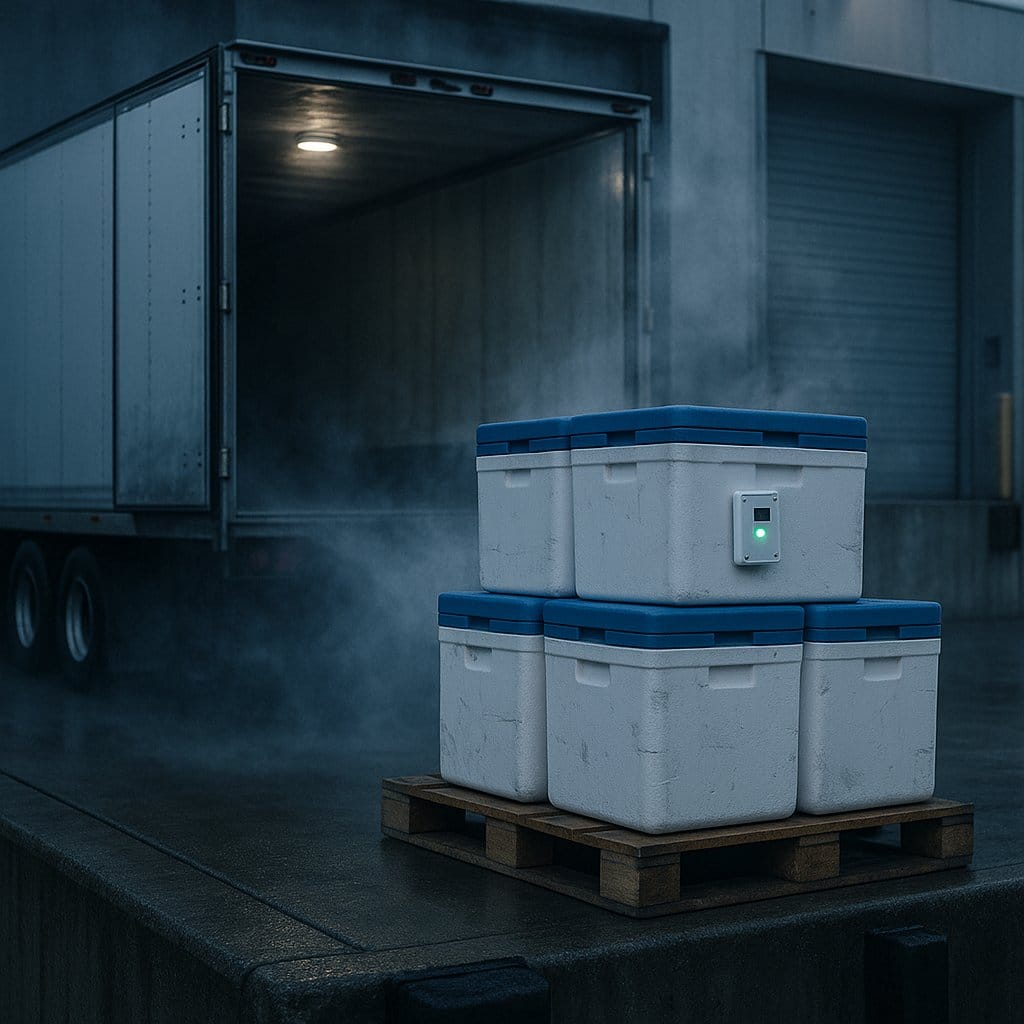
Much of the supply chain visibility hardware conversation has historically centered on location — the dot on a map. That basic question, where is it, is less differentiating than it used to be. The questions that now decide budgets, claims and audits are different: was the product kept within its labelled conditions, which returnable asset is this and when does it come back, and who had custody when something went wrong. In regulated and claims-prone lanes across pharmaceutical, food and third-party logistics, the buying conversation is shifting from tracking to evidence — and hardware is increasingly judged on whether its records survive a quality review, an audit or a dispute.
What Is Supply Chain Visibility Hardware for Condition, Asset and Custody Evidence?
Supply chain visibility hardware for condition, asset and custody evidence describes trackers, data loggers and sensor tags whose primary job is to produce defensible records: the conditions a shipment experienced, the identity and movement of reusable assets, and the chain of custody across handovers. Location is one input — the deliverable is a record that supports decisions.
Three evidence lanes sit under that definition. Condition evidence covers temperature, humidity, light, shock and tilt — measurements that help determine whether a vaccine, a biologic or a pallet of fresh produce can still be accepted, released or used. Asset evidence covers identity, dwell time, rotation and return for the pallets, crates, roll cages and insulated shippers that circulate between sites. Custody evidence covers who held the goods or the asset at each point in time — supported by handover and receipt records, and corroborated by positions, timestamps and geofence events.
The distinction matters because each lane answers a different reviewer. A quality team investigating a temperature excursion wants the condition record. An asset manager chasing a shrinking pool of crates wants the asset record. A claims handler apportioning responsibility wants the custody record. Hardware positioned as a generic GPS tracker competes on battery life and unit price; hardware positioned as an evidence source competes on whether its output stands up in those three reviews.
Why Are Location Dots No Longer Enough?
A location dot rarely settles the questions that cost money. Whether a delivery is accepted, a batch is released, a claim is paid or an asset pool is replenished depends on condition at a point in time, accountability for a specific asset, and custody at a handover — none of which a coordinate alone can establish.
When devices are compared as standard electronics — positioning accuracy, battery life, ingress rating, SIM cost, minimum order quantity — the conversation converges on price. Nothing in that comparison builds a durable reason to choose one supplier over another, and nothing in it maps to the moments when visibility actually gets used: a receiving dock deciding whether to accept or reject, a quality team deciding whether to release or quarantine, an operations team deciding which customer site is holding the crates.
Regulation is reinforcing the shift. In the United States, the Food Traceability Rule under FSMA Section 204 requires covered businesses to keep Key Data Elements at Critical Tracking Events and to provide records to the FDA within 24 hours of a request; a 30-month extension moved the compliance date from January 20, 2026 to July 20, 2028. In Europe, the Good Distribution Practice guidelines (2013/C 343/01) expect medicinal products to be stored and transported within labelled conditions, with deviations documented and investigated. Neither framework certifies devices. Both create demand for records appropriate to the regulated workflow — KDEs at CTEs under FSMA 204, documented transport-condition and deviation records under EU GDP — and hardware justifies itself by making those records easier to produce and harder to dispute.
What Turns a Temperature Alert Into Usable Evidence?
An alert states that a threshold was crossed; evidence supports a decision. To carry weight in a deviation review, an excursion record needs magnitude, duration, location, the custody leg in which it occurred, the response that followed, and exportable raw data a quality team can set against product stability knowledge.
A temperature excursion is a quality event, not a notification. The same breach of an 8°C ceiling means different things at ten minutes and at ten hours, on an airport apron and in a last-mile van, before a handover and after one. Pharmaceutical quality teams typically weigh peak temperature, time above threshold, mean kinetic temperature where scientifically appropriate, packaging qualification and lane history before deciding to release, quarantine or reject — a process that ends in a documented disposition decision, not a dashboard glance.
| Dimension | The question asked afterwards | What the record must contain |
|---|---|---|
| Magnitude | How far out of range did it go — did it touch a critical zone? | Min/max temperature, full curve, threshold settings |
| Duration | How long was the product exposed — continuous or intermittent? | Excursion start and end times, cumulative duration |
| Location | Where did it happen — apron, warehouse, border, last mile? | GPS or network position, geofence events, route trace |
| Custody leg | Whose leg of the journey was it — before or after handover? | Handover timestamps, stop points, custody record |
| Response | Did anyone receive the alert and act on it? | Notification log, acknowledgements, escalation record |
| Product impact | Can the batch still be released? | Raw data export and report for review against stability data |
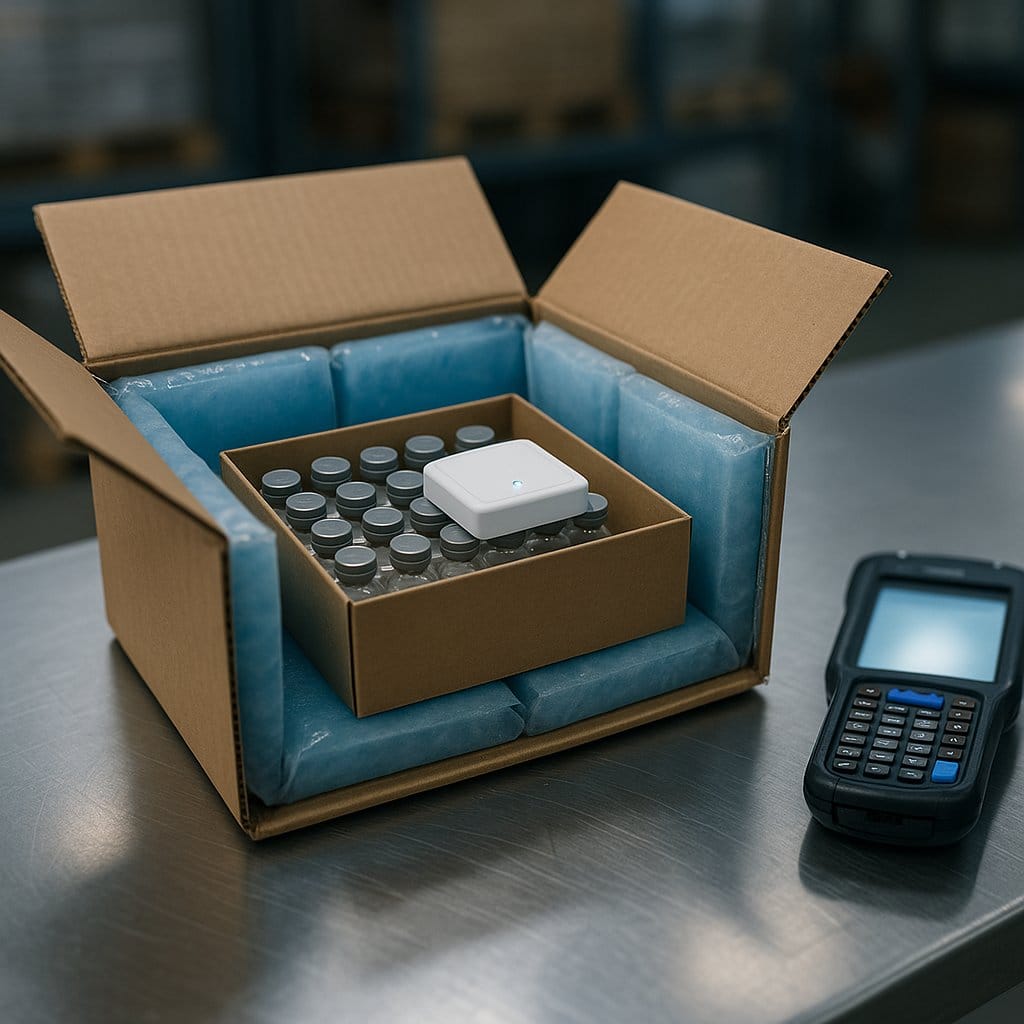
Each row in that table is a question someone will ask after the fact. In a deviation review, the first question is rarely whether there was an alert; it is what exactly the product was exposed to, for how long, and under whose control. A record that says only "alarm at 09:42" answers none of that.
When Does Cold Chain Data Count as Trustworthy?
Cold chain data counts as trustworthy when it meets the data integrity expectations summarized as ALCOA+: attributable, legible, contemporaneous, original and accurate, plus complete, consistent, enduring and available. A screenshot of a chart satisfies few of these expectations; raw data, an audit trail, controlled access, consistent units and timezones, and defined retention carry far more evidentiary weight.
The principles translate directly into product behavior. Attributable means every reading is bound to a device ID and a shipment or asset — and that record creation, changes, reviews and approvals can be traced to a user or system. Contemporaneous means values are recorded as they occur, not reconstructed later. Original means the first captured record, or a verified true copy of it, is preserved — not just a rendered graph. Complete, consistent, enduring and available mean nothing is missing, units and timezones do not wander between exports, retention is deliberate, and an auditor can pull the record years later. Different artifacts carry different evidentiary weight:
| Artifact | What it is | Why a reviewer asks for it |
|---|---|---|
| Raw data | The original time-stamped measurements from the device | Recalculation, audit and independent verification |
| PDF report | Human-readable summary with curve, map and excursion list | Receiving decisions, QA review, claims, sign-off |
| CSV / API export | Structured data feed for the customer's own systems | Integration with QMS, TMS or analytics without manual steps |
| Audit trail | Who changed thresholds, generated reports or edited notes, and when | Demonstrating records were not altered after the fact |
| Calibration record | Sensor accuracy reference traceable to a standard | Establishing that the measurements themselves are credible |
At receiving, a PDF alone rarely ends the discussion if the raw file, the threshold configuration or the calibration status cannot be produced alongside it.
Devices are not bought so that someone can look at data. They are bought so that when an excursion, an audit, a rejected delivery or a missing asset turns into a dispute, there is a record that can be trusted, replayed and acted on.
What Does Custody Evidence Look Like for Returnable Assets?
For pallets, crates, roll cages and reusable insulated shippers, custody evidence is the event history of the asset itself: dispatch, arrival, dwell at each node, return, cleaning or repair, and the party holding it at every step. The operational metrics built on that history are return rate, dwell time, cycle time and shrinkage.
Returnable transport items behave differently from fixed assets: they create most of their value while circulating, and they spend most of their lives on premises their owner does not control. The expensive questions are mundane — which customer sites hold crates for weeks, which lanes quietly lose shippers, how large the pool actually needs to be — and they cannot be answered without serialized per-asset identity and event history. Standards already exist for exactly this: GS1's GRAI can give returnable assets a globally unique identity when used with item-level serialization, and EPCIS defines how supply chain parties share event data — what happened, where, when and why — across company boundaries.
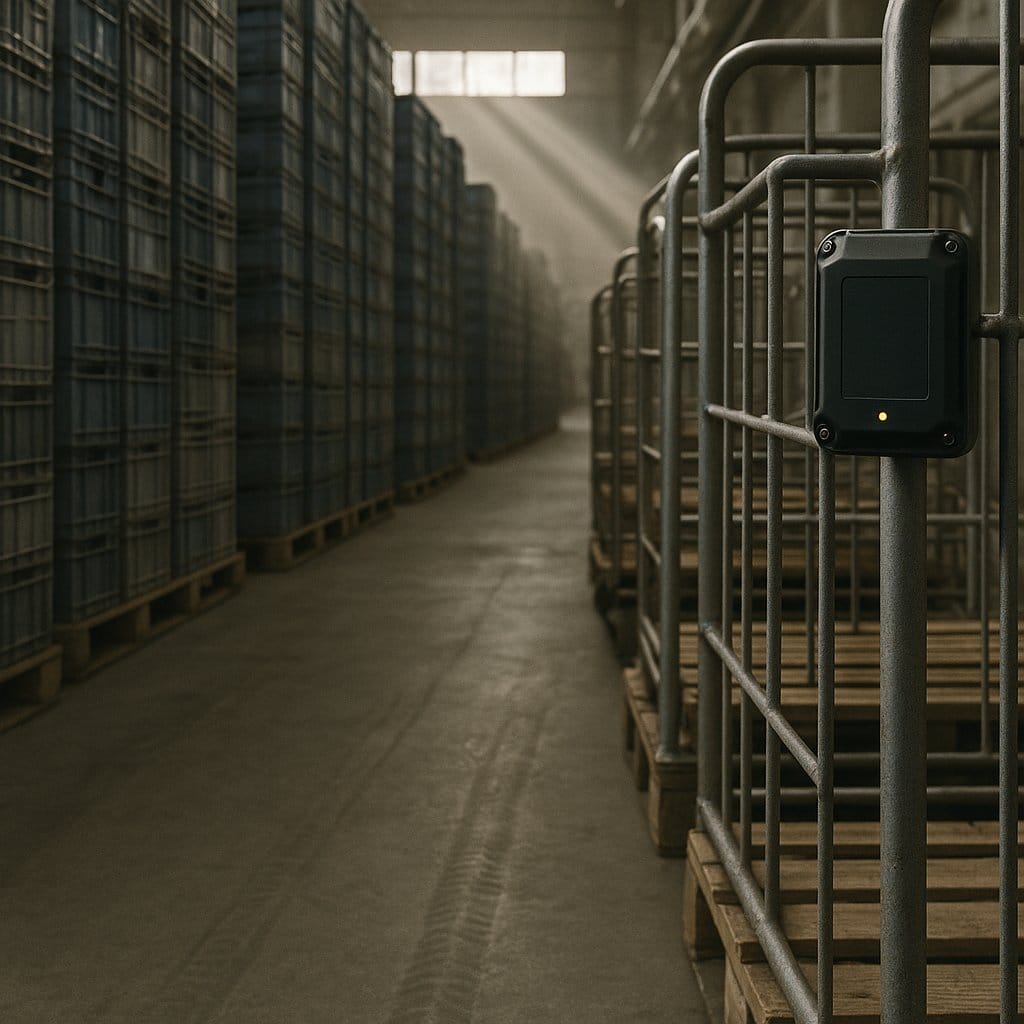
The overlap with cold chain deserves particular attention. A reusable insulated shipper is simultaneously a condition problem — did the contents stay in range — and an asset problem — did the box come back, and in what state. When device placement and the data model are designed for both jobs, one device run can feed both records: a temperature profile for the quality review, movement and dwell events for the asset ledger. That overlap can strengthen the business case, because the same deployment may support both quality review and asset-utilization analysis.
What Belongs in a Defensible Evidence Package?
A defensible evidence package typically combines a shipment summary, device configuration and calibration status for the trip, sensor placement, the full temperature profile, per-excursion summaries, location history, condition events such as light or shock, recorded data gaps, a notification log, custody and handover records, a raw data export, and report metadata. Each element exists because a different reviewer will ask for it.
The shipment and device summaries establish context: what moved, between which parties, on which device, configured with which thresholds and alarm delays, calibrated against what reference and with what status during the trip. The temperature profile and excursion summaries carry the condition story. Location history, condition events and the notification log show what happened and who was told. Communication and data gaps belong in the record too — an unexplained six-hour hole invites more questions than a documented one. Custody records help reconstruct responsibility at each handover. Report metadata is the most overlooked element: generation time, generating user, timezone, units and threshold settings determine whether a report can be reproduced — and a report that cannot be reproduced invites challenge.
There is also an honest boundary to draw. EU GDP sets expectations for distribution practice — storage and transport within labelled conditions, deviation handling, documentation. The FDA's 21 CFR Part 11 applies when electronic records or electronic signatures are used to meet FDA record requirements or are submitted to the agency, placing requirements on the computerized systems and procedures used to create, manage and approve those records. Neither attaches to a tracker as a standalone gadget. No device makes an organization compliant, and phrases like "FDA approved tracker" misstate how the agency works. What hardware can legitimately contribute is narrower and more useful: accurate sensors with calibration references, synchronized timestamps, structured exports, and data that supports the customer's own audit trail and validation effort.
What Questions Come Up Most Often?
The same questions recur in evaluations across pharmaceutical, food and third-party logistics settings. The conservative answers below reflect how the regulatory and quality context actually works: visibility hardware supports decisions and records; it does not replace quality systems or guarantee outcomes.
Is there such a thing as an FDA-approved GPS tracker or data logger?
No. The FDA regulates products and processes such as foods, drugs and medical devices; it does not issue blanket approvals for tracking hardware. Accurate language is narrower: a device can be designed to help collect shipment condition data used within FDA-regulated supply chain workflows. Claims of "FDA approved trackers" misstate the framework.
Does a real-time tracker replace a BLE temperature logger?
No — they do different jobs. A BLE logger travels inside the packaging and produces a box-level condition record read at receiving, at low unit cost and power draw. A real-time cellular tracker reports during transit, enabling intervention while a shipment can still be saved. Some high-value lanes run both, especially when teams need in-transit intervention and a package-level receiving record.
Can hardware guarantee that no temperature excursion will occur?
Most visibility devices do not control the environment around them. Packaging qualification, lane design and handling procedures determine exposure; hardware determines whether an excursion is detected early, documented precisely and attributed to the correct leg of the journey. The defensible claim is earlier detection and better records, not prevention.
What is the difference between tracking and traceability?
Tracking answers where something is right now. Traceability reconstructs what happened after the fact: what the product or asset was, where it moved, when each event occurred, who had custody and under what conditions. Rules such as FSMA 204 are traceability requirements — they mandate records, not live maps.
How is return on investment usually framed for returnable asset visibility?
Through asset metrics that finance teams can verify: potential replacement purchases avoided if shrinkage falls, dwell-time reduction at slow nodes, pool-size optimization if cycle times improve, fewer custody disputes and less manual counting. Credible programs establish baselines in a pilot rather than promising percentages upfront.
What Are the Key Takeaways?
Six points summarize the shift this article describes. They apply whether the cargo is a biologic shipment, a container of fresh produce or a pool of ten thousand crates, and they hold regardless of whose hardware is on the box.
- The location question is less differentiating than it was; condition, asset and custody evidence is where visibility hardware is now judged.
- A temperature excursion is a quality event defined by magnitude, duration, location, custody leg and response — not a notification.
- Data becomes evidence when it meets ALCOA+ expectations, with raw data, an audit trail and controlled access behind every human-readable report.
- Returnable assets need serialized per-item identity and event history; return rate, dwell time, cycle time and shrinkage are the metrics that matter.
- Reusable cold chain packaging is a high-value overlap: one well-designed deployment can produce both a condition record and an asset record.
- No device makes an organization compliant; hardware contributes accurate, attributable, exportable records to the systems that do.