
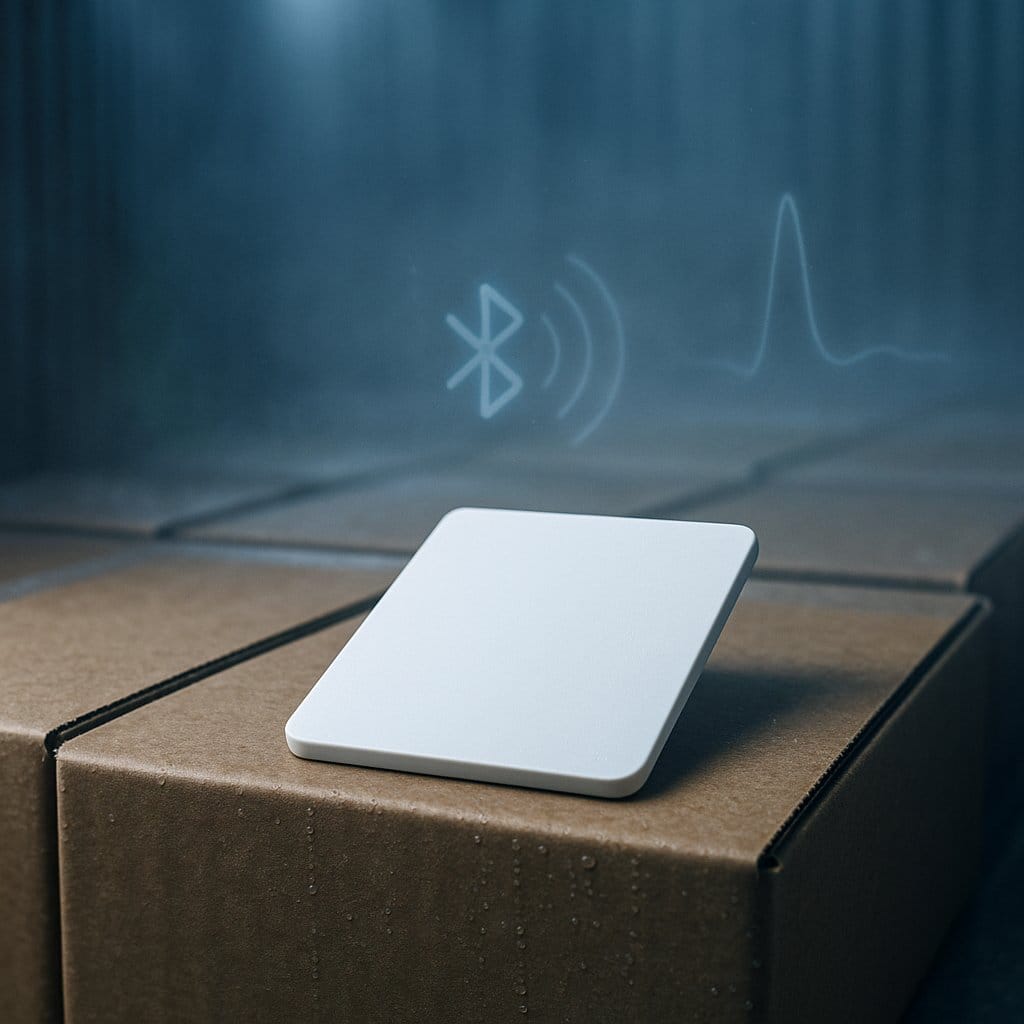
Most cold chain post-mortems I've sat through don't begin with a temperature breach. They begin with a question nobody can answer: what actually happened to this shipment between the dock and the customer? The reefer logged fine at both ends, the truck telematics looked normal, and yet a pallet arrived out of spec, with no record of when, where, or why. That blind spot, not the excursion itself, is what turns a recoverable problem into a rejected shipment and an audit finding.
After more than a decade in IoT hardware, working with logistics and pharmaceutical supply chains across global markets, I've come to think of this as the cold chain data gap: the distance between the temperature history you assume you have and the continuous, defensible record you can actually produce. Bluetooth Low Energy (BLE) temperature loggers are one of the more practical tools I've seen for closing it. Here's how they work, where they fit, and what to look for.
What is a BLE temperature logger?
A BLE temperature logger is a small, battery-powered data logger that records temperature, and often ambient light, on the device itself at set intervals, then broadcasts those readings over Bluetooth Low Energy to a nearby phone or gateway for upload, export, and audit. Unlike wired loggers it needs no cabling, and unlike a single-use USB logger it can be read in transit and reused across shipments.
That short definition hides a few design choices that matter in practice: where the data is stored, what the device can sense beyond temperature, and how the record gets out for an auditor to read.
Why does cold chain temperature data go missing?
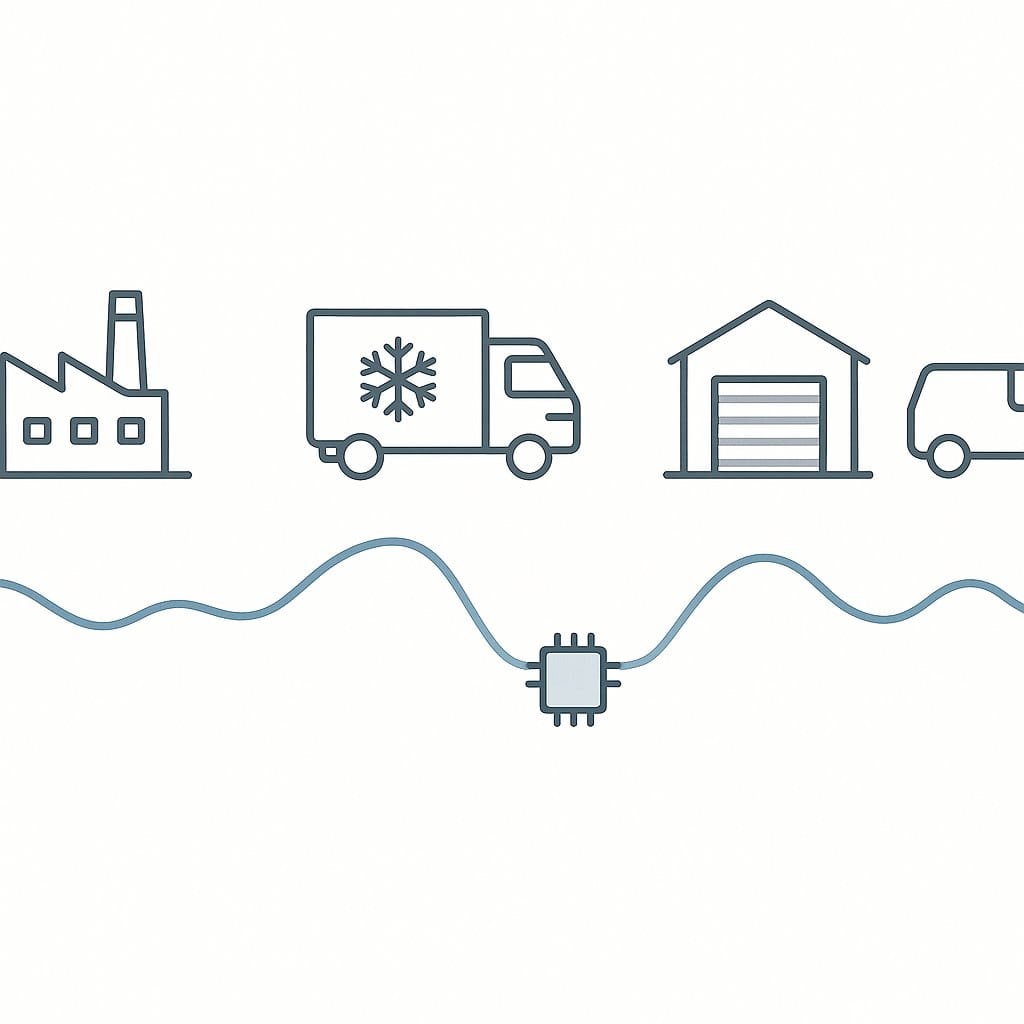
Cold chain data goes missing for a few recurring reasons: traditional single-use loggers are read only when the box is opened at the destination, so problems surface days too late; cloud-first trackers can lose live visibility, and, if they don't buffer locally, the readings themselves, in connectivity dead zones; and temperature alone rarely proves that a sealed carton was opened in transit. Each gap leaves a hole in the record, and holes are what fail audits.
- Read-only-at-destination. Many traditional single-use USB loggers are inspected only when the box is opened at journey's end. If something went wrong on day two, you find out on day nine, too late to intervene, and with no live alert.
- Connectivity dead zones. Cloud-first trackers that depend on a constant cellular or network link lose live visibility inside steel containers, on ocean legs, in rural corridors, and deep in cold rooms. Better devices buffer on-device and upload later; the ones that don't simply lose the readings taken there.
- No tamper or exposure signal. Temperature alone won't tell you a sealed carton was opened mid-transit. Pilferage, mishandling, and accidental exposure can leave no thermal fingerprint until the damage is already done.
The regulators are pushing in the same direction, though it's worth being precise about how. In the U.S., the FDA's Food Traceability Rule under FSMA Section 204 is a record-keeping and traceability rule for high-risk foods, not a temperature-monitoring mandate, but even with its compliance date pushed to July 20, 2028, it signals a permanent shift toward the kind of end-to-end data integrity that good monitoring has to support. (U.S. regulators estimate roughly 48 million foodborne illnesses a year, the public-health pressure behind it.) In Europe, the EU's Good Distribution Practice guidelines for medicines go further on temperature specifically: they expect temperature-controlled storage and transport to be monitored with calibrated equipment, excursions investigated, and records retained with enough integrity that a distributor can produce them on request. It's the same visibility discipline behind a decade of pallet-level tracking in long-haul logistics.
How does a BLE temperature logger close the data gap?
A capable BLE logger helps on three fronts: it stores readings on the device so the record survives network outages; it can add a light sensor that flags likely exposure when a sealed carton is opened; and it exports the full history, temperature curves with alarm events, as PDF or CSV a quality team can actually review.
It logs on the device, not just in the cloud
The single most important feature is local memory. A capable BLE logger stores tens of thousands of readings on board, at a five-minute interval, 30,000 readings is more than 100 days before overwrite, so the record continues even when no phone or gateway is in range. When connectivity returns, the backlog syncs. This is the difference between losing four hours on the ocean leg and having every reading, end to end.
It senses more than temperature
Adding a light sensor gives you an exposure signal alongside temperature. If a sealed carton is opened to daylight in transit, the logger can register the change and raise a light alarm next to its temperature trace. It isn't proof of tampering on its own, darkness, opaque packaging, or a device buried under payload can all hide an opening, and routine QA or customs checks can trip it, but as a second channel it often explains an otherwise mysterious excursion.
It produces an export a quality team can use
A reading you can't hand to a reviewer isn't worth much. Modern loggers export the full history, temperature curves with alarm events flagged, as PDF or CSV, straight from an app or web dashboard. Treat that as the starting point, not the finish line: for regulated pharma, true audit-readiness also depends on calibration traceability, device ID, a trustworthy time base, and controlled access to the records.
Are reusable BLE loggers better than single-use loggers?
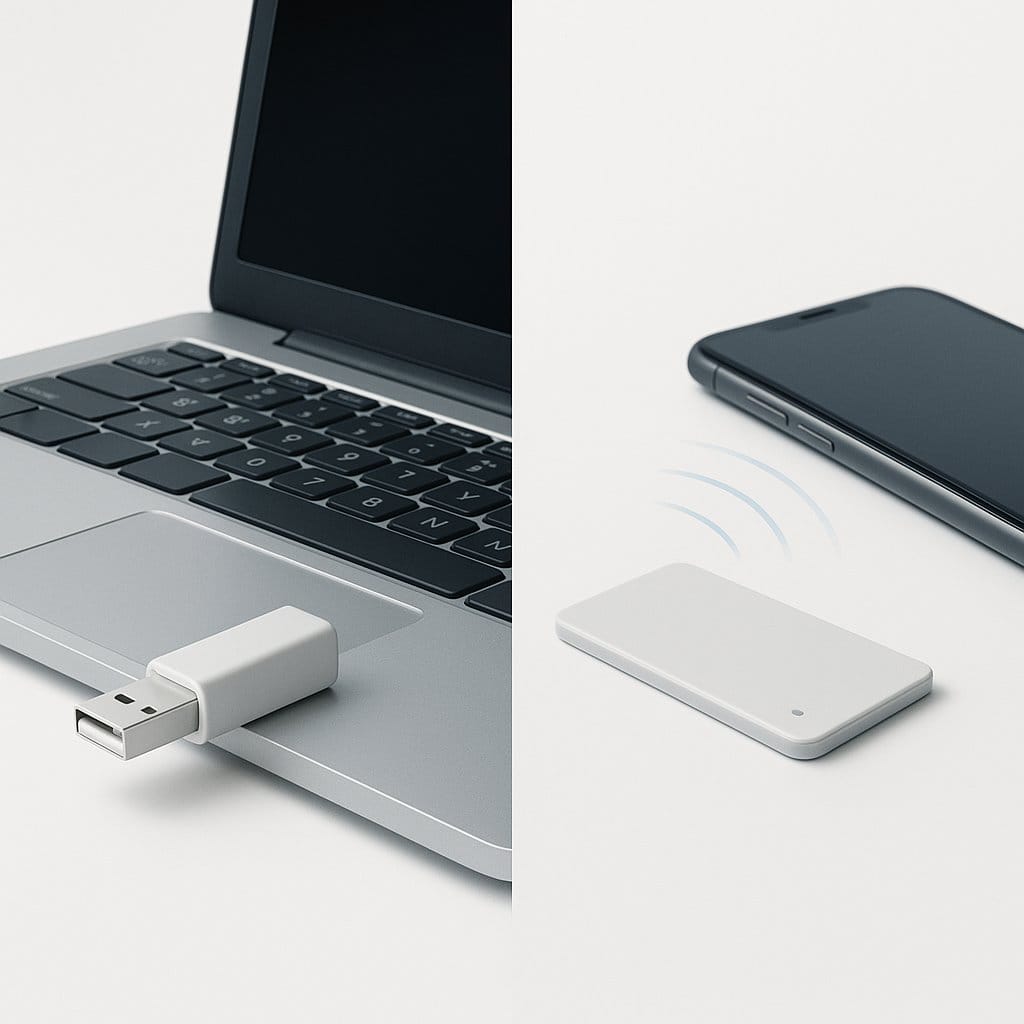
For repeat lanes, usually yes, with caveats. The common single-use USB logger is cheap per unit and fine for one-way, low-value shipments, but it's read only at the destination and offers no in-transit visibility. Reusable BLE loggers are readable live over Bluetooth, store history on-device, alarm on excursions, add an exposure signal, and are reused across shipments, which can lower cost per completed shipment when retrieval rates and device loss are under control. The honest comparison is about architecture, not the disposable-versus-reusable label alone.
| Capability | Single-use USB logger | Reusable BLE logger |
|---|---|---|
| How you read it | Plug into a PC at destination | Live over Bluetooth when a phone/gateway is nearby |
| In-transit visibility | None until opened | Continuous local record; live alerts when in phone/gateway range |
| Offline data | Stored, read once | Stored on-device, syncs when in range |
| Exposure signal | Rarely | Light alarm flags possible exposure/opening |
| Data export | Often a basic PDF | PDF/CSV with curves + alarm flags |
| Reuse | No | Yes, lower cost per completed shipment if retrieval is managed |
| Best fit | One-way, low-value lanes | Repeat, regulated, or high-value freight |
The table isn't an argument for abandoning single-use loggers everywhere, it's an argument for matching the tool to the lane, and recognizing that cheap per unit and cheap per shipment are not the same number once you account for retrieval, reverse logistics, and the routes you run again and again. If you want the dollars-and-cents version, I've laid out the ROI math behind continuous cold chain monitoring separately.
Does Bluetooth 6.0 improve cold chain logging?
Indirectly. The Bluetooth 6.0 specification, released in September 2024, headlines Channel Sounding for precise distance measurement, useful for locating assets, not for logging temperature. For a logging beacon, the meaningful 6.0 gains are quieter: smarter advertising and scanning and better behavior in crowded radio environments, which, depending on the chipset, firmware, and gateway, can mean better battery life and reliability rather than higher accuracy.
Put plainly: in a busy warehouse with hundreds of tags, a newer radio generation can help a gateway waste less energy and stay reliable. But if a vendor sells you BLE 6.0 as a range or accuracy miracle for temperature logging, be skeptical. The radio generation helps; it doesn't replace good sensor design.
How do you choose a BLE temperature logger?
Judge a BLE temperature logger on the things that actually differ between devices: accuracy across your real temperature range rather than a single point, honest range under loaded cargo, on-device memory deep enough for your longest leg, battery life rated for sustained cold, ingress protection suited to your lane, an export format your auditors accept, and a gateway ecosystem you can deploy. Those questions separate marketing from fit.
- Accuracy across your real range. A ±0.2 °C spec means something only if it holds across the temperatures you actually ship, frozen, chilled, and ambient behave differently. Ask for accuracy across the full range, not a single point.
- Honest range. Treat any long-range open-air BLE number, 100 m, 300 m, 500 m, as a lab figure. Loaded cargo, metal, water content, and insulation cut it sharply. Test with real freight, not an empty warehouse.
- Memory depth. Enough on-device storage to cover your longest leg between syncs, at your chosen logging interval.
- Battery under cold. Battery life drops in sustained low temperatures. Look for both a normal and a cold rating.
- Ingress protection. Condensation and wash-down are real; choose an ingress rating (IP67-class is common) suited to the handling on your lane.
- Export your auditor accepts. Confirm the PDF/CSV output, and its calibration and device metadata, match what your quality team, or your customer's, needs to see.
- Gateway ecosystem. If you need unattended upload, make sure the logger pairs with gateways you can actually deploy on your routes.
The goal of cold chain monitoring was never to measure temperature. It was to prove, after the fact, exactly what a shipment experienced, and to know in time to act. A logger that records on-device, senses exposure, and exports a record your quality team can actually use is one of the most direct ways to close that gap.
What else do buyers ask about BLE temperature loggers?
A handful of questions come up in nearly every evaluation I'm part of: how these devices differ from single-use loggers, why on-device memory matters even with a gateway, what a light sensor really adds, and whether the newest Bluetooth release changes anything. Short answers below; the detail is in the sections above.
What is a BLE temperature logger?
It's a battery-powered sensor that records temperature (and often light) on the device at set intervals and broadcasts the readings over Bluetooth Low Energy to a phone or gateway for upload, export, and audit. It needs no wiring and, unlike a single-use USB logger, can be read in transit and reused.
How is a BLE temperature logger different from a single-use USB logger?
The common single-use USB logger is read once, by plugging into a PC at the destination. A reusable BLE logger is readable live over Bluetooth when a phone or gateway is nearby, stores its history on-device, can alarm on excursions, and is reused across shipments, which can lower cost per completed shipment on repeat lanes when retrieval is managed. Some single-use devices do use BLE or cellular, so compare architecture rather than assuming disposable means blind.
Why does on-device logging matter if I already have a gateway?
Because gateways and networks have dead zones, steel containers, ocean legs, rural routes, deep cold rooms. On-device memory keeps recording when nothing is in range, then syncs the backlog later, so the record stays continuous instead of developing gaps you can't defend in an audit.
What does a light sensor add to temperature monitoring?
It flags likely light exposure, for example when a sealed carton is opened to daylight, as a second signal alongside temperature. It's an exposure indicator rather than definitive proof of tampering, since darkness or opaque packaging can hide an opening, but it's useful for explaining excursions and for high-value or security-sensitive freight where pilferage is a concern.
Does Bluetooth 6.0 improve cold chain logging?
Indirectly. Bluetooth 6.0's headline feature, Channel Sounding, is about precise distance measurement, which mainly helps locating assets. For logging, the useful 6.0 gains are more efficient advertising and scanning and better performance in crowded RF environments, which, depending on the hardware, can mean better battery life and reliability, not higher accuracy.
What are the key takeaways?
If you remember nothing else: the real cold chain risk is usually the missing record, not the excursion itself, and closing that gap is mostly a matter of where data is stored, what the device senses, and how cleanly it exports. The summary below distills the decision.
- The real cold chain risk is often the missing record, not the excursion itself.
- On-device logging closes connectivity dead zones; light sensing adds an exposure signal; clean PDF/CSV export makes the record reviewable.
- Reusable BLE loggers often beat single-use loggers on repeat, regulated, or high-value lanes, but match the tool to the lane and to your retrieval reality.
- Up to 500 m and ±0.2 °C are starting points; validate range and accuracy with your real freight and temperature band.
- Bluetooth 6.0 helps efficiency and reliability, not accuracy, buy the sensor design, not the hype.
- Regulators are tightening record-keeping from different angles, FSMA 204 on food traceability, EU GDP on temperature-controlled medicines, and both reward a complete, defensible data trail.
If you're weighing how to close the data gaps in your own cold chain, or matching logger types to specific lanes and compliance regimes, that's a conversation I have often. Let's discuss your requirements, and I'm glad to share what's working for teams shipping under FSMA and EU GDP today.