

What Is Supply Chain Visibility Hardware?
Supply chain visibility hardware refers to IoT devices — temperature loggers, multi-sensor trackers, BLE beacons, and cellular monitoring units — that generate verifiable data about what happens to goods as they move through production, storage, transit, and delivery. Unlike traditional GPS trackers that only answer where is my shipment, visibility hardware answers three harder questions: What condition was the product in? Where is the asset now and how efficiently does it circulate? Who had custody at each point, and can that be proven? These three evidence dimensions — condition, asset, and custody — form the foundation of modern supply chain accountability.
The shift from tracking to evidence is not a marketing distinction. It reflects how pharmaceutical quality teams, food safety auditors, 3PL operations managers, and insurance adjusters actually use the data that hardware produces. Professionals with decades of experience deploying IoT hardware across 100+ countries have observed this transition firsthand: the conversations with buyers have shifted from "how accurate is your GPS?" to "can your device generate the evidence my quality team needs for a deviation investigation?" The global cold chain monitoring market, valued at approximately USD 8.3 billion in 2025, is projected to exceed USD 15 billion by 2030, growing at a compound annual rate above 12% (MarketsandMarkets, 2025). Hardware remains the dominant segment, accounting for more than 78% of market revenue. That growth is not driven by better GPS chips. It is driven by industries that need proof — proof that a vaccine stayed below 8°C, proof that a pallet was returned within 14 days, proof that custody transferred at a specific dock at a specific time.
Why Has Visibility Hardware Moved Beyond Simple GPS Tracking?
For most of the last two decades, logistics hardware meant a cellular device reporting latitude and longitude on a schedule. That capability remains useful for fleet management — knowing that a truck is on Route 95 or parked at a depot. But for temperature-sensitive pharmaceuticals, perishable food, or high-value reusable logistics assets, location alone does not answer the questions that quality teams, regulators, and customers actually ask.
The pharmaceutical industry loses an estimated USD 35 billion annually due to cold chain failures, according to widely cited IQVIA data. The World Health Organization has noted that a significant portion of vaccines globally may be wasted due to temperature control failures during transport and storage. These losses do not happen because nobody knew where the truck was. They happen because nobody could prove what conditions the product experienced between origin and destination, or who was responsible when something went wrong.
Regulatory frameworks reinforce this shift. The FDA’s FSMA 204 food traceability rule — with enforcement now extended to July 20, 2028 — requires specific Critical Tracking Events (CTEs) and Key Data Elements (KDEs) that go far beyond location. The EU GDP guidelines for pharmaceutical distribution mandate documented temperature control, deviation investigation, and audit-ready records throughout the supply chain. These regulations do not ask "where was the shipment?" They ask "what happened to it, and can you prove it?"
What Are the Three Dimensions of Supply Chain Evidence?
Modern visibility hardware generates evidence across three distinct dimensions, each addressing different stakeholders and use cases. Understanding these dimensions helps operations teams, quality managers, and supply chain architects select the right hardware for the right problem — rather than defaulting to generic trackers that may not produce the data their organization actually needs.
Dimension 1: Condition Evidence
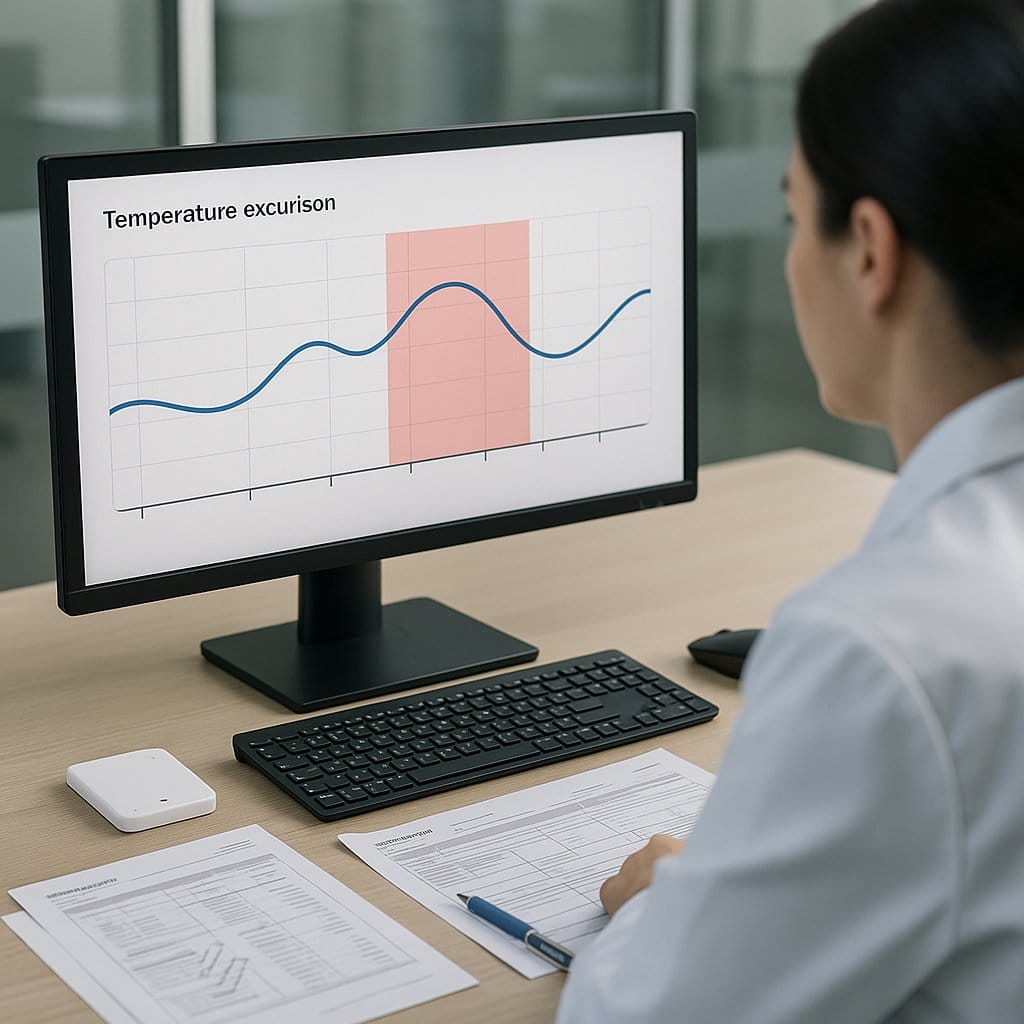
Condition evidence captures what environmental factors a shipment experienced during transit and storage. Temperature is the most common parameter, but condition monitoring increasingly includes humidity, light exposure, shock and vibration, tilt, pressure, and door-open events. For pharmaceutical products stored at 2–8°C, a 20-minute temperature excursion to 12°C may or may not compromise the product — but without accurate, timestamped, location-tagged condition data, the quality team cannot make an informed disposition decision.
The value of condition evidence emerges most clearly during temperature excursion investigations. A temperature anomaly is not a single alert. It triggers a formal quality process: the shipment is quarantined, QA reviews the full temperature profile, examines the duration and magnitude of the excursion, considers the product’s stability data and the packaging validation, and then decides whether to release, reject, or escalate to a CAPA (Corrective and Preventive Action). Without granular condition data — sampling interval, sensor accuracy, calibration traceability, and a complete audit trail — the investigation cannot be concluded, and the product sits in limbo.
Data integrity matters as much as sensor accuracy. The ALCOA+ framework (Attributable, Legible, Contemporaneous, Original, Accurate, Complete, Consistent, Enduring, Available) is the standard quality professionals use to evaluate whether condition data is trustworthy enough to support regulatory decisions. Hardware that produces a CSV export without audit trail, calibration metadata, or device identification does not meet this standard — regardless of how accurate the sensor is.
Dimension 2: Asset Evidence
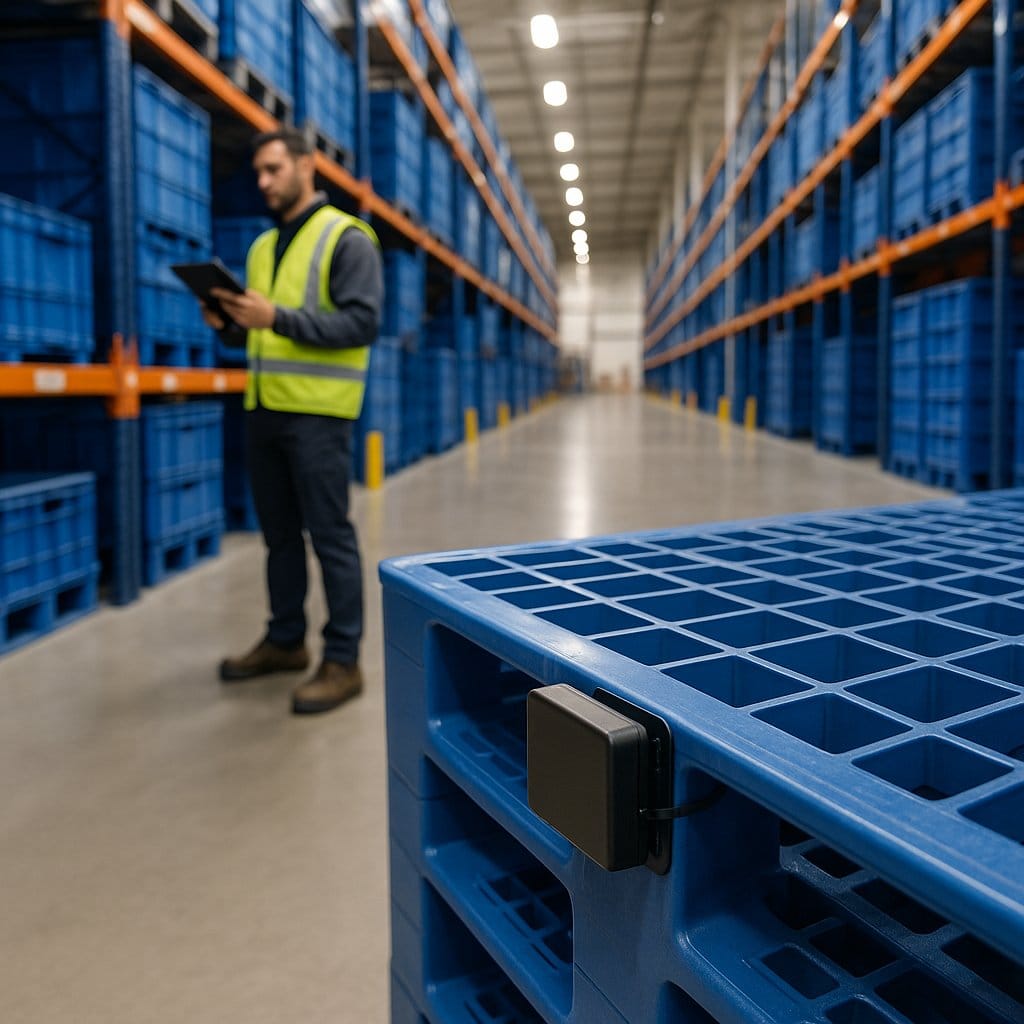
Asset evidence answers a fundamentally different question: where are reusable logistics assets — pallets, containers, crates, totes, roll cages, insulated shippers — and how efficiently do they circulate through the supply chain? Unlike condition monitoring, which focuses on the product inside the package, asset tracking focuses on the package itself and its lifecycle as a capital investment.
Industry surveys suggest that organizations managing pools of returnable transport items (RTIs) commonly experience annual loss rates in the range of 5–15% of their fleet. For operations running 50,000 pallets at a replacement cost of USD 15–30 each, even a 5% loss rate translates to meaningful annual replacement costs — before accounting for emergency purchases, manual audit labor, and supply disruptions caused by asset shortages at key nodes.
Asset evidence goes beyond location pings. The data model for effective RTI management includes: asset ID, current custodian, dwell time at each location, cycle count, time-to-return, loss rate by customer or route, and condition status (damaged, clean, in-service, retired). When this data is structured as events rather than coordinates, operations teams can calculate meaningful KPIs: average cycle time, utilization rate, custody compliance by partner, and true total cost of ownership.
Dimension 3: Custody Evidence
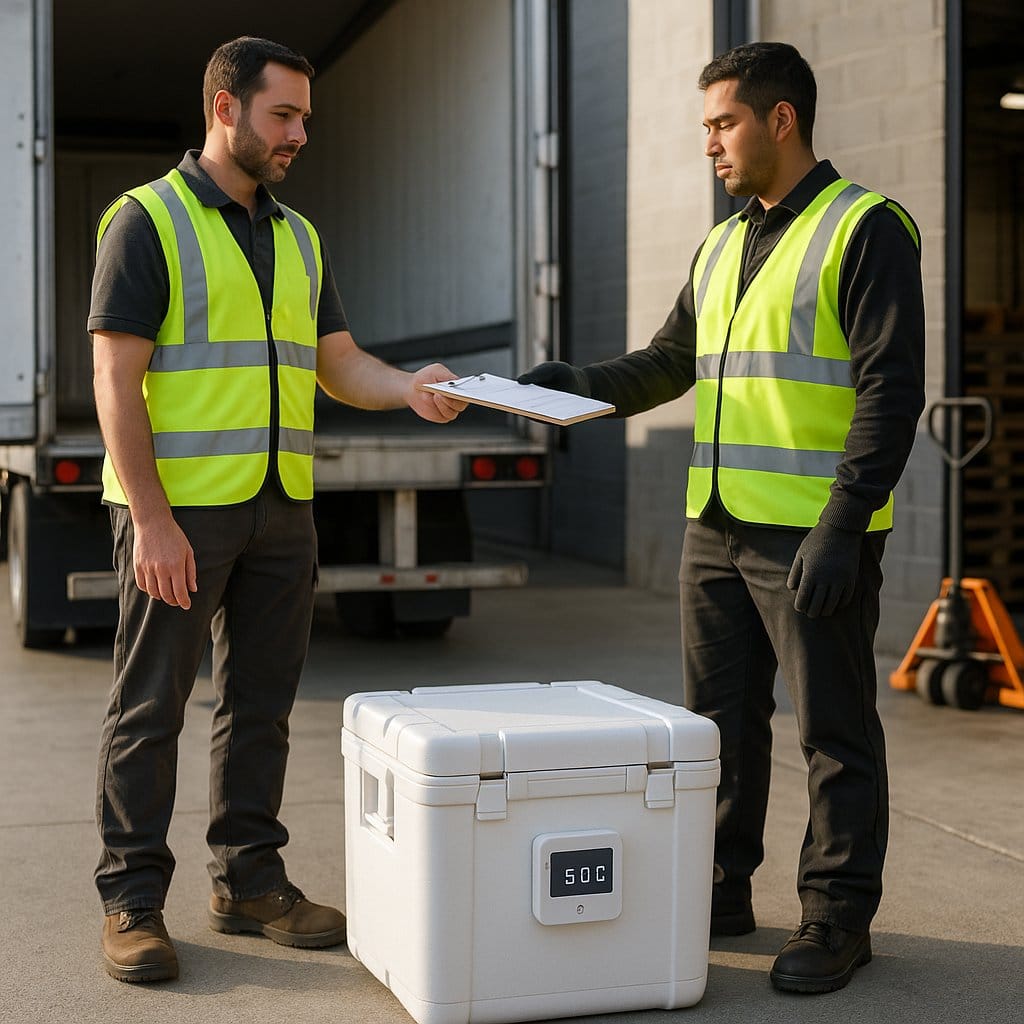
Custody evidence records who had control of a shipment or asset at each point in the supply chain — and critically, when control transferred from one party to another. Chain of custody is the connective tissue between condition evidence and asset evidence: when a temperature excursion occurs, custody data determines which party was responsible. When an asset goes missing, custody data identifies the last known holder.
In practice, custody evidence is built from handover events: the moment a driver accepts a shipment at origin, the moment a warehouse receives it at destination, the moment a 3PL transfers it to the last-mile carrier. Each handover should be timestamped, geolocated, and ideally confirmed by both parties. Hardware that captures these transitions — through geofence triggers, dock-scan events, motion detection after prolonged stillness, or integration with warehouse management systems — creates an auditable responsibility chain.
Custody disputes are expensive. When a pharmaceutical shipment arrives with a temperature excursion, the shipper, carrier, and receiver each claim the excursion happened during someone else’s leg. Without custody-linked condition data, the investigation becomes a negotiation rather than a factual determination. Claims adjusters, quality auditors, and compliance officers all benefit from hardware that ties condition events to specific custody windows.
How Do These Three Dimensions Work Together in Practice?
The real value of visibility hardware appears when condition, asset, and custody evidence are combined into a coherent record of what happened during a shipment’s journey. Consider a 2–8°C pharmaceutical shipment moving from a European manufacturer to a US distributor via air freight. The shipment uses an insulated container (an asset), is handled by a freight forwarder, airline, ground handler, customs broker, and final-mile carrier (custody chain), and must stay within temperature range throughout (condition requirement).
If the shipment arrives with a 45-minute temperature excursion peaking at 14°C, the distributor’s quality team needs to answer several questions simultaneously: When exactly did the excursion occur? Where — on the tarmac, in the customs hold, during last-mile delivery? Who had custody at that moment? Was the insulated container validated for this lane? Has this lane shown similar patterns before? Is the product still within its stability budget?
Hardware that only provides temperature data cannot answer the custody or location questions. Hardware that only provides GPS cannot explain the condition. Hardware that only tracks the container cannot identify whether the problem is the lane, the carrier, or the packaging. All three evidence dimensions, correlated by time and linked to the specific shipment, are necessary to resolve the investigation and prevent recurrence.
Key Insight: The evolution from tracking devices to evidence-generating hardware is not about adding more sensors. It is about structuring the data so that condition, asset, and custody information can be correlated, audited, and used for quality decisions — not just operational awareness.
What Should a Supply Chain Evidence Package Contain?
Organizations moving toward evidence-based supply chain operations should think beyond individual sensor readings. A complete evidence package — whether for a single shipment, a quarterly lane review, or an audit response — typically includes the following components:
| Evidence Component | What It Contains | Who Uses It |
|---|---|---|
| Shipment Summary | Origin, destination, carrier, planned vs actual route, shipment ID, batch/lot reference | Logistics coordinators, QA |
| Device Metadata | Device ID, sensor type, calibration certificate reference, firmware version, battery status | QA, auditors, calibration team |
| Temperature Profile | Complete curve with min/max/mean, sampling interval, threshold settings, MKT if applicable | QA, quality managers, regulatory |
| Excursion Summary | Start time, end time, duration, peak value, geographic location, custody holder during event | QA investigators, claims adjusters |
| Location History | Key waypoints, dwell times, geofence entries/exits, route deviation flags | Operations, compliance, 3PL managers |
| Condition Events | Door-open/light exposure, shock/drop, prolonged stillness, low battery, device offline | QA, packaging engineers, insurers |
| Custody Chain | Handover timestamps, geolocation at each transfer, confirmation records | Claims, legal, compliance |
| Raw Data Export | CSV or API-accessible data for independent verification, timestamps, units, timezone | QA systems, data analysts, auditors |
The difference between a hardware vendor and a visibility partner often comes down to whether the output is a raw data dump or a structured evidence package that supports quality decisions, audit responses, and operational improvement.
What Regulatory Frameworks Are Driving This Shift?
The demand for evidence-generating hardware is not coming from logistics departments alone. Several regulatory frameworks are actively raising the bar for what supply chain data must be captured, retained, and made available for inspection:
FSMA 204 (Food Traceability Rule): Requires specific Critical Tracking Events and Key Data Elements for foods on the FDA’s Food Traceability List. While the enforcement date has been extended to July 2028, the preparation window is active now. IoT condition data — temperature, location, timestamps — can supplement the traceability records that food companies must maintain.
EU GDP (Good Distribution Practice): Mandates that pharmaceutical wholesale distributors maintain product quality and integrity throughout the supply chain, including documented temperature control, deviation investigation procedures, and audit-ready records (EMA GDP overview).
21 CFR Part 11: Establishes criteria under which the FDA considers electronic records trustworthy and equivalent to paper records. For visibility hardware whose data enters regulated quality systems, this means attention to access controls, audit trails, data integrity safeguards, and the ability to produce complete, unaltered records on demand.
DSCSA (Drug Supply Chain Security Act): Focused on package-level electronic traceability for prescription drugs. While DSCSA primarily addresses serialization rather than condition monitoring, it signals the broader direction: US pharmaceutical supply chains are moving toward comprehensive electronic documentation where cold chain condition data serves as complementary evidence.
How Do Different Hardware Types Map to Evidence Needs?
Not every supply chain problem requires the same hardware. The distinction between BLE data loggers, real-time cellular trackers, and hybrid gateway-beacon architectures maps directly to different evidence requirements, operational constraints, and cost structures.
| Capability | BLE Data Logger | Real-Time Cellular Tracker | Gateway + BLE Beacon |
|---|---|---|---|
| Condition Evidence | Post-trip download; high accuracy; no real-time | Real-time alerts with location; intervention possible | Real-time via gateway relay; cost-effective at scale |
| Asset Evidence | Limited — requires scan or gateway | Full lifecycle; GPS + cell; real-time dwell/cycle | Presence detection; zone-level granularity |
| Custody Evidence | Start/stop timestamps only | Geofence-based handover; continuous chain | Zone transitions; inferred handover |
| Cost | Lowest | Highest | Medium |
| Best Fit | Compliance recording; receipt verification | High-value shipments; exception management | Warehouse/yard RTI visibility at scale |
The choice is not which hardware is "better" — it is which evidence type the operation needs most urgently. A pharmaceutical wholesaler may need a BLE logger for every carton and a real-time tracker for every pallet. A 3PL managing 40,000 returnable crates may need gateway coverage at every depot. For a deeper look at how ultra-low-power asset tracking hardware balances battery life against reporting frequency in these scenarios, the engineering tradeoffs are substantial. The architecture follows the evidence requirement, not the other way around.
FAQ
What is the difference between supply chain tracking and supply chain visibility?
Tracking answers where a shipment is at a given moment. Visibility encompasses the broader picture: what condition the goods are in, who has custody, whether thresholds have been breached, and whether the data meets the quality and integrity standards required for audits, regulatory filings, and business decisions. Visibility hardware generates evidence; tracking hardware generates coordinates.
Does supply chain visibility hardware need to be FDA approved?
Cold chain IoT hardware — GPS trackers, temperature loggers, BLE beacons — is generally not a product category that goes through FDA product approval. The relevant question is whether the data generated by the hardware can support processes within FDA-regulated supply chains, such as FSMA 204 traceability records or pharmaceutical quality system documentation.
How does FSMA 204 affect IoT hardware selection for food supply chains?
FSMA 204 requires specific Critical Tracking Events (CTEs) and Key Data Elements (KDEs) for certain food products. IoT hardware can supplement the required documentation with shipment-level condition evidence — temperature, location, timestamps, dwell times — that strengthens a company’s traceability posture during recalls and investigations. The enforcement date extension to July 2028 creates a preparation window for companies to build or enhance their IoT data infrastructure.
What is a cold chain evidence package?
A cold chain evidence package is a structured collection of data and reports generated by visibility hardware for a specific shipment. It typically includes the shipment summary, device metadata, the complete temperature profile, excursion details with location and duration, the location history, condition events such as door-open or shock alerts, the custody chain with handover timestamps, and raw data exports for independent verification.
What does ALCOA+ mean for cold chain data integrity?
ALCOA+ is a framework used in regulated industries to evaluate whether data is trustworthy: Attributable (who or what generated it), Legible (can it be read), Contemporaneous (recorded when the event occurred), Original (preserved in its first form), Accurate (correct within stated precision), plus Complete, Consistent, Enduring, and Available. For cold chain hardware, ALCOA+ means the device must record data with traceable identity, timestamps, and calibration, and the platform must preserve an unaltered audit trail accessible for future review.
Key Takeaways
- Supply chain visibility hardware has evolved from location tracking to generating structured evidence across three dimensions: condition, asset, and custody.
- Condition evidence supports quality investigations, deviation reports, and disposition decisions for temperature-sensitive products.
- Asset evidence enables returnable transport item management and quantifiable ROI on logistics assets.
- Custody evidence resolves responsibility disputes and supports insurance and compliance processes.
- The evidence package concept separates operational tracking from regulatory-grade supply chain documentation.
- Regulatory frameworks including FSMA 204, EU GDP, 21 CFR Part 11, and DSCSA are driving demand for evidence-generating hardware.
- Hardware selection should follow evidence requirements: BLE loggers for compliance, cellular trackers for exceptions, gateway-beacon for asset pools.